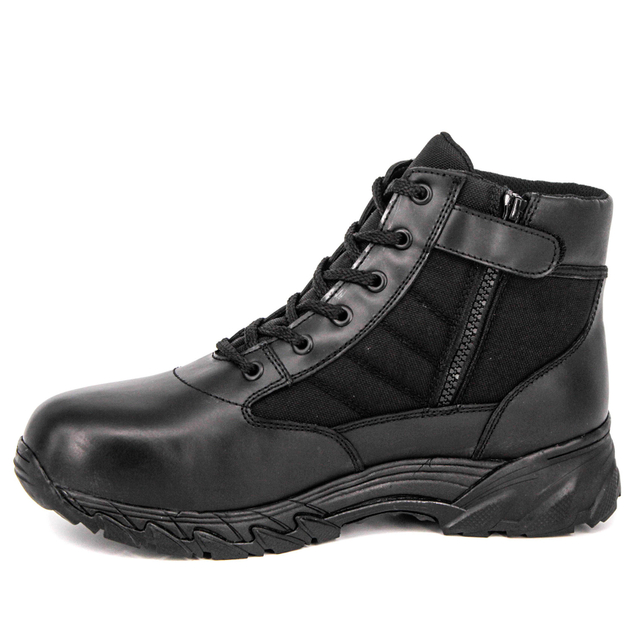
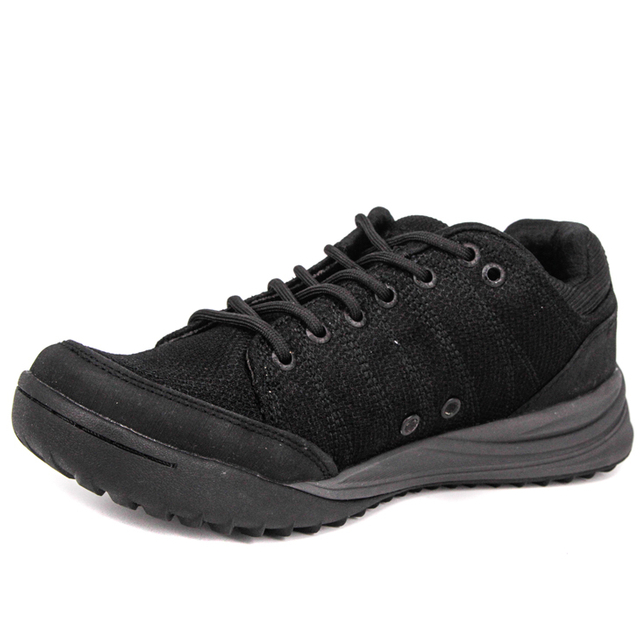
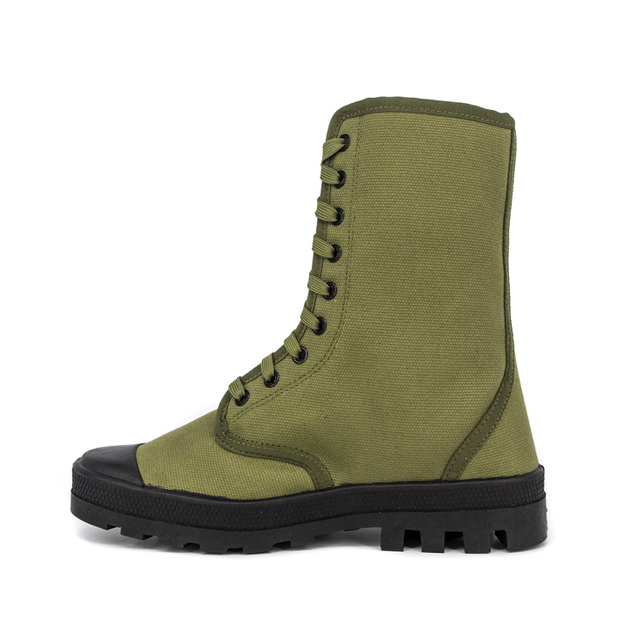
Procuring military boots for an entire unit involves exceptionally high financial stakes. A single miscalculation can paralyze your supply chain and leave personnel unequipped. Poor size planning quickly leads to dead stock. You often face massive inventory bloat at the extreme ends of the size spectrum. Meanwhile, you experience critical shortages in average sizes. Unlike civilian footwear, tactical boots must accommodate heavy pack loads. They also need extra space for foot swelling and specialized cushioned socks. This physical reality significantly shifts standard sizing metrics away from retail averages.
We will explore how to avoid these expensive procurement pitfalls. You will discover a data-driven framework to forecast size distributions accurately. Furthermore, we will guide you through evaluating vendor sizing models, running internal fit tests, and mitigating long-term inventory risks.
Key Takeaways
Bulk orders should follow a weighted bell-curve distribution based on historical demographic data, not a flat distribution across all sizes.
Accounting for width variations (Wide/Extra Wide) is non-negotiable; roughly 20-30% of tactical operators require wider fits to prevent field injuries.
Manufacturer "lasts" (the mold the boot is built on) vary drastically. Standardizing military boot sizes requires physical fit testing before finalizing bulk quantities.
Evaluating a vendor's exchange policies and SLA for outlier sizes is just as critical as the unit price.
The Baseline: Applying Demographic Bell Curves to Military Boots
Footwear procurement must rely on statistical forecasting. Adult shoe sizes naturally follow a standard distribution curve. You cannot treat every size equally when planning a bulk order. For a standard male military demographic, sizes US 9 through 11.5 represent the peak of this bell curve. These core sizes typically consume roughly 60% to 70% of your total order volume. The demand drops sharply as you move toward the extreme ends of the spectrum.
Many procurement officers fall into the "flat order" trap. They assume ordering equal quantities of every size simplifies the process. They might order fifty pairs of size 7 and fifty pairs of size 10. This approach guarantees immediate budget waste. The size 10 boots will vanish from your supply room within weeks. The size 7 boots will sit on pallets for years, occupying valuable warehouse space.
You need a standardized baseline ratio to start your forecasting. You can adjust these percentages later based on your specific unit demographics. A highly effective starting formula breaks the size run into five distinct categories. This structure prevents you from overcommitting funds to outlier dimensions.
Distribution Category | Typical Size Range (Men's US) | Recommended Order Volume | Inventory Risk Level |
Outlier Small | 6.0 - 7.5 | 10% | High Risk (Dead Stock) |
Lower-Mid | 8.0 - 8.5 | 20% | Moderate Risk |
Core Average | 9.0 - 11.5 | 40% | Low Risk (High Turnover) |
Upper-Mid | 12.0 - 13.0 | 20% | Moderate Risk |
Outlier Large | 13.5 - 15.0+ | 10% | High Risk (Dead Stock) |
This formula provides a safe starting point. You must review past issue logs to refine these percentages. Some regional demographics naturally skew larger or smaller. Always prioritize funding for the core average sizes before allocating your budget to the outliers.
Factoring in Widths and Gender-Specific Fit Profiles
A standard regular width will never cover an entire unit. Tactical operators carry immense weight during field exercises. This operational load forces the arches to flatten over time. Feet inevitably swell during long marches. If you only provide regular widths, your personnel will suffer from severe blisters and stress fractures. You must include Wide (W) and Extra Wide (EW) options in your order matrix.
Forecasting width variants requires careful attention. Roughly 20% to 30% of tactical operators require a wider fit. When analyzing military boot sizes, you cannot simply guess these ratios. Relying on assumptions leads to painful injuries and costly emergency reorders. We recommend referencing your past 24-month quartermaster issue data. This historical record establishes an accurate, unit-specific baseline width ratio.
Female personnel introduce another critical sizing dynamic. You face significant risks if you rely on "unisex" boots. Scaled-down men's boots do not accommodate female foot biomechanics. Women generally have narrower heels relative to their forefoot width. A men's boot in a smaller size often causes severe heel slip for a female operator. This heel slip leads to debilitating friction injuries during sustained operations.
Ordering gender-specific models drastically changes your overall size matrix. You must create a secondary, distinct bell curve exclusively for female sizes. Treat the men's and women's footwear lines as two entirely separate procurement categories. This separation ensures both demographics receive proper ergonomic support in the field.
Common Mistakes in Width and Gender Planning
Ordering 100% standard widths to simplify vendor contracts.
Assuming women can simply drop one and a half sizes in a men's boot.
Ignoring foot expansion caused by heavy rucking and thick issue socks.
Failing to cross-reference width demands against specific sizes. (e.g., Wide options are highly requested in core sizes, but rarely needed in outlier small sizes).
Evaluating Vendor Sizing Standards and "Lasts"
You cannot blindly trust a number on a box. Different manufacturers use different physical molds to build their footwear. The industry calls these molds "lasts." A last dictates the internal volume, arch placement, and heel width of the boot. Because these molds vary drastically across brands, a US size 10 in one brand might fit exactly like a US 10.5 in another.
Procurement teams must decide between standard off-the-shelf options and specialized gear. Standardized boots work well for general garrison duties. However, extreme operational environments often justify contracting custom military footwear. If your unit deploys to sub-zero climates, they require extra internal volume for insulated socks. Custom adjustments to the manufacturer's last ensure personnel maintain circulation in freezing temperatures.
You must mitigate the sizing variations between different brands. We strongly advise procurement teams to execute a strict fit kit protocol. Never finalize a bulk order based on paper dimensions alone.
The Fit Kit Protocol Steps
Shortlist your top two or three vendor candidates based on material quality and pricing.
Demand a full "sizing run" from each vendor. This means receiving a physical set of boots in every available size and width combination.
Select a diverse group of unit members to participate in a live wear test.
Conduct physical fit tests focusing on heel lock, toe box volume, and arch support.
Adjust your demographic bell curve percentages based on the specific vendor's fit profile before signing the final purchase order.
Data Collection and Internal Survey Implementation
Accurate size forecasting demands reliable data. You have two primary methods for gathering this intelligence: pulling historical data or conducting active polling. Historical supply room data provides a fast, effortless baseline. However, old data often reflects past procurement errors. If previous buyers ordered too many size 9s, the issue logs might falsely suggest a higher demand simply because personnel had no other options.
Active polling delivers much higher accuracy. A fresh unit-wide sizing survey captures the exact needs of your current personnel. You must execute this strategy carefully. A poorly planned survey causes massive operational downtime. Do not ask hundreds of operators to line up outside the supply room.
Instead, deploy a rapid digital survey through internal communication channels. Ask personnel to submit their current athletic shoe size and their required boot width. Remind them to account for standard-issue thick socks. Give unit commanders a strict 72-hour deadline to compile and submit the data.
Survey data is rarely perfect. People make typing errors. Some operators misjudge their actual foot size. You must pad your final order to account for these discrepancies. Calculate a buffer percentage to protect your supply chain.
We recommend adding a 5% to 10% buffer exclusively to your high-turnover core sizes. Do not pad the extreme outliers. This buffer absorbs survey inaccuracies. It also provides immediate stock for unexpected replacements or sudden influxes of new recruits. A smart buffer prevents localized shortages without creating dead stock.
Risk Mitigation: Vendor Contracts and Exchange Terms
Successful bulk ordering is an exercise in vendor management. You will inevitably miscalculate a small percentage of your size distribution. You must build safety nets directly into your B2B contracts. Negotiating sizing flexibility upfront saves thousands of dollars later.
Structure your purchase agreement to include an exchange clause. Ensure you can swap unworn, dead-stock outlier sizes for high-demand core sizes. A standard, reasonable exchange window spans between 90 and 180 days after delivery. If a vendor refuses this basic flexibility, you should reconsider the partnership. They are shifting all inventory risk onto your budget.
For orders exceeding 1,000 pairs, advocate strongly for a phased rollout. Never accept the entire bulk order in a single shipment. Staggered deliveries allow you to course-correct in real time.
Phased Rollout vs. Traditional Delivery
Strategy | Initial Delivery | Feedback Loop | Risk Level |
Traditional Delivery | 100% of order arrives on Day 1. | None. You own all sizing mistakes immediately. | Extremely High |
Phased Rollout | 30% of order arrives as a trial run. | Issue the first 30%. Identify sizing trends and tight spots. | Low |
Phased Adjustment | Remaining 70% arrives 60 days later. | Adjust ratios for the final 70% based on the first batch. | Minimal |
Finally, establish a long-term replenishment plan. Your unit will occasionally require extreme outlier sizes, such as a Men's US 15 Extra Wide. Manufacturers often impose Minimum Order Quantity (MOQ) penalties for these rare sizes. Negotiate an annual allowance for outlier requests. Secure a streamlined framework where you can order individual extreme sizes without triggering massive MOQ surcharges.
Conclusion
Successful bulk footwear procurement relies entirely on statistical forecasting and rigid vendor management. You cannot simply guess size distributions or rely on flat ordering models. Treating military footwear acquisition as a data-driven process protects your budget and keeps your personnel combat-ready.
Audit your current inventory data to identify historically stagnant sizes before placing new orders.
Request a complete physical fit kit from your top vendor short-list to verify their unique lasting molds.
Finalize your demographic bell curve, ensuring you account for width variations and gender-specific requirements.
Negotiate robust exchange terms and staggered delivery schedules before finalizing any pricing tiers.
FAQ
Q: How much larger should military boots be compared to standard shoe sizes?
A: Most personnel size up by a half-size compared to their standard athletic shoes. This extra space accommodates thick tactical socks and inevitable foot swelling during long marches. However, you must verify this rule against specific manufacturer lasts, as some brands already build extra volume into their molds.
Q: What is the standard ratio for ordering wide vs. regular military boot sizes?
A: A conservative baseline ratio is 70% regular width and 30% wide or extra-wide. Operational loads flatten arches and widen feet over time. You should always cross-reference this 70/30 baseline with your specific unit's past issue data to ensure accuracy.
Q: Can we return unworn bulk tactical boots if the size estimates were wrong?
A: This depends entirely on your pre-negotiated B2B contract terms. You must explicitly include an exchange clause before signing. A standard clause allows you to swap unworn dead stock for high-demand core sizes within a 90-to-180-day window.
Q: Is it better to order unisex boots or separate men's and women's models?
A: You should order separate, gender-specific models for large, diverse units. Unisex boots are typically scaled-down men's lasts. They fail to accommodate the narrower heel and biomechanics of female operators, leading to severe friction injuries and reduced field performance.