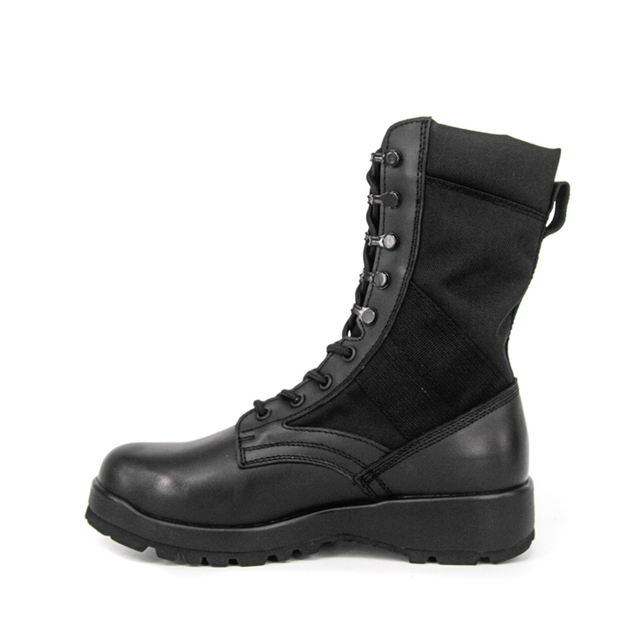
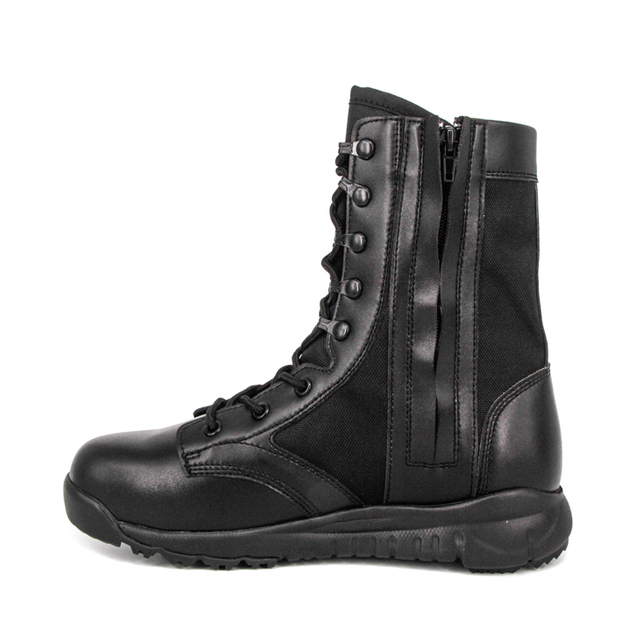
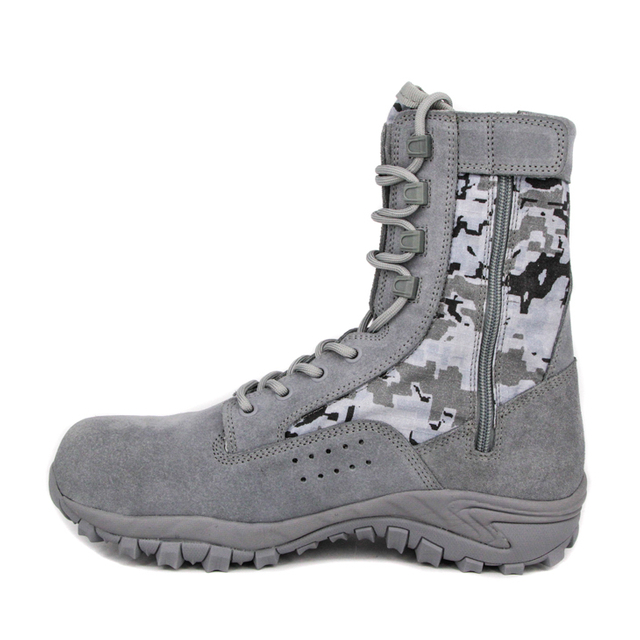
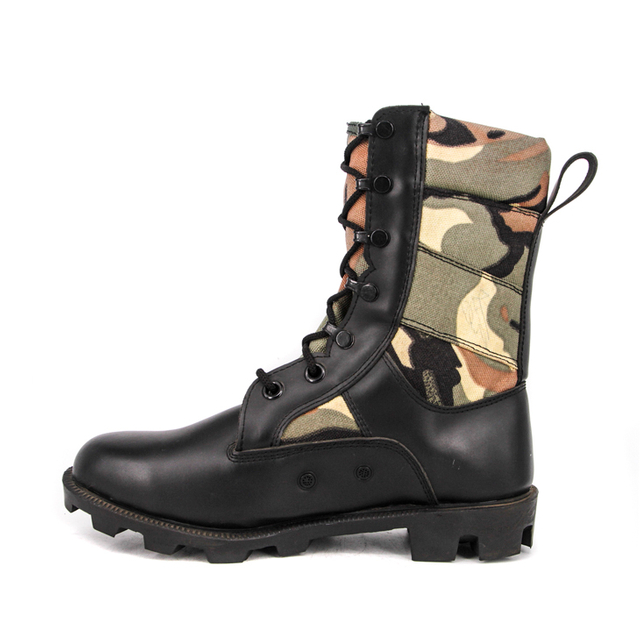
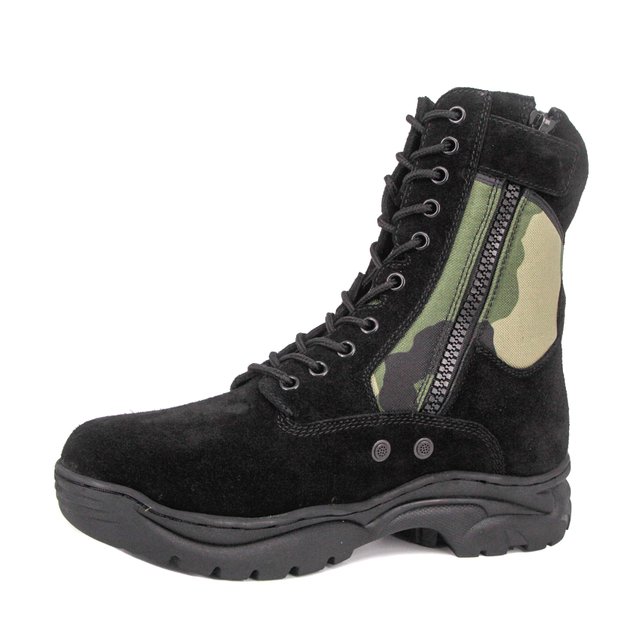
Deploying into tropical environments guarantees your feet will get wet. Moisture acts as a constant operational hazard, not an occasional inconvenience. You face a strict footwear dilemma: try to block water from entering, or let it drain out fast. Pick the wrong mechanism, and you risk trench foot, severe blistering, or complete boot failure miles from extraction. This guide breaks down the technical realities of waterproof versus quick-drying designs. We provide an evidence-based framework to select the right footwear. You will learn how to evaluate options based on mission duration, terrain, submersion frequency, and material durability. By understanding the specific hydrological challenges of your environment, you can deploy the correct footwear system to maintain mobility and combat effectiveness.
Key Takeaways
The Humidity Factor: In environments with 80%+ humidity, waterproof membranes lose their breathability, trapping sweat, heat, and fungal spores inside the boot.
The Submersion Rule: For routes requiring frequent river crossings or deep mud wading, quick-dry jungle boots outperform waterproof models by preventing the "bathtub effect."
Duration Dictates Design: Waterproof boots excel in short-duration, static, or shallow-wet conditions; quick-drying designs are mandatory for prolonged, dynamic operations in deep water.
Construction Matters: Beyond moisture management, true jungle boots for humid environments require vulcanized or direct-attach soles, as standard footwear adhesives rapidly degrade and delaminate in tropical heat.
System-Level Approach: Neither boot design functions effectively without a strict field foot-care regimen, proper sizing for heat-swelling, and the correct pairing of moisture-wicking socks.
The Core Problem: Moisture Management and Structural Integrity in Humid Environments
Prolonged exposure to dampness, friction, and high heat rapidly degrades human skin. When feet remain wet for extended periods, the skin undergoes severe maceration. It becomes soft, white, wrinkled, and highly susceptible to tearing under the friction of a heavy ruck march. This physiological breakdown creates an ideal environment for immersion foot syndromes. Trench foot, a non-freezing cold injury, can develop even in warm tropical waters if the skin never gets a chance to dry out and recover. The constant dampness causes blood vessels to constrict, starving the tissue of oxygen and nutrients.
Blisters form quickly as softened skin rubs against wet socks and internal boot linings. Once the primary skin barrier breaks, aggressive bacterial and fungal infections take hold. In a jungle environment, these infections escalate rapidly. A minor hot spot can turn into a debilitating, infected ulcer within 48 hours. These conditions routinely incapacitate operators, severely compromising mission success and requiring immediate medical evacuation.
Defining Effective Jungle Boots for Humid Environments
Tropical footwear must meet strict baseline requirements to function effectively in the field. Structural integrity when wet remains non-negotiable. The boot must not stretch out of shape, sag, or lose critical ankle support after complete and repeated submersion. Puncture resistance is another mandatory feature. Sole plates are required to block punji sticks, sharp thorns, and jagged rocks hidden deep in muddy terrain. Modern boots utilize flexible Kevlar or composite puncture-resistant layers rather than the heavy steel plates of the past.
Hardware such as eyelets, speed laces, and drainage vents must be completely rust-proof to withstand constant moisture and high salinity. Effective jungle boots for humid environments must balance these heavy-duty protective features with aggressive moisture mitigation strategies. A boot that protects against punctures but rots the foot from the inside fails the primary objective.
The Myth of "Waterproof and Breathable"
Many operators rely on the marketing promise of waterproof and breathable membranes. However, the physics of moisture vapor transfer dictate a harsh reality in the jungle. Waterproof membranes require a specific temperature and humidity gradient to breathe effectively. The inside of the boot must be significantly warmer and more humid than the outside air. This gradient creates the pressure needed to push moisture vapor through the microscopic pores of the PTFE membrane.
In a tropical jungle, the outside environment often features 90% humidity and ambient temperatures exceeding 95 degrees Fahrenheit. The required gradient simply does not exist. The outside air is just as hot and wet as the inside of the boot. Consequently, sweat vapor cannot escape through the membrane. The boot traps all internal moisture, creating a highly destructive, swamp-like microclimate right against the skin.
Adhesive Degradation
Standard hiking boots rely on synthetic glues and polyurethane (PU) midsoles to attach the outsole to the upper. These adhesives perform exceptionally well in dry, temperate climates. However, constant moisture and extreme temperatures cause these chemical bonds to fail rapidly. The tropical environment induces a process called hydrolysis, where water molecules actively break down the polyurethane chains. The midsole literally crumbles into a sticky powder.
This leads to catastrophic sole delamination, often occurring miles away from the nearest resupply point. Specialized sole attachment methods are required for jungle operations. Vulcanized rubber soles or direct-attach construction methods fuse the sole directly to the upper using extreme heat and pressure. This eliminates the reliance on vulnerable adhesives and ensures the boot remains intact during rigorous, long-term deployments.
Waterproof Jungle Boots: Mechanisms, Pros, and Cons
Material Construction
Modern waterproof jungle boots utilize advanced materials to block external moisture from reaching the foot. Polytetrafluoroethylene (PTFE) membranes form the primary barrier. These membranes are sandwiched between the rugged outer material and the soft inner lining. To support the membrane, durable water repellent (DWR) hydrophobic coatings are applied to the exterior nylon or leather. This forces water to bead up and roll off the surface rather than soaking into the outer fabric.
Full-grain leathers used in these boots are heavily treated with waxes or silicones during the tanning process to prevent water absorption. These construction methods create a formidable, impenetrable shield against external water sources. As long as the water level remains below the top of the boot collar, the interior remains completely dry.
Operational Advantages
Waterproof designs offer distinct tactical advantages in specific operational contexts. They are ideal for static operations, such as observation posts, sniper hides, or vehicle checkpoints, where physical movement is limited and generating body heat is difficult. They perform exceptionally well in shallow puddles, wet grass, and dense, dew-soaked vegetation.
Keeping the feet dry provides a crucial barrier against severe biological hazards. Leeches, hookworms, and waterborne diseases like leptospirosis cannot penetrate the waterproof membrane. Additionally, waterproof boots offer superior thermal retention. If operations shift from the lowland jungle to high-altitude cloud forests where temperatures drop significantly at night, the trapped heat prevents cold-weather injuries and keeps the operator combat-effective.
The "Bathtub Effect" and Fungal Traps
The critical failure point of waterproof boots occurs the moment water breaches the collar. Deep river crossings, submerged mud holes, or heavy monsoon rain running down the operator's legs will instantly flood the boot. Once water enters from the top, the waterproof membrane works in reverse. It completely prevents the water from draining out, creating the dreaded "bathtub effect."
The operator is forced to walk with boots carrying pounds of standing water. This trapped, warm water mixes with sweat, dirt, and dead skin cells. It becomes an ideal breeding ground for aggressive bacteria and fungus. Drying a flooded waterproof boot in a humid environment is nearly impossible. Without access to forced-air mechanical dryers, the boots will remain wet internally for the duration of the patrol, guaranteeing severe foot degradation.
Quick-Dry Jungle Boots: Mechanisms, Pros, and Cons
Traditional and Modern Drainage Designs
The architecture of quick-dry jungle boots abandons the concept of blocking water entirely. Instead, the design focuses entirely on rapid water evacuation and maximum airflow. These designs feature medial drainage vents located near the instep of the foot. Traditional vents use brass screens, while modern iterations employ durable, micro-mesh polymer to prevent rust and block finer debris.
The uppers are constructed from unlined, high-denier nylon, typically 1000D Cordura. These synthetic materials absorb very little water and dry rapidly when exposed to air and body heat. Internal padding is kept to an absolute minimum. Thick foam padding acts like a sponge, holding water for days. Therefore, quick-dry boots use thin, closed-cell foam only where strictly necessary for ankle support and collar structure.
Operational Advantages
The primary advantage is immediate water evacuation. After a full submersion during a river crossing or swamp movement, the water drains out within a few steps. The mechanical pumping action of the foot flexing inside the boot forces the water out through the drainage vents. The unlined nylon uppers provide superior air circulation, significantly reducing internal heat buildup in high-temperature environments.
Furthermore, quick-dry boots maintain a much lighter wet-weight compared to waterlogged waterproof boots. Carrying less weight on the feet exponentially reduces caloric expenditure. A common field metric states that one pound on the foot equals five pounds on the back in terms of energy cost. Shedding water weight immediately reduces leg fatigue over long distances, allowing operators to move faster and further.
Initial Discomfort and Exposure
Operators must accept the reality that their feet will get wet immediately. This requires a significant psychological and physical adjustment. Stepping into a swamp means instant exposure to the water and whatever is in it. There is also a complete lack of thermal insulation. If temperatures drop unexpectedly at night, or if the operator is static in a cold rain, the feet will feel the chill immediately.
Additionally, the open drainage vents and breathable mesh can allow micro-debris to enter the boot. Silt, fine sand, and small leeches can sometimes bypass the protective screens. Operators must often pair these boots with tightly woven, knee-high gaiters to prevent debris ingress from the top and protect the lower legs from cuts and biological threats.
Head-to-Head Evaluation: Which Design Fits Your Mission?
Evaluation Criteria | Waterproof Jungle Boots | Quick-Dry Jungle Boots |
Moisture Strategy | Blocks external water entry completely. | Allows water in, but drains and dries rapidly. |
Best Terrain | Shallow mud, wet grass, static posts. | Deep rivers, swamps, flooded mangroves. |
Breathability | Poor in high humidity (traps sweat). | Excellent air circulation and heat venting. |
Drying Time | Extremely slow (days) once flooded. | Fast (hours) while walking or overnight. |
Biological Protection | High barrier against leeches and parasites. | Requires gaiters to block micro-debris. |
Wet Weight Penalty | Severe (retains standing water). | Minimal (sheds water immediately). |
Thermal Retention | Good for cold nights and high altitudes. | Poor; offers zero insulation. |
Terrain and Submersion Frequency
The frequency and depth of water encounters dictate the correct footwear choice. High submersion environments demand quick-dry designs. Swamps, riverine networks, and flooded mangroves require constant wading. Waterproof boots will flood immediately and remain waterlogged, destroying the feet. Quick-dry designs are mandatory here.
Conversely, low submersion environments make waterproof boots highly viable. If the terrain features wet grass, shallow mud, or intermittent rain, waterproof boots keep the feet completely dry. They excel when the operator can reliably keep the water level below the boot collar, such as during vehicle-mounted patrols or operating in well-drained, elevated jungle canopies.
Traction and Outsole Architecture
Traction requirements differ significantly in tropical mud compared to rocky alpine environments. Classic quick-dry boots often feature the traditional "Panama sole." This sole uses wide, deeply angled lugs designed to push thick mud outward laterally as the foot strikes the ground. It prevents the sole from caking with clay and turning into a slick, heavy block.
Modern waterproof tactical boots often utilize shallower hybrid lugs, similar to the Vibram Sierra pattern. These lugs provide better surface area and grip on wet rocks, fallen logs, and hard-packed trails. However, shallow lugs pack with thick jungle mud quickly, reducing traction to zero. Operators must match the outsole architecture to the specific soil composition and terrain features of their deployment area.
Mission Duration and Logistics
Drying times heavily influence mission logistics and daily routines. Quick-dry boots can dry while walking due to body heat, airflow, and the mechanical pumping of the vents. They can also dry overnight when hung upside down in a hammock or placed on a stick near a small fire. This makes them ideal for multi-day, unsupported deployments.
Waterproof boots present a severe logistical challenge once flooded. They may remain wet internally for the entire duration of a two-week deployment. Field environments lack the forced-air boot dryers necessary to push dry air into the toe box of a soaked waterproof membrane. For long-range dismounted patrols, the inability to dry footwear overnight is a critical vulnerability that leads directly to medical casualties.
Weight, Mobility, and Fatigue Factors
Footwear weight directly impacts caloric expenditure and combat effectiveness. Retained water in waterproof boots exponentially increases the weight lifted with every single step. A flooded waterproof boot can weigh twice as much as its dry state. Over miles of uneven, muddy terrain, this added weight causes severe leg fatigue, hip strain, and lower back pain.
It degrades overall mobility, making it harder to react to contact or navigate obstacles. Quick-dry boots shed this water weight immediately after exiting a river. By maintaining a lower wet-weight, they preserve the operator's energy reserves, reduce the risk of musculoskeletal injuries, and allow for sustained physical performance over grueling distances.
Sizing and Fit for Tropical Climates
Proper sizing is critical when deploying jungle boots. Feet naturally swell in high heat, high humidity, and under heavy ruck weights. The arches flatten slightly, and the foot elongates. Purchasing boots that fit perfectly in an air-conditioned store with thin socks will lead to severe compression blisters and lost toenails in the field.
Operators must size up slightly, usually a half size, to accommodate this swelling. You need a full thumb's width of space between your longest toe and the front of the boot. Utilizing adjustable, rust-proof speed-lacing systems is essential. These systems allow the operator to use a surgeon's knot to lock the heel in place, while leaving the toe box slightly looser to accommodate swelling without sacrificing ankle support.
Sock Selection
The best boot in the world will fail if paired with the wrong sock. Cotton is a massive liability in humid environments. It absorbs moisture, loses its shape, bunches up, and causes severe friction blisters. Operators must utilize specific blends based on the chosen boot type and expected temperatures.
Merino wool is excellent for temperature regulation and retains its insulating properties even when soaking wet. Synthetic blends, such as polyester, nylon, and spandex, offer rapid moisture wicking and durability. A highly effective field strategy involves wearing a thin synthetic liner sock to reduce skin-on-sock friction, covered by a thicker Merino wool outer sock to absorb and manage the bulk of the moisture.
Field Maintenance
Rigorous field maintenance is required for both boot types to keep the operator in the fight. You must establish a strict daily foot care routine. Drying feet completely at night is mandatory. Wipe the feet down, apply alcohol wipes to kill bacteria, and let them air out while sleeping.
Applying antifungal powders directly to the feet and inside the boots prevents aggressive infections. Rotating socks is crucial. Operators should tie wet socks to the outside of their rucksack to dry in the sun during the day. Inspecting the feet daily for hot spots allows for early intervention with moleskin or zinc oxide tape before debilitating blisters form and tear open.
Debris Clearance
Managing internal debris prevents severe friction injuries. Silt, fine sand, and small pebbles easily enter quick-dry drainage vents or wash over the collar during river crossings. Operators must frequently remove their boots during short halts to rinse out this abrasive grit. Leaving sand in the boot acts like sandpaper against wet skin.
While waterproof boots block external debris through the material, they trap anything that falls in from the top. Small rocks or twigs that enter through the collar cannot escape. Utilizing tightly woven gaiters mitigates debris entry for both boot designs. Regular inspection and physical clearance of the boot interior are necessary to maintain foot health and boot integrity.
Conclusion
The choice between waterproof and quick-drying designs is not about which is universally better. It is about which design aligns with the specific hydrological and logistical realities of the operational theater. Understanding the limitations of moisture vapor transfer in high humidity prevents critical footwear failures. You must honestly evaluate your expected terrain, submersion depths, and mission duration before selecting a boot.
Evaluate your upcoming terrain profile and submersion frequency to determine if you need a waterproof barrier or a quick-drain system.
Select a boot with a vulcanized or direct-attach sole to prevent adhesive failure in extreme heat and humidity.
Purchase boots a half-size larger to accommodate natural foot swelling under heavy loads in tropical climates.
Invest in high-quality Merino wool and synthetic liner socks, completely eliminating cotton from your packing list.
Begin a rigorous wet-break-in period immediately, soaking the boots and walking them dry to mold them to your feet before deployment.
FAQ
Q: Do quick-dry jungle boots actually dry while you are wearing them?
A: Yes. The mechanical pumping action of your foot flexing forces water out of the drainage vents. Combined with body heat and breathable unlined nylon uppers, the boots shed moisture rapidly. While they may remain slightly damp in 90% humidity, they will not hold standing water, preventing severe skin maceration.
Q: Are waterproof jungle boots worth it for monsoon season?
A: Generally, no. During heavy, continuous monsoons, water inevitably runs down your legs and into the boot collar. Once water breaches the top, the waterproof membrane traps the water inside. This creates a bathtub effect, making waterproof boots a severe liability in torrential rain.
Q: Why do most jungle boots feature a "Panama" sole?
A: The Panama sole features a wide, angled lug design specifically engineered for tropical mud. As you step down, the angled lugs push thick clay and mud outward laterally. This self-cleaning mechanism prevents the sole from caking, ensuring continuous traction on slippery jungle terrain.
Q: How do I stop leeches and debris from entering quick-dry drainage vents?
A: Modern quick-dry boots utilize micro-mesh polymer screens built directly into the drainage vents to block larger debris and leeches. However, fine silt can still enter. You must pair these boots with tightly woven, knee-high gaiters to fully protect the lower legs and boot collars from biological hazards.
Q: Can I use standard hiking boots as jungle boots for humid environments?
A: No. Standard hiking boots use heavy internal padding that retains water like a sponge. Furthermore, they rely on synthetic glues to attach the soles. In extreme tropical heat and constant moisture, these glues rapidly degrade, causing the soles to completely delaminate during operations.
Q: What is the best way to break in new jungle boots?
A: Use the wet-forming method. Soak the boots completely in water, put on your tactical socks, and walk in them until they dry. This forces the heavy canvas and leather to mold exactly to the shape of your feet. Gradually increase your mileage to prevent field blisters.