Prolonged standing during ceremonies, inspections, and daily administrative duties takes a severe physical toll on the body. Static standing on hard surfaces like concrete parade decks transfers immense pressure through the lower extremities. Footwear represents a critical intersection of strict regulatory compliance and physical readiness. Service members and procurement officers must balance rigid branch regulations—such as AR 670-1 and NAVPERS 15665I—with individual biomechanical needs, durability requirements, and maintenance constraints. This guide outlines the precise framework for evaluating military footwear. We focus on exact material specifications, the practical trade-offs of different leather finishes, and the internal structural components that dictate long-term value. Understanding these elements ensures you select footwear that provides lasting comfort and unwavering uniform compliance.
Regulatory Baseline: The "plain toe oxford" is the universal standard across branches, but specific finish allowances (high-gloss vs. polishable) dictate purchasing decisions.
Material Trade-offs: High-gloss patent leather eliminates daily polishing but is prone to irreparable scuffing; full-grain polishable leather requires high maintenance but offers superior longevity and breathability.
Structural Value: Upgrading from basic-issue footwear to premium models with Goodyear welt construction and advanced moisture-wicking liners (e.g., Cambrelle) significantly reduces long-term replacement costs and foot fatigue.
Fit Realities: Proper sizing must account for uniform sock thickness and foot swelling during long-duration static standing.
The "Plain Toe Oxford" Standard
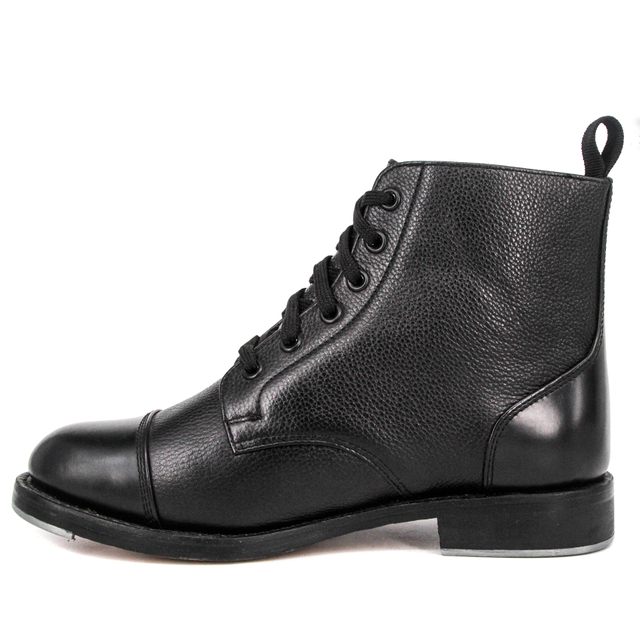
The plain toe oxford design serves as the foundational standard for military dress footwear. This specific style requires a closed lacing system, historically known as a Balmoral closure. The shoemaker sews the vamps under the quarters, creating a sleek and seamless profile that sits flush against the instep. Regulations strictly prohibit any broguing, decorative stitching, medallions, or toe caps. The shoe must present a smooth, uninterrupted surface from the bottom of the laces down to the toe edge. Open lacing systems, like the Blucher style, fail inspection because the quarters sit on top of the vamp, breaking the required uniform silhouette.
Color requirements remain absolute across the branches. Most service uniforms mandate black leather uniform shoes for standard daily wear and formal dress. However, specific brown leather allowances exist for certain uniforms. The Army Green Service Uniform (AGSU) requires brown leather oxfords in a very specific shade of walnut or heritage brown. Navy and Marine Corps aviators also retain authorization for brown footwear in specific working uniforms. The shade of brown must match exact military specifications, and personnel cannot substitute lighter tan or mahogany shades.
Official military purchase descriptions dictate the exact manufacturing specifications. Documents like GL-PD 19022 outline rigid constraints for upper materials. These documents specify the allowable use of corrected versus full-grain cattle hide. They also dictate the exact thread types, usually heavy-duty nylon or polyester, and the stitching density required for structural integrity. Heel height maximums are strictly enforced to maintain uniformity across formations. Sole thickness must align perfectly with standard military grooming and uniform guides, preventing personnel from wearing platform-style soles that alter their height in formation.
Branch-Specific Mandates and Ambiguities
Military regulations often specify the exact style and color required. However, they frequently leave the specific brand and internal construction to the wearer's discretion. This creates a gap between basic issue items and premium aftermarket options. Service members routinely seek clarification on authorized non-issued alternatives. Online military forums frequently host discussions regarding which aftermarket brands pass strict uniform inspections. You can wear aftermarket shoes if they strictly meet all visual standards. The exterior must mimic the issued footwear perfectly.
Female officer regulations introduce different structural allowances. The authorized female black oxford style remains the standard for most uniform combinations, featuring a slightly different last shape to accommodate female foot anatomy while maintaining the plain toe requirement. Optional dress pumps are also permitted for specific formal events. These pumps carry strict heel height constraints, usually limiting the heel to between one-half inch and three inches. Material constraints apply heavily for year-round duty wear, mandating smooth leather or authorized synthetic equivalents without suede or textured finishes.
Purchasing hybrid tactical dress shoes introduces severe compliance risks. Some manufacturers blend athletic shoe soles with dress leather uppers to increase comfort. These shoes often feature overly aggressive tread patterns visible from the side profile. Thick, athletic-style midsoles violate the traditional dress shoe profile and will fail a strict inspection. Non-standard eyelets, metal D-rings, or speed-lacing systems also pose immediate compliance risks. Stick to traditional leather or low-profile rubber soles that maintain a low, dress-appropriate silhouette.
Evaluating Leather Types and Finishes for Officer Shoes
Full-grain cattle hide represents the absolute premium choice for footwear longevity. This leather retains the outermost layer of the hide, including the natural epidermis. It features densely packed fibers that provide superior tensile strength and durability against abrasions. Full-grain leather offers excellent natural breathability, allowing foot moisture to escape through the microscopic pores of the hide. The material actively molds to the unique shape of the wearer's foot over time. This molding process creates a custom fit that significantly reduces friction and blistering during long marches or static standing events.
Corrected grain leather undergoes a much different manufacturing process. Tanneries sand down the outer surface to remove natural scars, tick bites, and imperfections from the hide. They then apply an artificial grain pattern using heavy heated presses and finish it with a thick synthetic coating. Standard issue footwear commonly utilizes corrected grain leather due to its lower initial manufacturing cost and uniform appearance. However, this material shows a much higher propensity for deep creasing. The synthetic coating often cracks at the flex points across the vamp after moderate use, exposing the fibrous split leather underneath.
Maintenance requirements differ drastically between these materials. Full-grain leather demands a significant time investment to achieve inspection standards. Spit-shining requires specialized waxes, cold water, and dedicated manual labor. Maintaining a mirror finish on traditional leather is a continuous process. Corrected grain takes a shine faster initially because the polish sits on top of the synthetic coating, but it degrades quicker under heavy use. You must weigh the daily time investment against the long-term durability of the footwear.
To properly maintain full-grain leather, follow these field-tested steps:
Strip the factory finish using a mild leather preparer or saddle soap to open the pores.
Apply a heavy base coat of black cream polish to nourish the leather and restore color depth.
Allow the cream to dry for twenty minutes, then brush vigorously with a horsehair brush.
Apply small, concentric circles of hard wax polish using a damp cotton chamois.
Alternate between tiny drops of cold water and wax until a mirror finish develops on the toe and heel counters.
High-Gloss / Patent Leather: Pros and Cons
High-gloss finishes rely on heavy synthetic coatings applied during the manufacturing process. Manufacturers apply thick layers of polyurethane or acrylic directly to the leather substrate. This creates highly reflective military officer dress shoes that mimic a perfect spit-shine without any manual labor. The underlying leather is often of lower quality, sometimes even split leather, because the opaque coating completely obscures the natural grain and any imperfections.
The primary advantage is the total elimination of daily polishing. You achieve an immediate, inspection-ready appearance straight out of the box. A simple wipe with a damp microfiber cloth removes dust and dirt instantly. The polyurethane surface is also highly water-resistant. This protects the underlying leather from rain, snow, and environmental moisture during outdoor ceremonies or inclement weather formations.
Disadvantages center heavily on comfort and long-term durability. The synthetic coating completely destroys the leather's natural breathability. This leads to severe heat retention and excessive foot sweating, especially in warm climates. The coating is highly susceptible to permanent scuffs and deep scratches. Unlike wax polish, you cannot buff out a scratch in polyurethane; once the coating is breached, the shoe is permanently damaged. Cracking frequently occurs at the vamp flex points where the foot bends, rendering the shoe unserviceable for strict inspections.
Decision Framework: Finish vs. Duty Frequency
Choosing between finishes depends entirely on your specific use case. Daily administrative wear demands different materials than occasional ceremonial use. Active duty requirements differ vastly from cadet programs. You must analyze your daily environment before purchasing.
Use Case | Recommended Finish | Primary Benefit | Primary Drawback |
Daily Office/Admin Duty | Full-Grain Polishable | Maximum breathability and custom molding | Requires regular polishing maintenance |
Static Color Guard/Ceremonies | High-Gloss Patent | Flawless mirror finish with zero prep time | Hot, traps moisture, cracks over time |
Drill and Marching Units | Corrected/Full-Grain Polishable | Scuffs can be repaired with wax polish | Requires heavy initial break-in period |
JROTC / ROTC Cadets | High-Gloss Patent | Ensures strict uniformity across the unit | Prone to permanent damage from drill rifles |
JROTC and ROTC unit procurement officers face specific challenges. Most cadet programs require standard military-style black dress shoes. High-gloss is often preferred for these units. It ensures strict visual uniformity across the entire formation, regardless of individual cadet effort. It also removes the burden of teaching complex polishing techniques to new cadets who need to focus on basic drill movements. However, procurement officers must account for higher replacement rates due to scuffing from drill rifles and general inexperience.
Construction, Fit, and Long-Term Comfort
Outsole and Midsole Technologies
Sole materials drastically impact daily comfort and skeletal health. Traditional leather soles present a classic, low-profile silhouette but are incredibly slick initially. They require a dedicated break-in period on rough surfaces like concrete to develop micro-abrasions for traction. Leather soles also transmit more shock directly to the heel, knees, and lower back. They are less ideal for personnel standing on concrete parade decks for extended periods, as they offer zero impact absorption.
Vibram and specialized rubber compounds offer distinct tactical advantages for garrison environments. They provide immediate, slip-resistant surfaces suitable for polished tile floors and wet tarmac. Rubber compounds feature inherent shock-absorbing properties. This reduces joint strain during prolonged static standing. The midsole should incorporate a layer of natural cork or dense EVA foam. Cork footbeds slowly compress and mold to the exact contours of your foot, creating a personalized orthotic effect over several months of wear.
A rigid shank is absolutely critical for structural integrity. The shank sits between the insole and outsole, running directly under the arch of the foot. Steel or fiberglass shanks provide necessary arch support. This support prevents the shoe from bending in the middle or collapsing under the wearer's weight. It distributes body weight evenly across the entire footbed. Without a rigid shank, the plantar fascia and calf muscles overcompensate to stabilize the foot, leading to severe arch fatigue and potential injury.
Interior Linings and Breathability
Moisture management prevents serious dermatological foot issues. Trapped sweat softens the epidermis, making it highly susceptible to friction and shear forces. This stops blisters from forming during long marches or extended drill sessions. It also mitigates the risk of fungal infections like athlete's foot, which thrive in dark, damp environments. Advanced lining materials improve overall foot health significantly compared to unlined or cheaply lined alternatives.
Cambrelle liners excel at interior moisture control. This synthetic, bi-component fiber material absorbs foot perspiration rapidly. It wicks sweat away from the foot and allows it to evaporate through the leather upper. Cambrelle keeps feet cool under high-stress conditions and retains its structural integrity even when wet. High-temperature environments demand breathable interiors. Avoid shoes with cheap, non-porous synthetic vinyl linings that trap heat and moisture against the skin, accelerating fatigue and discomfort.
Sizing Realities for Officer Shoes for Men
Proper sizing requires professional measurement techniques. Always use a metal Brannock device to determine your true size. Measure both the heel-to-toe length and the heel-to-ball length. The heel-to-ball measurement ensures the shoe flexes at the exact same point your foot flexes. If the shoe flexes before or after your natural joint, it will cause severe vamp biting and heel slip. Measure your feet late in the afternoon when they are naturally swollen from daily activity.
You must measure while wearing standard-issue dress socks. Sock thickness alters the required internal shoe volume. Volume and width considerations are paramount for long-term comfort. Standard issue footwear often runs notoriously narrow across the toe box. This prompts many personnel to seek aftermarket options that accommodate wider foot shapes.
Finding proper officer shoes for men often means looking for wider sizes. E, EE, and EEE widths accommodate natural foot swelling. Feet expand significantly during long-duration static standing as blood pools in the lower extremities. A shoe that feels snug at 0700 will cause severe pain by 1500 if it lacks adequate width. Prioritize width over length if you experience pinching at the widest part of your foot, specifically across the metatarsal heads.
Upgrading from Basic Issue: Cost vs. Value Analysis
Historical data reveals stark contrasts in footwear longevity. Basic Military Training (BMT) issued shoes degrade relatively quickly under the stress of daily use. They often lose structural integrity within one to three years. Moderate daily use accelerates this degradation. The synthetic coatings crack at the flex points, and the cemented soles begin to peel away from the upper at the toe and heel.
Premium aftermarket footwear requires a higher upfront investment. However, the replacement frequency drops significantly. Cheaper alternatives fail faster, forcing you to purchase multiple pairs over a single enlistment or commission. Quality construction ensures a longer functional lifespan. Premium full-grain leather uppers can last over a decade if properly conditioned and stored with cedar shoe trees. The leather develops a rich patina and conforms perfectly to the foot, becoming more comfortable with each passing year.
Resoling and Goodyear Welt Construction
Construction methods dictate the repairability of the footwear. Goodyear welt construction remains the gold standard for military dress shoes. A strip of leather, called the welt, connects the upper to the sole. The shoemaker stitches the upper to the welt, and then stitches the welt to the outsole. This indirect attachment allows for multiple resoling procedures without damaging the delicate leather of the upper.
Blake stitch construction sews the upper directly to the sole from the inside. It creates a sleeker, closer-cut profile but is less water-resistant than a Goodyear welt because moisture can travel up the threads into the footbed. Resoling a Blake stitched shoe requires specialized machinery that not all local cobblers possess. Cemented soles are simply glued together using industrial adhesives. Once a cemented sole wears down or detaches, you must discard the entire shoe, creating a cycle of continuous replacement.
Welted shoes offer an excellent return on investment. A skilled cobbler can replace the sole indefinitely as long as the upper remains intact. You can swap a worn leather sole for a rubber Vibram sole later in your career if your duty environment changes. This modularity makes Goodyear welted shoes the most practical choice for career service members.
The Break-In Period
Wearing brand-new leather oxfords to a major event carries severe physical risks. Long inspections demand fully broken-in footwear. Parades can result in severe blistering if the leather remains stiff and unyielding. Degraded performance inevitably follows acute foot pain. You cannot maintain proper military bearing while experiencing sharp heel friction or toe box pinching.
Structured break-in protocols are essential for full-grain leather. You must implement gradual wear cycles to safely soften the materials.
Day 1-3: Wear the shoes indoors on carpeted surfaces for one hour a day with thick socks.
Day 4-7: Increase wear time to three hours, walking on hard indoor surfaces to begin flexing the sole.
Day 8-10: Wear them for a half-day of light administrative duty, bringing a backup pair just in case.
Day 11-14: Transition to full-day wear, utilizing quality leather conditioners on the vamp flex points to prevent micro-tearing.
Procurement Risks for Units
Ordering footwear for an entire unit requires strategic foresight. High-gloss shoes present specific logistical risks. They suffer a high rate of scuffing in active drill environments. Rifle manual of arms often damages the toe box permanently. A dropped drill rifle or a misjudged marching step will shatter the polyurethane coating on a patent leather shoe, rendering it useless for future inspections.
Standardizing polishable leather mitigates this operational risk. Polishable leather suits drill and marching units perfectly. Cadets and service members can repair deep scuffs using heat, wax polish, and friction. Reserve high-gloss options strictly for static color guards or band members who do not execute complex rifle manuals. Quality officer shoes must match the specific operational environment of the unit to prevent rapid inventory depletion.
Conclusion
Verify your specific branch's current uniform regulation manual (e.g., AR 670-1 or NAVPERS) before purchasing any aftermarket footwear.
Get professionally measured on a Brannock device late in the day while wearing standard-issue uniform socks to ensure proper width and volume.
Invest in high-quality cedar shoe trees to absorb internal moisture and maintain the leather's shape between wearings.
Establish a strict 14-day break-in schedule for new full-grain leather shoes before wearing them to a prolonged standing event.
FAQ
A: Authorization depends strictly on branch regulations. The Army generally restricts high-gloss patent leather to formal dress uniforms and specific ceremonial duties. The Navy and Marine Corps often allow patent leather for daily service uniforms, but local command policies may dictate polishable leather for specific working environments. Always check your specific branch manual before wearing high-gloss shoes to daily formations.
Q: What is the difference between standard issue and premium military officer dress shoes?
A: Standard issue shoes typically use corrected grain leather with synthetic coatings and cemented soles. Premium aftermarket shoes utilize full-grain cattle hide for better breathability and employ Goodyear welt construction. This welted construction allows a cobbler to resole the shoe multiple times, extending its lifespan significantly while providing superior long-term foot support.
A: No. While specific brands are rarely mandated, the shoe must strictly adhere to military design constraints. It must feature a plain toe, a closed lacing system, and specific heel and sole dimensions. Shoes with broguing, decorative stitching, thick athletic midsoles, or aggressive tread patterns violate uniform regulations and will fail inspection.
Q: What are the regulations for female military officer dress shoes?
A: Female officers are authorized to wear the standard black oxford style for year-round duty. Optional dress pumps are permitted for formal occasions. These pumps must meet strict heel height minimums and maximums, usually between one-half inch and three inches. The pumps must feature a closed toe and heel, with no decorative elements.
A: Prevent cracking by using cedar shoe trees immediately after taking them off to maintain the vamp's shape. Avoid exposing the shoes to extreme temperature fluctuations, which make the synthetic coating brittle. Clean them only with a damp cloth or specific patent leather cleaners, avoiding harsh chemical solvents that degrade the polyurethane finish.
Q: What are the best officer shoes for men with wide feet?
A: Standard issue footwear often runs narrow. Personnel with wide feet should look for premium aftermarket brands that offer E, EE, or EEE widths. Proper width prevents the foot from spilling over the welt and reduces side friction. Always measure your foot on a Brannock device to determine your true width before purchasing.
Q: How long should a pair of military dress shoes last?
A: Cemented standard-issue shoes typically last one to three years under moderate use before the soles detach or the synthetic leather cracks. Premium, full-grain leather shoes with Goodyear welt construction can last over a decade. You simply pay a cobbler to replace the outsole every few years as the rubber or leather wears down.