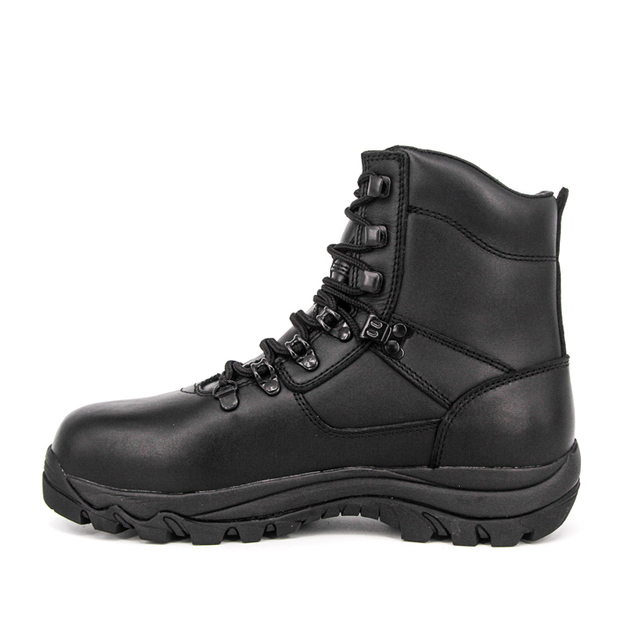
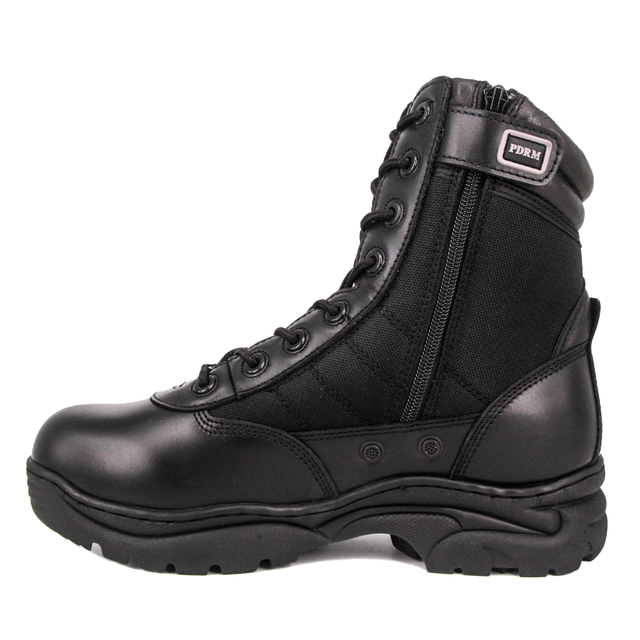
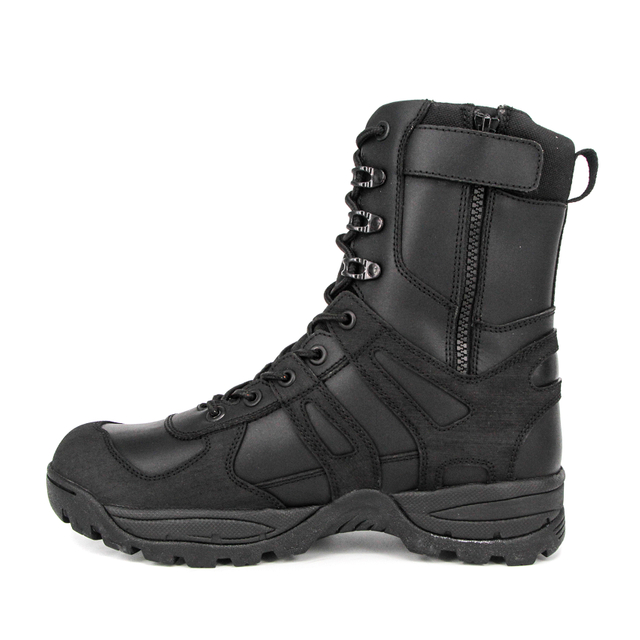
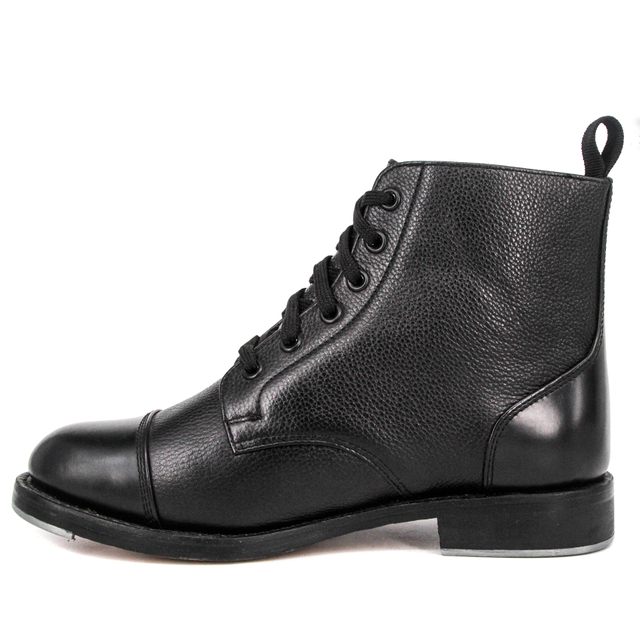
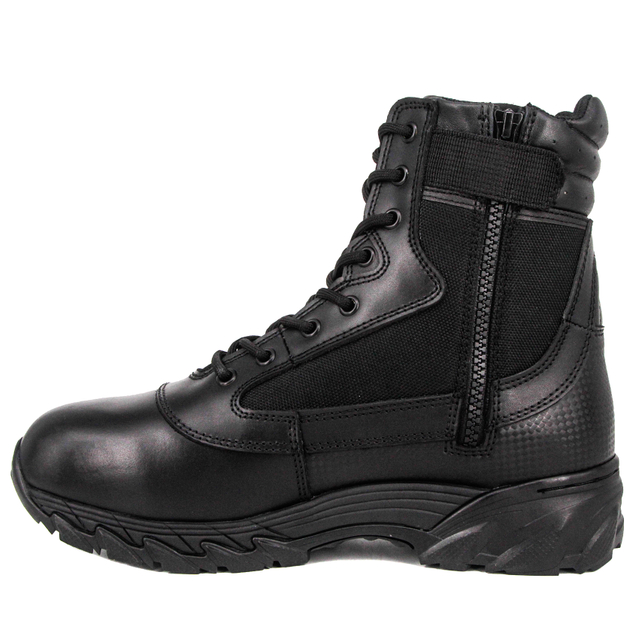
Law enforcement and first responder footwear has shifted heavily toward rapid-deployment designs over the last decade. Patrol officers, paramedics, and security personnel increasingly rely on side-zip models to meet demanding shift requirements. You must balance the convenience of rapid donning, doffing, and lightweight agility against the need for structural integrity, ankle support, and uniform compliance. Hardware failure remains a persistent risk if you choose the wrong specifications or ignore maintenance protocols. This guide provides a definitive evaluation framework for individual officers and department procurement teams. We will help you assess whether a police boots with zipper configuration meets your specific operational, environmental, and regulatory requirements. You will learn how to evaluate hardware, mitigate implementation risks, and navigate uniform compliance effectively without compromising field performance.
Rapid Deployment vs. Structural Integrity: Side zippers drastically reduce donning time and maintain consistent lace tension, but introduce a mechanical failure point not present in traditional boots.
Agility and All-Day Comfort: Modern zipper boots often utilize lightweight, athletic-inspired designs that reduce fatigue over 12+ hour shifts, balancing versatility with essential foot protection.
Hardware Specifications Matter: Not all zippers are equal; procurement should mandate heavy-duty, self-locking hardware (e.g., YKK Vislon) and full interior gusseting to maintain environmental protections.
Compliance and Materials: Departments must balance modern synthetic tactical designs with traditional uniform regulations, often necessitating hybrid designs like polishable police leather boots with discreet side zippers.
Lifecycle Management: Zipper failures can prematurely end a boot's lifecycle. Evaluating warranty terms and historical failure rates is critical for fleet-wide procurement.
The Operational Case for Police Boots with Zippers
A successful tactical boot deployment hinges on specific performance metrics. You need speed, consistent fit, agility, and fatigue reduction. Traditional lace-up boots offer excellent support but fail to deliver rapid response capabilities when seconds matter. Modern side-zip designs address these operational gaps directly. They transform how officers and first responders manage their footwear during high-stress shifts, offering a distinct tactical advantage in dynamic environments.
Rapid Deployment and On-Off Efficiency
Time is a critical metric for officers reacting to emergency call-outs. SWAT teams, K9 units, and EMS personnel often deploy from a resting or administrative state. When the tones drop at 0300 in a residential barracks, lacing up traditional eight-inch boots wastes valuable seconds. Side zippers eliminate this delay entirely. You can step into the boot, pull the zipper, and deploy immediately. This rapid donning capability ensures that personnel hit the apparatus floor fully equipped without fumbling with speed hooks in the dark.
The efficiency extends to the end of a shift. Removing boots after a grueling twelve-hour patrol should not require strenuous effort. Unlacing tight, mud-caked boots when your hands are cold or fatigued can be frustrating and physically taxing. A side zipper allows you to remove the footwear in seconds. This ergonomic benefit significantly improves daily comfort for patrol officers. It reduces the physical friction associated with gear management and allows for faster decontamination if the boots are exposed to hazardous materials.
Consistent Fit and Lacing Retention
Achieving the perfect lace tension takes time. You must balance a secure heel lock with adequate circulation for your toes. Traditional boots require you to recreate this tension every single time you put them on. Side-zip models solve this problem through a set-and-forget methodology. You lace the boot perfectly once, utilizing specific techniques like a surgeon's knot to lock the heel in place. From that point forward, you use the zipper for entry and exit, preserving that exact tension.
This consistent fit provides distinct physiological benefits. It ensures optimal blood flow throughout long shifts, accommodating the natural swelling (edema) that occurs in the feet after hours of standing. You avoid the pressure points caused by hastily tied laces during a rushed deployment. Consistent tension also prevents heel slip, which is the primary cause of blisters during extended foot patrols. Your boots perform exactly the same way at minute one and minute seven hundred of your shift.
Fatigue Management and Lightweight Design
Heavy footwear accelerates lower-body fatigue. Every ounce on your foot requires exponential energy to move over a twelve-hour shift. If you walk five miles a day on patrol, heavy steel-shank boots will drain your energy reserves quickly. Modern side-zip boots actively combat this issue. They integrate athletic shoe technology into rugged tactical profiles. Manufacturers utilize advanced synthetic materials, composite shanks, and cored-out outsoles to reduce overall boot weight significantly.
This weight reduction directly correlates to improved endurance. You experience less lower-back strain and reduced leg fatigue. The athletic design promotes a natural walking gait, allowing for explosive sprints during foot pursuits without feeling weighed down. You gain the agility of a running shoe while maintaining the protective silhouette of a duty boot. This hybrid approach keeps officers light on their feet, improving reaction times and overall physical readiness.
Structural Limitations and Implementation Risks
You must evaluate side-zip boots objectively. The convenience they offer comes with inherent conceptual trade-offs. You are introducing a mechanical closure system into a high-stress, abrasive environment. Understanding these structural limitations is vital for making informed procurement decisions. You must weigh rapid deployment against ruggedness and longevity, acknowledging that zippers require specific maintenance to survive patrol work.
Zipper Failure Points and Durability Concerns
Zippers introduce mechanical realities that standard eyelets avoid. They face intense lateral stress during dynamic movements. When an officer drops into a kneeling position to render medical aid or take cover, the foot flexes at the metatarsals. This action forces the ankle outward, placing immense lateral strain directly on the zipper teeth. Over time, this stress can cause blowouts, where the teeth separate under load. Slider derailment is another common failure point in poorly constructed models.
Environmental factors accelerate zipper degradation. Dirt, mud, dried blood, and fine highway grit act as a grinding paste against the zipper hardware. Standard laces easily shed dried mud and can be replaced in two minutes if they snap. Zippers trap abrasive particles between their teeth. This debris causes the slider to jam or strips the teeth entirely. A blown zipper deadlines the entire boot. You must maintain the hardware meticulously to prevent premature failure.
Waterproofing and Pathogen Resistance Challenges
A zipper track creates a vulnerability in the boot's exterior shield. It provides a direct ingress point for water, mud, and hazardous fluids. Standard zippers are not watertight. If you step in a deep puddle or navigate a flooded intersection, water will breach the closure immediately. This compromises the internal climate of the boot, leading to wet socks, maceration, and severe discomfort.
Manufacturers mitigate this risk using waterproof gussets. A gusset is a folded piece of waterproof membrane sewn behind the zipper track. It creates a continuous fluid barrier even if water penetrates the teeth. However, these gussets impact breathability. They add a layer of dense material that traps heat against the side of the foot. You must balance the need for bloodborne pathogen resistance against thermal regulation in hot environments.
Ankle Support vs. Flexibility
Critics often argue that side zippers compromise torsional rigidity. Traditional laces allow you to tighten the boot uniformly around the ankle, creating a custom-molded cast of support. A zipper creates a rigid vertical line that does not conform perfectly to the leg's anatomy. This can result in slightly less lateral ankle support compared to a fully laced combat boot, especially if the upper material stretches over time.
You must evaluate this trade-off based on your operational environment. Urban patrol requires athletic agility for foot pursuits, stair climbing, and navigating tight spaces. Side-zip boots excel here. However, uneven terrain navigation demands maximum lateral support to prevent ankle rolls. If your operations involve rural tracking, woodland searches, or heavy tactical loadouts, the flexibility of a zipper boot may become a liability.
Key Evaluation Criteria for Police Tactical Boots with Side Zipper
Selecting the right footwear requires a structured approach. You cannot rely on aesthetics or brand recognition alone. You must analyze specific hardware components, material blends, and safety certifications. This feature-to-outcome matrix will help you assess specific boot models effectively. We will break down the critical evaluation dimensions you must consider before issuing gear to the field.
Boot Feature | Technical Specification | Operational Outcome |
Zipper Hardware | YKK Vislon (Molded Plastic) | Resists rust, sheds debris, prevents lateral blowouts under heavy load. |
Interior Gusset | Full-length PTFE waterproof membrane | Blocks water and bloodborne pathogen ingress through the zipper track. |
Upper Material | Full-Grain Leather & 1000D Nylon | Balances polishable uniform compliance with lightweight breathability. |
Midsole Cushioning | Injected EVA Foam | Provides athletic shock absorption and reduces joint fatigue on concrete. |
Outsole Tread | ASTM-rated slip and oil resistance | Ensures traction on slick urban surfaces, wet tile, and industrial floors. |
Shank Material | Composite or Fiberglass | Provides arch support without triggering metal detectors or conducting cold. |
Zipper Hardware Specifications
The quality of the zipper dictates the lifespan of the boot. You must understand the difference between coil zippers and molded plastic zippers. Coil zippers use a continuous nylon coil stitched to the tape. They are flexible but highly prone to jamming when exposed to dirt. They also separate easily under lateral load. Molded plastic zippers, like the YKK Vislon series, inject individual plastic teeth directly onto the tape. They are vastly superior for tactical environments. They shed debris easily, resist lateral blowouts, and operate smoothly even when coated in dust.
Hardware retention is equally critical. You need a self-locking slider. This mechanism prevents the zipper from creeping downward during a sprint or a prolonged foot pursuit. Additionally, look for Velcro retention tabs at the collar. These tabs secure the zipper pull in place at the top of the boot. They prevent the hardware from snagging on underbrush, wire fences, or unzipping during dynamic movement.
Upper Materials: Police Leather Boots vs. Synthetic Blends
Material selection dictates durability, weight, and compliance. Traditional police leather boots utilize full-grain leather throughout the entire upper. This material offers exceptional durability, natural water resistance, and high abrasion resistance. It takes a high shine, meeting strict Class A uniform standards. However, full leather is heavy, requires extensive break-in time, and traps heat during summer shifts.
Nylon and synthetic meshes offer incredible weight reduction. They breathe well, dry quickly, and require zero break-in time. Yet, they lack the abrasion resistance of leather and cannot be polished. The optimal solution for patrol is a hybrid construction. These boots feature a polishable full-grain leather toe and heel counter. The side panels utilize heavy-duty 1000D Cordura nylon. This hybrid approach delivers the perfect middle ground for modern law enforcement, offering durability where it counts and breathability everywhere else.
Safety and Protective Enhancements
Many officers operate in hazardous environments. Industrial sites, traffic accidents, and riot control scenarios present severe crush hazards. You must evaluate the integration of safety features in side-zip models. Standard soft-toe boots offer minimal protection against falling debris, heavy equipment, or combative subjects stepping on your feet.
Look for models featuring composite safety toes. Composite materials meet ASTM F2413-18 impact standards without the weight or thermal conductivity of steel. They will not freeze your toes in winter, bake them in summer, or trigger metal detectors at courthouse entrances. Additionally, consider puncture-resistant midsoles. These flexible internal plates, often made of Kevlar, protect your feet from nails, glass, and discarded needles during urban searches and alleyway pursuits.
Outsole Traction and Midsole Cushioning
Your connection to the ground determines your stability. You must demand ASTM-rated slip and oil resistance from your outsoles. The tread pattern should feature wide, self-cleaning lugs that expel mud and water automatically as the boot flexes. Siping, which consists of small slits cut into the rubber lugs, significantly improves traction on wet tile, smooth concrete, and oily highway asphalt.
Midsole cushioning dictates your comfort level over a twelve-hour shift. You will encounter two primary materials: EVA and Polyurethane (PU). EVA foam is incredibly lightweight and provides athletic-shoe-like shock absorption. It is perfect for fast-paced urban patrol but compresses over time. PU is denser and heavier, but it lasts much longer without losing its rebound properties. Choose EVA for agility and PU for heavy-duty longevity. When evaluating a police tactical boots with side zipper, ensure the midsole aligns with your daily operational terrain and body weight.
Departmental Compliance and Procurement Considerations
Procurement officers face unique challenges when outfitting an entire department. You must scale purchasing decisions while ensuring strict compliance with agency standards. Fleet-level acquisitions require a strategic approach. You cannot simply buy the most popular retail boot. You must align the footwear with uniform policies, lifecycle expectations, and complex sizing logistics.
Departmental standard operating procedures dictate footwear regulations strictly. You must navigate these rules carefully before authorizing a fleet purchase. Common mandates include minimum height requirements, usually set at six or eight inches to ensure adequate ankle coverage. Many agencies strictly prohibit visible branding, contrasting logos, or reflective materials on duty gear. The boot must present a clean, professional, and subdued profile.
Polishable toes are the most common compliance hurdle. Class A uniforms require a high-gloss finish. Class B uniforms allow for more tactical, matte finishes. You must verify that your chosen boots meet these specific dress codes. A discreet zipper profile is essential. Bulky, highly visible zippers or contrasting zipper tape often violate traditional uniform standards. Ensure the hardware blends seamlessly into the boot's silhouette and remains hidden beneath the trouser hem.
Lifecycle and Replacement Cycles
Evaluating the durability of zipper boots is critical for fleet management. Zippers introduce a mechanical failure point that can prematurely end a boot's lifecycle, even if the outsole and leather upper remain in excellent condition. You must analyze historical failure rates and manufacturer warranty terms specifically covering hardware defects and zipper blowouts.
Establish clear replacement cycles based on operational tempo. A patrol officer working urban environments may require new boots every twelve to eighteen months. Ensure the procurement contract includes provisions for rapid replacement of defective zippers. Educate your personnel on proper maintenance, as neglecting to clean the zipper track will void most warranties and artificially inflate your replacement frequency.
Sizing Standardization for Fleet Purchases
Bulk ordering introduces significant sizing challenges. Human anatomy varies wildly across a large department. Zipper closures offer slightly less volume adjustability than fully laced boots. Officers with exceptionally high insteps, flat feet, or wide calves may struggle to zip the boot fully, even if the footbed length fits perfectly.
You must account for this during fleet purchases. Order a wider range of widths, including wide and extra-wide options, based on Brannock device measurements. Encourage officers to test the boots with their standard issue duty socks and any aftermarket orthotics they use. A police zipper boots configuration requires precise sizing to prevent zipper strain. If the boot is too tight around the calf or instep, the lateral pressure will inevitably cause hardware failure.
Conclusion
A side-zip configuration is highly effective for rapid deployment, agility, and daily convenience. These boots excel in urban environments where speed and fatigue reduction are paramount. However, their success depends entirely on hardware quality, proper sizing, and construction standards. You must prioritize heavy-duty molded zippers, waterproof gussets, and hybrid material designs to ensure operational readiness.
Take the following actionable steps to optimize your footwear selection:
Review your department's uniform policy to confirm polishable toe, height requirements, and branding restrictions before selection.
Inspect the zipper hardware on prospective boots, ensuring they utilize molded plastic teeth and self-locking sliders rather than nylon coils.
Verify the presence of a full interior waterproof gusset if your operational environment involves standing water or hazardous fluids.
Request wear-test samples for your procurement team to evaluate sizing consistency across different foot shapes and calf widths.
Establish a weekly maintenance protocol for your personnel to clean zipper tracks with compressed air and silicone lubricant.
FAQ
A: Yes, most modern departments allow them, provided they meet specific criteria. The boots typically must feature a polishable leather toe and meet minimum height requirements, usually six to eight inches. The zipper profile must remain discreet, color-matched to the upper, and hidden beneath the trouser hem to maintain a professional appearance.
Q: How do you maintain the zipper on tactical boots?
A: Keep the track clear of dirt and debris. Use compressed air or a stiff nylon brush to clean the teeth weekly. Wash the zipper with mild soap and water if exposed to heavy mud. Apply a non-greasy silicone lubricant sparingly to keep the slider moving smoothly without attracting dust. Avoid wax-based boot polish near the zipper tape.
Q: Do side zippers compromise the waterproofing of police boots?
A: They can, unless properly designed. High-quality waterproof boots feature an interior gusset. This is a continuous waterproof membrane sewn behind the zipper track. This gusset blocks water and hazardous fluids from entering the boot, maintaining a strict fluid barrier even if the zipper teeth get completely submerged.
Q: Can police tactical boots with side zipper be resoled?
A: It depends entirely on the construction method. Most lightweight tactical boots use cement construction, attaching the outsole directly to the upper with adhesive. These generally cannot be resoled. Boots built with a Goodyear welt or specific stitch-down constructions can be resoled by a cobbler, though they are heavier.
Q: What is the difference between a side zip and a front zip police boot?
A: Side zips are placed laterally, allowing you to retain your custom lace tension across the front of the foot. Front zip boots replace the lacing system entirely with a central zipper. Front zips are highly specialized, often used by rescue teams, but offer significantly less fit adjustability than side zips.
Q: Do side-zip tactical boots come with safety toes?
A: Yes. Many manufacturers offer side-zip models with ASTM-certified safety toes. You can choose between traditional steel toes or modern composite toes. Composite options provide excellent crush protection without the added weight, thermal conductivity, or metal detector interference of steel, making them ideal for patrol.
Q: How long should the zipper on a patrol boot last?
A: A high-quality molded plastic zipper should last the entire lifespan of the boot's outsole, typically twelve to eighteen months of daily patrol use. However, frequent exposure to abrasive mud, lack of cleaning, or forcing the slider over a tight calf will significantly reduce this lifespan and cause premature blowouts.