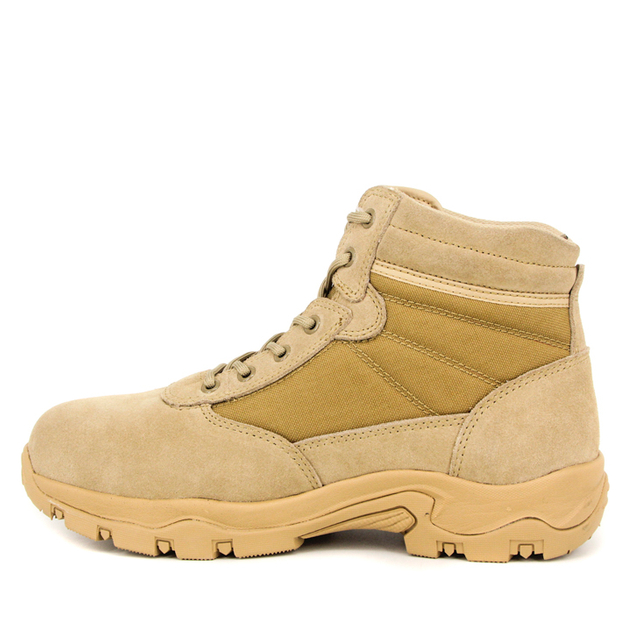
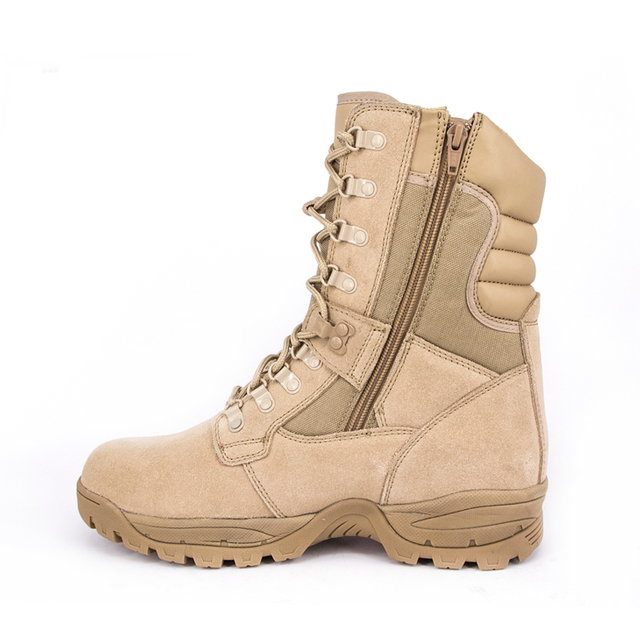
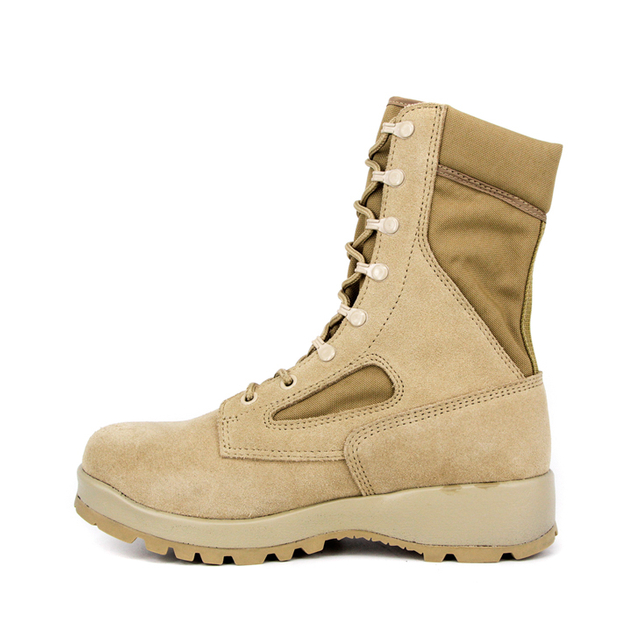
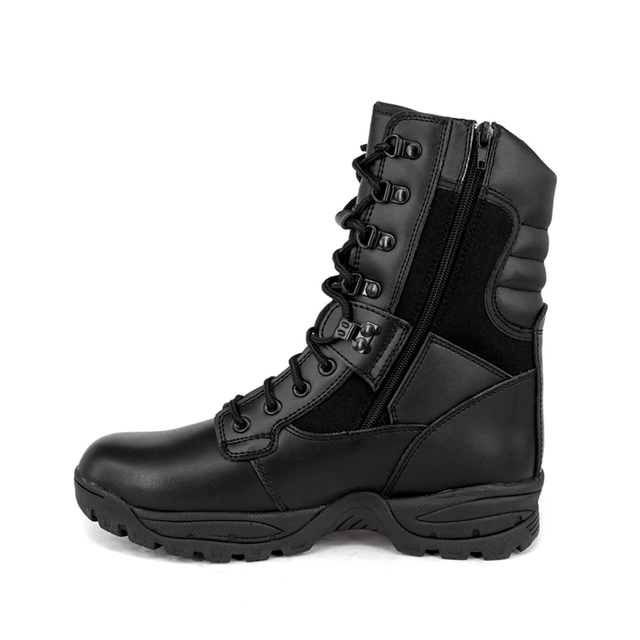
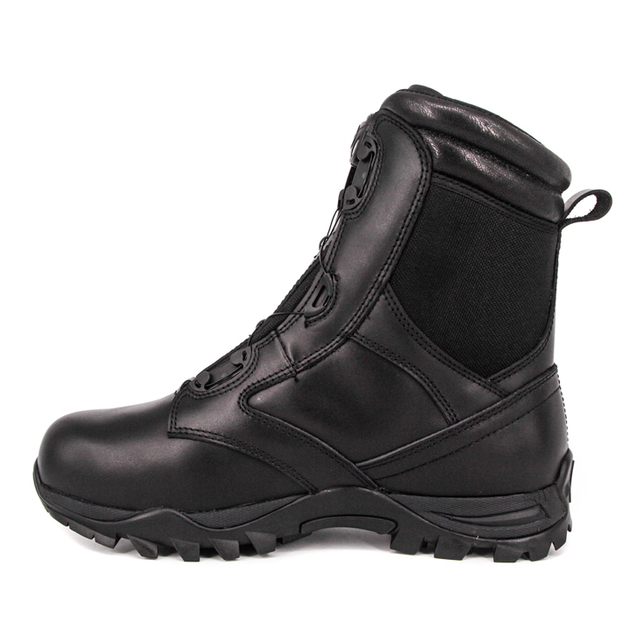
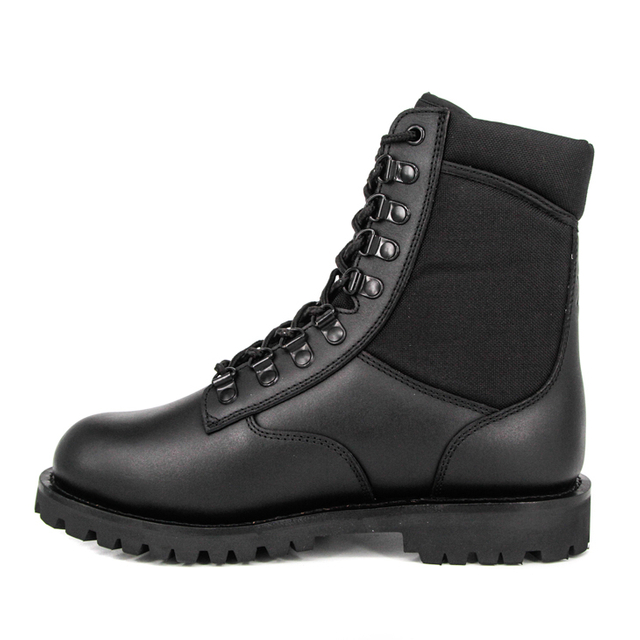
Upper material selection is one of the most influential decisions in military footwear procurement. It affects durability, weight, breathability, support, maintenance expectations, appearance, and overall application fit. In many projects, the discussion quickly turns into a simple comparison between leather and nylon, but in practice the decision is rarely that simple.
Different procurement programs evaluate upper materials in different ways. A field deployment project may place more weight on structure, abrasion resistance, and long-term durability. A patrol-oriented program may prefer reduced weight and better mobility. A hot-weather project may prioritize airflow and faster drying, while a uniform-based government program may focus more on consistency, support, and formal appearance. Because of this, material selection should not be treated as a general preference. It should be treated as a project decision tied to operational use.
That is why buyers should avoid asking which material is universally better. The more useful question is which upper construction fits the intended mission profile, user expectations, and procurement priorities. In many cases, the answer may not be pure leather or pure nylon at all, but a combination that balances structure and mobility.
Before narrowing the material decision, many teams first compare the broader military boot product categories to clarify whether the project is deployment-focused, patrol-oriented, hot-weather specific, or part of a mixed-use footwear program.
Key Takeaway
Leather and nylon uppers serve different purposes in military footwear procurement. Leather is often selected for structure, abrasion resistance, and a more robust appearance, while nylon is often chosen for lighter weight, improved breathability, and mobility. The right decision depends on the environment, duty pattern, support requirements, maintenance expectations, and overall project goals.
In many procurement projects, buyers should compare:
operating environment
expected wear duration
support and structure requirements
weight and mobility priorities
abrasion exposure
maintenance expectations
uniform or appearance requirements
overall product positioning
Many projects reach the best outcome through a balanced upper configuration rather than an all-or-nothing material decision. This is especially true in custom military footwear projects where the upper must support both functional and procurement objectives.
Why Upper Material Choice Matters So Much
Upper materials do more than shape the visual identity of a boot. They affect how the footwear performs over time, how it feels during long wear, how much support it offers, and how well it fits a specific use environment.
From a procurement perspective, upper material choice influences at least five major areas:
structural stability
comfort in different climates
resistance to wear and abrasion
maintenance demands during use
suitability for the intended operational role
Because upper materials influence so many performance outcomes at once, they should be discussed early rather than treated as a minor detail later in the project. A buyer may initially focus on one requirement, such as breathability, and later find that support, abrasion resistance, or appearance has become equally important. When the upper decision is not aligned early, the project may go through unnecessary sample revisions.
What Leather Uppers Usually Offer
Leather has long been used in military and duty footwear because of its ability to provide structure, durability, and a strong external surface. In procurement terms, leather is often associated with a more stable and substantial boot profile.
Typical strengths of leather uppers
better structure and shape retention
stronger surface resistance in many wear conditions
more substantial appearance for duty or formal use
higher perceived ruggedness
suitability for applications requiring more support
Leather may be especially relevant in projects where the boot is expected to maintain form during prolonged use, carry a more formal visual standard, or support a more robust construction profile.
Where leather can be a strong fit
Leather-based upper configurations are often evaluated for:
field deployment footwear
duty and uniform programs
more structured patrol or operational footwear
programs where abrasion exposure is significant
projects requiring a stronger external finish
In some product directions, leather military boots are chosen not because leather is automatically superior, but because the project values support, structured feel, and durability over maximum airflow and the lowest possible weight.
What Nylon Uppers Usually Offer
Nylon is commonly used where weight reduction, ventilation, and movement efficiency are more important. In upper construction, nylon is often introduced as a way to improve mobility and reduce bulk, especially when paired with leather reinforcement in key areas.
Typical strengths of nylon uppers
lighter overall construction
improved airflow potential
quicker drying in many applications
greater flexibility in movement-focused designs
lower bulk compared with more heavily structured uppers
For projects operating in hot weather or involving active movement, nylon can help create a lighter upper profile that supports wear comfort during long hours.
Where nylon can be a strong fit
Nylon-based or nylon-combination uppers are often considered for:
hot-weather operational footwear
patrol-oriented categories
mobility-focused tactical footwear
applications where reduced weight matters
projects requiring quicker drying characteristics
Many nylon military boots are not fully nylon. Instead, they combine nylon with leather panels or reinforcement zones so the boot can balance flexibility with support.
Leather and Nylon Are Often Compared Too Simplistically
A common procurement mistake is treating leather and nylon as if they represent a clear binary decision: one is durable and the other is light. In reality, the comparison is more layered.
A more useful comparison should ask:
What type of environment will the boots face?
How long will they be worn continuously?
Is user mobility a top priority?
How much support is needed?
What type of surface wear is expected?
Is visual consistency important?
How much maintenance can the end users realistically manage?
In many cases, the right answer is not pure leather or pure nylon, but a hybrid upper construction designed to combine the advantages of both.
Comparing Leather and Nylon by Procurement Priority
1. Durability and Surface Resistance
Leather is often favored when buyers expect the boot upper to handle harder wear and maintain a more substantial feel over time. It may perform well where the upper is exposed to repeated abrasion or where the project requires a more rugged visual and structural profile.
Nylon can still perform effectively, especially when combined with reinforcement zones, but buyers should assess whether the application demands a more protective and structured upper surface.
2. Breathability and Heat Management
Nylon is often preferred where ventilation and lighter wear feel are important. This makes it relevant in hot-weather and movement-heavy use cases.
Leather can still work in warm environments depending on construction design, but nylon-based or mixed uppers are more commonly associated with improved airflow and reduced heat buildup.
Projects involving hot and dry conditions often begin by reviewing desert boots with upper constructions that balance support and ventilation more carefully.
3. Weight and Mobility
When buyers want lower weight and easier movement, nylon usually has an advantage. It helps reduce the overall burden of the upper and can improve comfort during extended wear.
Leather may still be suitable where structure is more important than lightness, but if fast movement, reduced fatigue, and patrol comfort are major priorities, nylon or mixed-material uppers may provide a better fit.
4. Support and Structure
Leather often supports a more structured build and may contribute to a firmer upper profile. That can be useful where the project values boot stability and a stronger feeling of support.
Nylon-heavy designs tend to be associated with greater flexibility. In some roles this is beneficial, but in others buyers may need more reinforcement to maintain structure during demanding operational use.
5. Appearance and Uniform Fit
Some procurement programs value the way leather contributes to a more formal or substantial appearance. This can matter in duty, officer, or uniform-focused categories where visual consistency is part of the project requirement.
Nylon may still be acceptable or preferred in operational categories, but buyers should evaluate whether the project expects a more formal appearance standard.
6. Maintenance Expectations
Maintenance should not be overlooked. Material choice affects not only how the footwear performs, but also how it is handled during regular use.
Buyers should consider:
how often the footwear will be cleaned
whether the users are likely to maintain it carefully
whether faster drying is needed
whether a more polished appearance must be preserved
The more demanding the maintenance expectation, the more important it becomes to align upper material with realistic field conditions.
A Practical Comparison Table
| Comparison Factor | Leather Upper | Nylon Upper | Procurement Consideration |
| Structure | More structured feel | More flexible feel | Depends on support priority |
| Weight | Usually heavier | Usually lighter | Important for mobility-heavy use |
| Breathability | More limited in many builds | Often better airflow potential | Relevant for hot-weather and long wear |
| Abrasion resistance | Often stronger external surface | Depends on reinforcement design | Assess terrain and wear pattern |
| Appearance | More substantial and formal-looking | More operational and lightweight-looking | Important in uniform-based programs |
| Drying behavior | Typically slower | Often quicker | Useful in certain environments |
| Maintenance profile | May require more appearance care | Often lower appearance upkeep | Depends on use and expectations |
| Best fit | Duty, structured field use, formal-looking applications | Patrol, hot-weather, movement-oriented use | Must match mission profile |
How Buyers Should Compare Materials by Application
Material selection becomes clearer when it is tied to use categories rather than abstract preference.
Desert Deployment
In hot and dry environments, reduced weight and better ventilation may become more important. That can make nylon-combination uppers highly attractive. At the same time, buyers should not ignore abrasion exposure and support needs, especially in rough terrain.
Patrol and Tactical Use
Mobility often matters greatly in patrol-oriented programs. Buyers comparing tactical boots may prefer upper configurations that reduce weight while still keeping enough reinforcement in high-stress areas.
Government Uniform and Duty Programs
Where visual consistency, structure, and a more substantial appearance are valued, leather may remain highly relevant. Buyers should compare whether the program is operational, formal, or mixed in character.
Long-Wear Field Use
For prolonged wear in demanding use conditions, the decision should focus on balance. Excessive weight can increase fatigue, but insufficient structure can reduce confidence and support. Mixed-material upper designs may perform well in this type of project.
Questions Buyers Should Ask Before Confirming the Upper Material
Before making a material decision, procurement teams should ask the following:
What environment will the footwear be used in most often?
Is heat management a major concern?
How important is lighter weight compared with stronger structure?
Will the users need higher flexibility or firmer upper support?
Is abrasion exposure likely to be significant?
Does the project require a more formal visual appearance?
What maintenance behavior is realistic for the end users?
Is a mixed-material construction more suitable than a single-material direction?
These questions often help buyers avoid overly narrow material assumptions and move toward a more practical specification.
Why Mixed-Material Uppers Often Make More Sense
In many modern military footwear programs, the real comparison is not leather versus nylon in a pure form. It is how much of each material should be used, and where.
A mixed-material upper can help achieve several goals at once:
structure in higher-stress zones
lower overall weight
improved movement comfort
better heat handling
more application-specific design flexibility
This is one reason so many custom military footwear projects evaluate upper construction as a combination of material zones rather than a one-material-only decision.
Common Buyer Mistakes in Upper Material Selection
Choosing by Habit
Some programs repeat earlier material preferences without checking whether the use case is still the same.
Treating Lightweight as Automatically Better
Reduced weight can be useful, but only if it does not undermine the support and durability needed for the project.
Treating Leather as Automatically More Professional
Leather may support a stronger appearance, but appearance alone should not drive the entire specification.
Ignoring Maintenance Reality
A material decision should reflect how the footwear will actually be used and maintained, not just how it looks when first evaluated.
Overlooking Hybrid Options
Many projects create unnecessary trade-offs by comparing only full leather and full nylon rather than considering reinforced combinations.
A Buyer Checklist for Upper Material Review
Before finalizing the upper direction, confirm:
intended operating environment
required support level
mobility expectations
likely abrasion exposure
temperature and airflow priorities
appearance requirements
maintenance expectations
whether a hybrid construction is possible
Once these points are clear, buyers can share project specifications more effectively and receive more relevant material recommendations during the review stage.
Conclusion
Leather and nylon uppers serve different purposes in military footwear procurement, and neither should be treated as the universal best option. Leather is often associated with stronger structure, a more substantial appearance, and a more robust feel, while nylon is often selected for lighter weight, improved ventilation, and movement-oriented comfort.
The best choice depends on how the footwear will actually be used. Environment, wear duration, mobility needs, abrasion exposure, appearance requirements, and maintenance expectations all influence whether leather, nylon, or a mixed-material upper is the better fit. For many projects, the most practical answer is not a strict material preference, but a balanced upper design aligned to mission and procurement needs.
A clear material decision improves more than just product fit. It can also reduce sample revisions, improve quotation accuracy, and support better alignment between the footwear specification and real operational use.
FAQ
Is leather always more durable than nylon in military footwear?
Not automatically. Leather is often associated with stronger structure and a more substantial outer surface, but overall durability also depends on design, reinforcement, construction quality, and actual use conditions.
Is nylon always better for hot-weather use?
Nylon is often preferred where lower weight and better airflow are important, but the best upper still depends on support needs, abrasion exposure, and the broader construction of the boot.
Which upper material is better for tactical patrol footwear?
Many patrol-oriented projects prefer lighter or mixed-material uppers because mobility and comfort matter greatly. However, the correct choice depends on how much structure and reinforcement the application requires.
Are mixed-material uppers common in military footwear?
Yes. Many projects use a combination of leather and nylon to balance support, durability, breathability, and weight.
Should buyers decide the upper material before reviewing the outsole and application?
No. The upper should be evaluated together with the environment, duty type, outsole needs, and overall product positioning. Material choice works best as part of a full specification review.
Does upper material affect quotation accuracy?
Yes. Material direction affects the product recommendation, construction assumptions, and pricing structure. Even an early preference helps support a more accurate review.