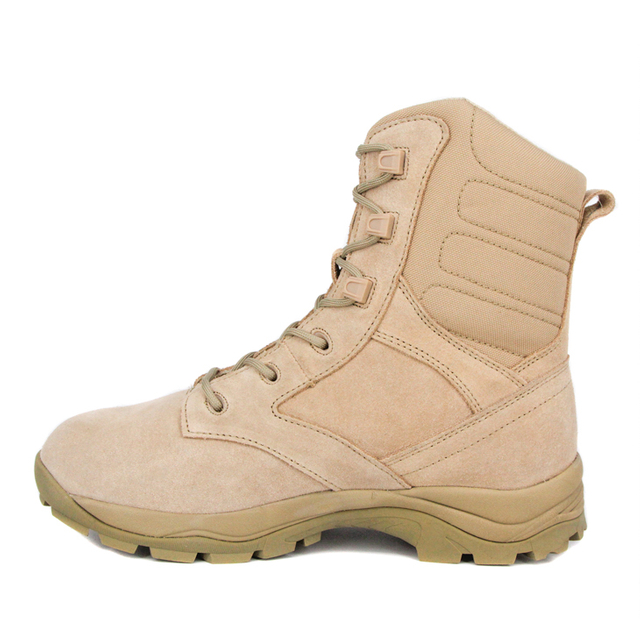
Uniform compliance remains a high-stakes reality for modern armed forces. Mismatched materials or batch-to-batch color drift quickly leads to rejected shipments. It also causes out-of-regulation gear and compromised unit uniformity. Achieving perfect visual harmony across organic materials and synthetics presents a massive structural challenge. Suede and nylon possess entirely different dye absorption rates. They also have highly distinct light refraction properties.
We provide procurement officers, unit commanders, and agency buyers with a strict framework. You will learn evidence-based methods for evaluating vendor color consistency. We will detail exactly how to manage dye lots and enforce rigid compliance when ordering custom military footwear. You will discover actionable strategies to mitigate supply chain risks. This guide ensures reliable material matching across all repeat production batches.
Key Takeaways
Achieving a 100% exact visual match between leather and synthetic fabrics is physically impossible; evaluation should focus on "commercially acceptable" tolerances and strict metamerism control.
Repeat batch consistency relies on a vendor’s adherence to a physical Master Color Standard rather than digital hex codes or pantones.
Reliable manufacturers mitigate procurement risk through mandatory lab dips, strike-offs, and spectrophotometer testing before full production begins.
Poor color control carries severe business and operational costs. Out-of-spec boots often fail strict compliance frameworks. For example, Coyote Brown shades leaning too green or red violate AR 670-1 or AFI 36-2903 guidelines. These failures lead directly to wasted budgets. They also cause massive operational delays. Units cannot deploy wearing out-of-regulation gear.
The metamerism factor further complicates procurement. Metamerism occurs when colors match under one light source but clash under another. Boots might look perfectly matched under factory fluorescent lighting. However, they can appear vastly different under natural sunlight or infrared lenses. This optical phenomenon catches many inexperienced buyers off guard.
Evaluating vendor transparency is a critical mitigation strategy. A trustworthy manufacturer proactively communicates these material limitations. They will explain structural constraints openly. Honest vendors never over-promise a flawless match across disparate materials. They focus instead on managing acceptable tolerances safely.
Evaluation Criteria: Matching Leather vs. Synthetic Panels
Comparing porous materials to synthetic webbing highlights major manufacturing realities. Organic rough-out leather and suede absorb pigment deeply. They soak up dyes like a sponge. Conversely, tightly woven Cordura resists deep penetration. Synthetic fabrics require entirely different chemical dye formulas. You cannot treat them the same way.
Texture drastically influences light refraction. The textured nap of suede scatters light unpredictably. Flat nylon reflects light in a much more uniform direction. This creates an optical illusion of color variation. They might use the exact same dye formula. The human eye will still perceive two different shades.
Establishing Tolerance Baselines
Military specifications demand acceptable Delta-E (dE) variance limits. Delta-E measures the mathematical distance between two colors. A dE of 1.0 is generally imperceptible to the human eye. Military standards often allow a dE of 1.5 to 2.5 for mixed materials. Buyers must outline a strict approval process before ordering.
Demand physical swatches known as lab dips. You must review both materials side-by-side prior to placing orders. Never approve production based on digital photos.
Material Dye Absorption Properties
Material Type | Dye Penetration | Light Refraction | Matching Difficulty |
Rough-out Suede (Organic) | High (Deep absorption) | Scattered (Due to nap) | High |
Cordura Nylon (Synthetic) | Low (Surface bonding) | Uniform (Flat weave) | Medium |
Canvas Webbing (Cotton/Poly) | Medium | Slightly scattered | Medium |
Managing Dye Lots for Military Desert Boots and Tactical Gear
Procurement teams constantly face the batch-to-batch challenge. An order placed in January rarely perfectly matches an order placed in November. Raw hides fluctuate naturally based on animal diets and seasons. Water temperatures during dyeing impact pigment bonding. Chemical lot differences introduce minor hue shifts. These variables heavily impact production of military desert boots over long contracts.
Implementing a Master Color Standard
You must require vendors to hold a physical golden sample. This physical master dictates all future approvals. Facilities must store it in a dark, climate-controlled environment. Proper storage prevents harmful UV degradation and moisture warping. Without a physical master, color drift becomes inevitable over time.
Buyers must insist on strict matching protocols. All future production runs must match the physical master sample directly. Do not accept matching against a written dye recipe alone. Recipes behave differently across varying batches of raw materials. The physical swatch remains the single source of truth.
Verifying Military Boot Colors and Vendor QA Processes
Modern quality assurance shifts evaluation from naked eyes to quantifiable data. Human vision remains highly subjective. Fatigue and ambient lighting alter human perception dramatically. Objective testing ensures compliance remains mathematical and undeniable. Reliable vendors embrace scientific verification methods throughout their workflow.
Spectrophotometer Validation
Top-tier vendors use spectrophotometers to measure color wavelengths. These tools bounce light off materials and read the reflection mathematically. They ensure military boot colors remain within tight tolerances. If the Delta-E reading exceeds 2.0, the machine flags the batch. This stops errors before stitching even begins.
Procurement officers should watch for glaring red flags. Warn against vendors relying solely on visual inspection by factory line workers. Line workers experience eye fatigue. Their subjective approvals often lead to massive color drift over months. Purely visual QA pipelines invite costly rejection rates upon delivery.
Steps for Objective QA Validation:
Extract raw samples from incoming material shipments.
Condition samples in standardized lighting booths (e.g., D65 daylight).
Scan samples using a calibrated spectrophotometer.
Compare digital dE readouts against the Master Color Standard.
Reject any material exceeding pre-approved mathematical variance.
Shortlisting Logic: Next Steps for Procurement
Assessing vendor capability requires a strict vetting checklist. You must evaluate a custom boot manufacturer's internal color QA pipeline. Do not take their marketing materials at face value. Ask detailed questions about their testing equipment. Verify how often they calibrate their light booths.
Detail exactly what to request in a formal proposal. Your Request for Proposal (RFP) must enforce rigid accountability.
Require comprehensive documentation of their color approval workflow.
Demand physical strike-offs of both upper materials and outsole rubber.
Insist on written guarantees regarding maximum dye lot variance percentages.
Ask for proof of third-party lab testing partnerships.
Recommend commissioning a low-volume pilot batch first. Order a small size run before committing to a multi-year contract. A pilot run exposes hidden supply chain weaknesses quickly. It allows buyers to inspect physical consistency across multiple pairs. This minimal investment prevents massive financial losses later.
Conclusion
Professional color approval is a science of managed tolerances, not magic. You cannot force porous organic leather and flat synthetics into perfect visual alignment under every light source. However, strict adherence to a physical Master Color Standard guarantees commercial acceptability. Utilizing spectrophotometer validation eliminates the risk of human error.
Encourage your buying team to request a material swatch kit immediately. Initiate a technical consultation to review a vendor's internal protocols. Solidify these standards long before issuing a Purchase Order. By demanding scientific verification, you protect your budget and your personnel.
FAQ
Q: Why does the suede on my boots look like a different color depending on the angle?
A: This optical effect is called "nap tracking." When suede fibers are brushed in different directions, they absorb and reflect light differently. This makes the color appear lighter or darker depending on your viewing angle. It is a physical trait of the material, not a dye defect.
Q: Can a manufacturer guarantee an exact match for reorders years later?
A: Minor dye lot shifts are unavoidable due to natural variances in raw leather hides. Strict QA keeps these variations unnoticeable to the naked eye. Look for vendors who guarantee matching within a specific Delta-E range rather than promising an impossible identical match.
Q: Should I provide a Pantone code for custom tactical boots?
A: Pantones are good starting points, but they are designed for ink on paper. They do not translate perfectly to textiles. A physical fabric or leather sample, known as a Target Swatch, remains the only reliable benchmark for custom footwear manufacturing.