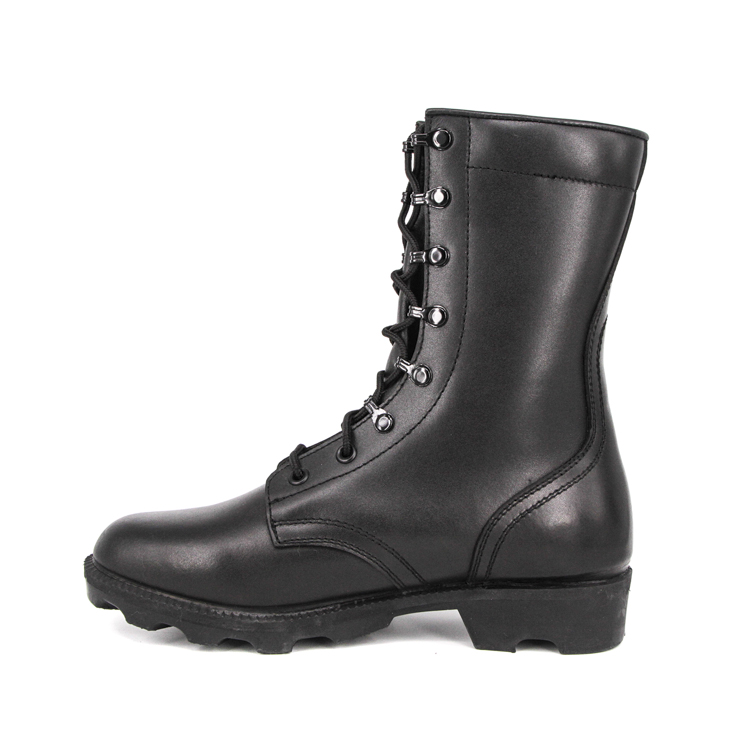
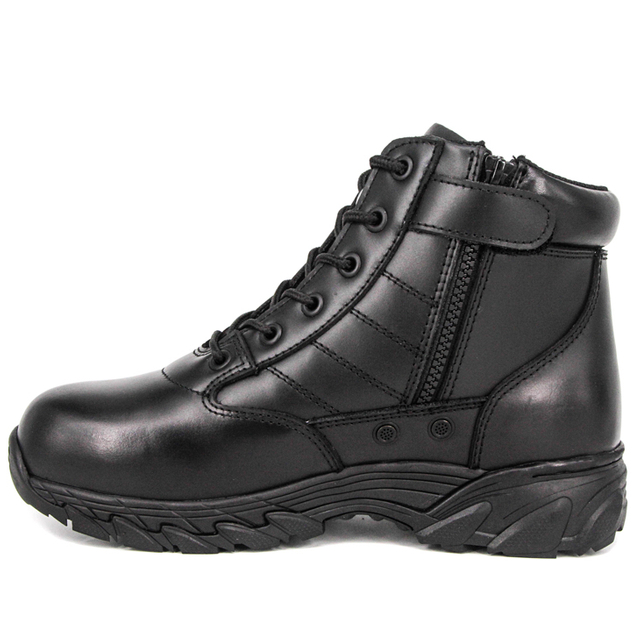
The upper and upper surfaces are all leather materials, and the price will be more expensive than nylon-leather military boots. The material of the skin is divided into a top layer and a second layer.
The first layer of cowhide is located on the outermost layer of the cowhide surface. The leather has the most flexibility/smoothness and has different thickness. The top layer has grainy skin, shaved skin, embossed skin, etc. It will not wear peeling when worn for a long time.
The second layer of cowhide is the second layer of the upper and lower layers of the thicker cowhide cross-section.
The leather is adhered to the surface of the PU material. The appearance is the same as that of the top layer, but the breathability and comfort are poor.
Milforce's leather boots for the US market come in many models, including a variety of functional military boots.
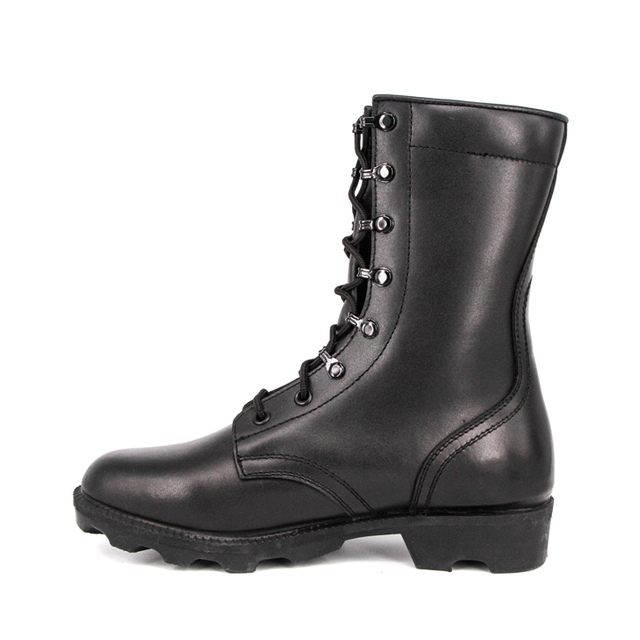
The first layer of cowhide has been processed into a face, breathable and durable, with a wear-resistant Panama rubber outsole, suitable for all kinds of training wear.
These boots are not equipped with a zipper and use a metal eyelet that is not easy to rust, so the waterproof performance is even better.
The boots are 8 inches high and are the height of standard combat boots.
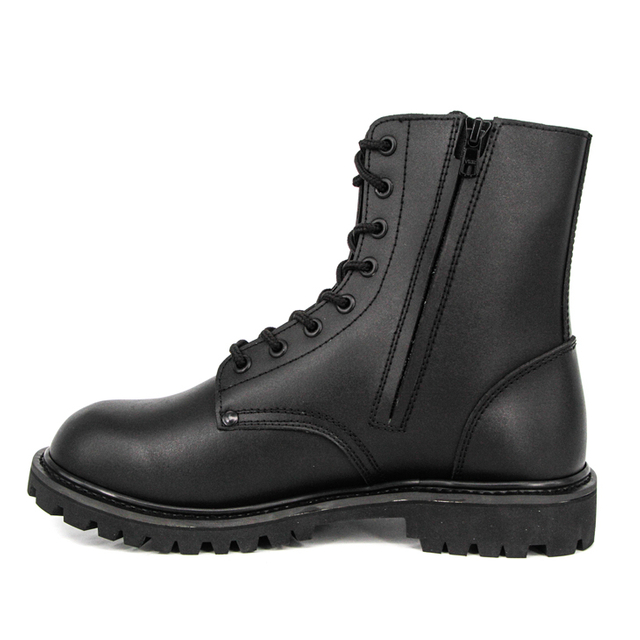
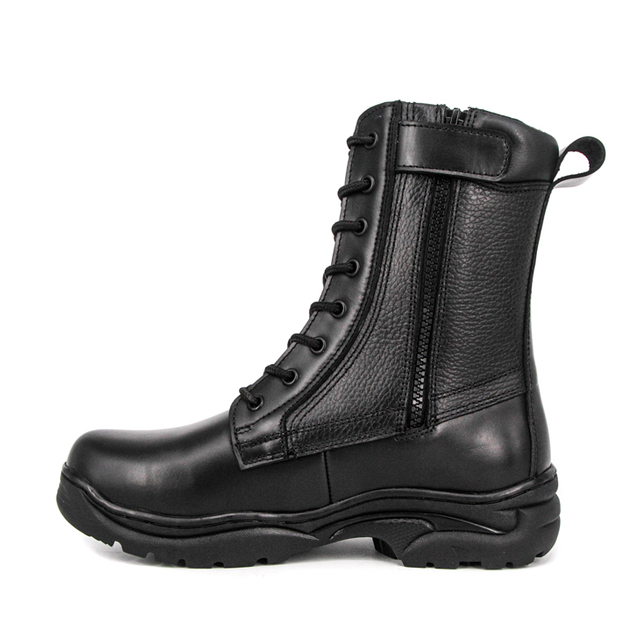
Unlike the 6212, his upper uses embossed leather that mimics the texture of the dermis, and the inside is zippered for easy wear and tear.
It is worth mentioning that the 6296 full leather boots are not the general rubber sole, but the lightweight MD sole of the tactical boots.
The part of the toe cap also adds anti-smashing steel plate, which protects the foot very well.
It is a very functional combat boots for outdoor training.
In addition to long-sleeve combat boots, short-sleeve full leather boots are also popular in the US market.
Short full leather boots look more like leather tactical boots, vents and zips are standard on tactical boots, but there is no nylon cloth, vamp is made from all leather.
Short-sleeve boots are more convenient to wear and take off, breathable and comfortable, more flexible than long-sleeve combat boots, more suitable for everyday wear.
Leather boots are the most practical but versatile boots you can have.
The wear-resistant leather upper with a wear-resistant sole allows the boots to adapt to all environments.
If they are handled properly, they can be used for many years, sometimes even decades.
Prolonged standing during ceremonies, inspections, and daily administrative duties takes a severe physical toll on the body. Static standing on hard surfaces like concrete parade decks transfers immense pressure through the lower extremities.
Deploying into tropical environments guarantees your feet will get wet. Moisture acts as a constant operational hazard, not an occasional inconvenience. You face a strict footwear dilemma: try to block water from entering, or let it drain out fast.
Aviation environments present unique hazards that standard tactical footwear cannot mitigate, making the selection of specialized footwear a mandatory safety and compliance decision.
Procuring footwear for government agencies requires balancing strict budgets against the demand for high-performance gear. Institutional buyers and quartermasters navigate a fragmented market filled with complex compliance standards and fluctuating supply chains.
Foot health dictates officer safety, endurance, and focus during grueling 10- to 12-hour shifts. The persistent dilemma involves selecting footwear that blocks external moisture versus footwear that vents internal heat.
Law enforcement and first responder footwear has shifted heavily toward rapid-deployment designs over the last decade. Patrol officers, paramedics, and security personnel increasingly rely on side-zip models to meet demanding shift requirements.
Law enforcement patrol work physically breaks down the human body over time. You spend 12-hour shifts standing on asphalt, running through unpredictable terrain, and carrying 20 to 30 pounds of gear on your duty belt and vest.