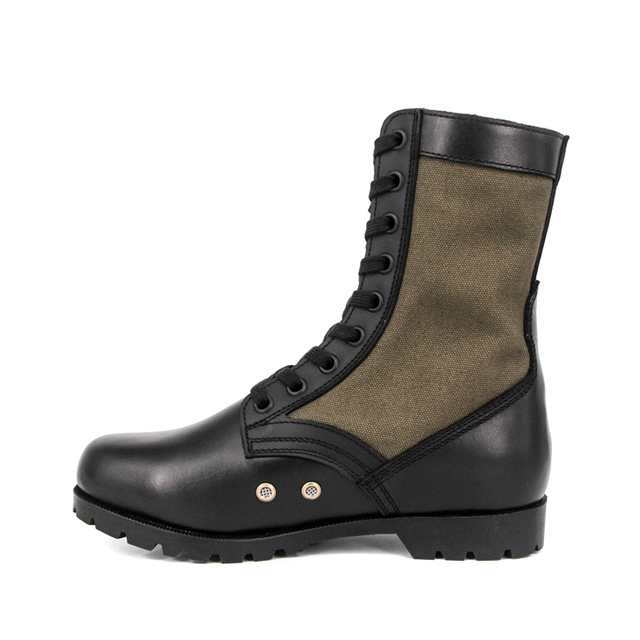
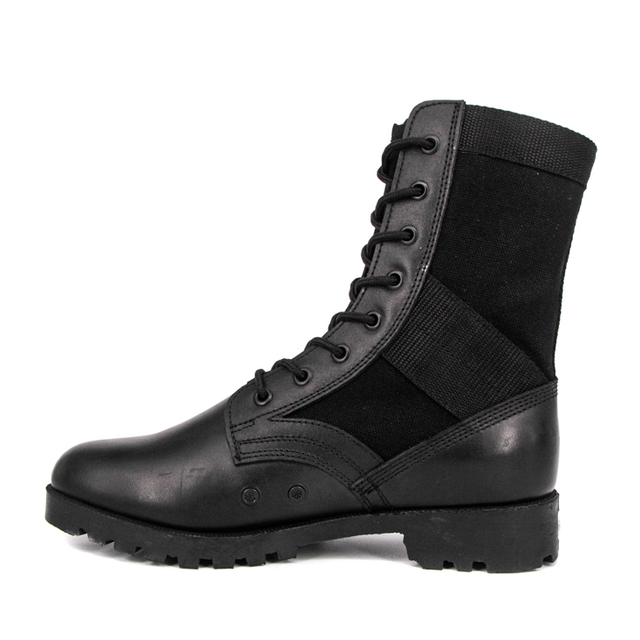
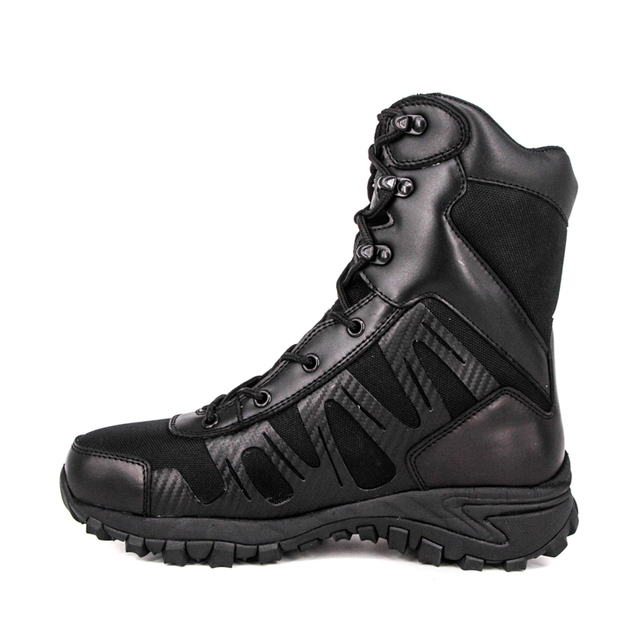
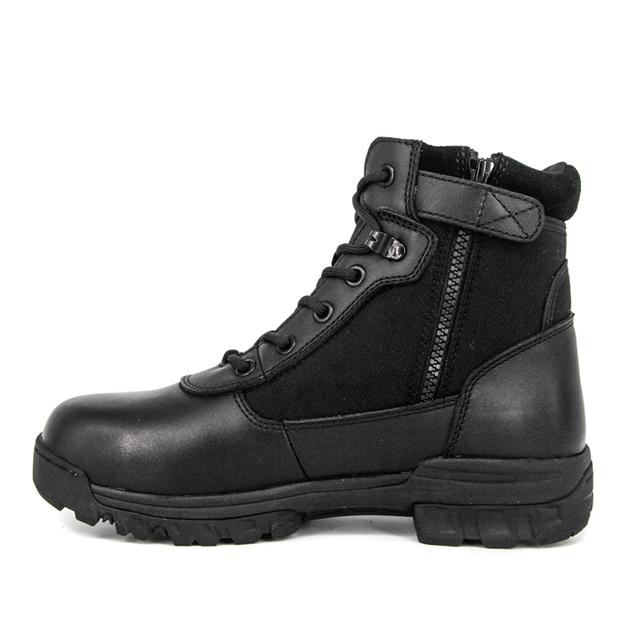
Procuring tactical and defense footwear requires moving past marketing claims. You must validate hard evidence. The gap between a commercial shoe factory and a legitimate defense contractor is immense. We measure this gap in compliance, testing data, and supply chain transparency. For procurement officers, distributors, and defense contractors, vetting failures carry severe consequences. Missing proper documentation can lead to rejected shipments. It triggers compliance penalties, such as Berry Amendment violations. It also causes catastrophic field failures.
A structured document review serves as your most reliable filter. This applies perfectly to the bottom-of-funnel evaluation stage. Collecting these records eliminates unqualified vendors early. It protects your procurement budget from systemic risks. Below is the definitive list of documents you must request. Always secure these files before issuing an RFQ or signing a contract.
Key Takeaways
Always request verifiable government registration documents (e.g., CAGE Code, SAM.gov status) to confirm defense-contracting eligibility.
Demand third-party laboratory testing reports to validate MIL-SPEC claims, specifically for material durability (Cordura, Kevlar) and environmental resistance.
Require ISO-certified Quality Management System (QMS) manuals to ensure the supplier can maintain consistency at scale.
Use supply chain transparency records to verify raw material origins and avoid geopolitical compliance risks.
Many manufacturers claim they produce "tactical" or "military-grade" boots. They use aggressive marketing to push aesthetic designs. However, they lack the rigorous infrastructure required for actual defense procurement. A commercial factory focuses on retail appeal. A defense contractor prioritizes operational survivability. You must identify this distinction early.
Without requesting specific technical documentation, buyers easily fall into a trap. We call this the "MIL-STYLE" versus "MIL-SPEC" trap. Commercial vendors build aesthetic lookalikes. They might use camouflage patterns and rugged outsoles. Yet, these boots fail functionally under combat conditions. They lack the certified shock-absorption metrics required for extended patrols. Their outsoles might melt in desert environments.
You must apply a strict risk mitigation lens. Collecting documents upfront eliminates unqualified vendors immediately. It reduces unnecessary back-and-forth communication during the RFQ process. More importantly, it provides an auditable trail. Government or enterprise compliance officers require this trail. When you partner with a legitimate military footwear supplier, they expect these requests. They maintain organized compliance files ready for immediate dispatch.
Best Practices
Always ask for documentation before discussing unit pricing.
Verify all certification numbers through official online databases.
Reject self-generated spreadsheets masquerading as official lab results.
Core Compliance and Government Registration Documents
You must evaluate vendors on legal and defense eligibility. A factory might produce excellent boots. However, if they lack proper government registrations, they cannot fulfill defense contracts.
Government Procurement Registrations
Request the supplier’s CAGE Code (Commercial and Government Entity). You should also demand proof of active SAM.gov registration. This applies specifically to US and NATO-aligned procurement processes.
Why does this matter? These registrations prove the entity is legally cleared. It shows they can bid on and fulfill defense contracts. The government vets these entities for baseline legal and financial standing. If a vendor cannot provide a CAGE code, they operate strictly in the commercial sector.
Domestic Sourcing & Trade Compliance
Many procurement programs are bound by strict US regulations. If your contract falls under these rules, demand Berry Amendment Compliance Certificates. You can also request Made in USA validation. This aligns seamlessly with legislative frameworks like the BOOTS Act.
Why does this matter? The Berry Amendment ensures 100% domestic sourcing. All materials and manufacturing labor must originate domestically. Purchasing foreign-made boots for a restricted contract leads to immediate cancellation. It also invites severe legal penalties.
Cybersecurity and Data Protection
Modern defense procurement involves sensitive digital assets. Request CMMC (Cybersecurity Maturity Model Certification) level compliance documentation.
You might wonder why a boot manufacturer needs cybersecurity. Consider the implementation reality. You will share sensitive boot blueprints. You might transmit proprietary camouflage patterns. You will discuss exact troop deployment quantities. A breach in the manufacturer's network exposes critical operational intelligence. You cannot risk this exposure.
Compliance Document Summary
Document Name | Primary Purpose | Required For |
CAGE Code | Identifies defense contractors | All DoD / NATO contracts |
SAM.gov Registration | Authorizes federal bidding | US Federal procurement |
Berry Amendment Certificate | Validates 100% US sourcing | Specific military clothing/footwear |
CMMC Verification | Ensures digital data protection | Contracts sharing sensitive blueprints |
Quality Assurance and Manufacturing System Certifications
You must evaluate scalability and defect management. Producing one perfect sample boot is easy. Producing fifty thousand identical boots requires exceptional infrastructure. You need documented proof of this capability.
Request the actual ISO 9001:2015 certification. Do not just accept a logo on their website. Check the certificate's validity date. Look at the issuing authority. This document assesses baseline quality management. It proves the factory follows standardized operating procedures. It shows they track materials accurately.
For highly specialized gear, you need more rigor. Ask if they operate under advanced defense-specific quality frameworks. AS9100 is an excellent example. While often associated with aerospace, premier defense suppliers adopt similar rigorous standards. These frameworks ensure absolute traceability for every eyelet, thread, and sole.
Next, ask for their Corrective and Preventive Action (CAPA) logs. Request an anonymized sample of their recent CAPA reports. This serves as a vital trustworthiness marker.
A credible vendor will transparently show their defect management process. Manufacturing errors happen. For example, sole delamination issues occasionally occur during heat-pressing. A strong CAPA log shows exactly how they document the defect. It reveals how they quarantine the bad batch. It explains the mechanical steps taken to prevent recurrence. A vendor claiming zero historical defects is usually hiding something.
Common Mistakes
Accepting an ISO certificate registered to a parent trading company, not the actual manufacturing facility.
Ignoring the expiration date on quality certificates.
Failing to ask how they handle raw material quarantines.
Technical Specifications and Third-Party Lab Testing Reports
You must validate features against actual outcomes. A reliable military footwear supplier provides empirical evidence for every marketing claim.
Material Origin and Authenticity Certificates
Do not accept verbal claims regarding technical textiles. Request official certificates of authenticity for all branded materials. If they claim to use authorized Cordura® nylon inserts, they must provide the fabric mill's certificate. If they advertise genuine Gore-Tex® waterproofing, ask for the licensing agreement. If they build boots with licensed Kevlar® anti-puncture midsoles, demand the supplier invoice.
Counterfeit materials run rampant in global supply chains. A fake waterproof membrane will cause trench foot during a field deployment. Authenticity certificates guarantee you get the performance you pay for.
Independent Laboratory Test Results
Internal factory tests are not enough. Request recent test data from accredited, independent laboratories. You need specific metrics for operational extremes.
First, ask for slip-resistance and oil-resistance coefficients for the outsoles. This data ensures stability on wet ship decks or oily tarmac surfaces. Second, demand cold-weather flexion tests. Inferior rubber cracks when bent in sub-zero temperatures. The lab report must prove the boot survives thousands of flexes at negative temperatures.
Third, examine breathability and abrasion metrics. This is crucial for summer or desert boot uppers. The lab must quantify moisture vapor transmission rates. It must also detail the fabric's performance on the Martindale abrasion tester.
Ergonomic and Anatomical Compliance Data
Ask for detailed documentation on the last dimensions. The "last" is the foot mold used to build the shoe. Military personnel carry heavy loads. Standard commercial lasts cause severe foot fatigue under these conditions.
You must also request shock-absorption metrics. Look at the energy return data for the midsole materials (like EVA or polyurethane). Proper shock absorption prevents lower back pain. It minimizes joint fatigue during extended infantry deployments.
Required Lab Testing Chart
Performance Feature | Recommended Test Standard | Key Metric to Look For |
Outsole Slip Resistance | ASTM F2913 / EN ISO 20345 | High coefficient of friction on wet/oily steel |
Cold Weather Flexion | ASTM D1052 | No sole cracking after 50,000 flexes at -20°C |
Puncture Resistance | ASTM F2412 | Penetration force exceeding 1200 Newtons |
Upper Breathability | ASTM E96 | High Moisture Vapor Transmission Rate (MVTR) |
Financial Stability and Supply Chain Transparency Records
You must evaluate vendor viability and geopolitical risk. A factory can have excellent test reports but still fail your contract due to poor cash flow or sanctioned suppliers.
Request Tier 2 and Tier 3 supplier disclosures. Ask for a high-level map of their raw material sources. Where do they buy their leather? Where does the vulcanized rubber come from? Who supplies the eyelets? This transparency mitigates severe implementation risks. Relying on a supplier whose raw materials come from sanctioned regions is dangerous. It can halt a defense contract immediately. Customs will seize the shipment. You will face intense legal scrutiny.
Next, request capacity and lead-time guarantees. Ask for historical on-time delivery (OTD) performance metrics. You should also request letters of reference. Seek references from previous defense or law enforcement clients. These letters prove the vendor can handle massive surges in demand.
Finally, ask for financial health letters. Request standard bank reference letters. You must ensure the factory has adequate cash flow. A multi-million dollar, large-scale deployment requires massive raw material purchases. A financially unstable factory will demand excessive upfront deposits. They might use your deposit to finish another client's order. Bank letters confirm their operational liquidity.
A Shortlisting Checklist: Red Flags in Supplier Documentation
Receiving the documents is only the first step. You must know how to read them. Apply strict shortlisting logic to filter out deceptive vendors.
Red Flag 1: The "Self-Certified" Trap.
The supplier provides internal testing spreadsheets. They lack stamps from accredited, independent third-party labs like SATRA or SGS. Internal tests hold zero weight in defense compliance. Always reject unverified data.
Red Flag 2: Expired or Irrelevant ISOs.
The vendor supplies an ISO certificate that expired three years ago. Alternatively, they provide a valid certificate, but it belongs to a parent trading company. The actual manufacturing facility remains uncertified. Always match the factory address on the certificate to the production location.
Red Flag 3: Refusal to Sign NDAs.
The vendor shows unwillingness to sign a Non-Disclosure Agreement (NDA). They refuse this step before reviewing your custom tender files. A legitimate defense contractor signs NDAs daily. Hesitation indicates they might share your technical drawings with unauthorized third parties.
Red Flag 4: Vague Supply Chain Maps.
The vendor claims they source materials "globally" without naming specific countries or mills. This vagueness usually masks reliance on embargoed or sanctioned regions. Demand specific geographic disclosures.
Conclusion
Procurement success relies entirely on rigorous vetting. A reliable military footwear supplier will anticipate your requests for compliance, testing, and QMS documentation. They understand the defense sector's strict demands. Their ability to produce these files quickly serves as a primary indicator of their operational maturity.
Never rely on a glossy product catalog. Insist on authentic material certificates and third-party lab results. Verify their geopolitical supply chain footprint. Check their financial health to guarantee long-term production stability.
Your immediate next-step action is simple. Before asking for a pricing quote, send a formal "Request for Information" (RFI). Specifically ask for their CAGE code, QMS certificates, and material testing samples. Use this data to build a verified shortlist. Only then should you initiate contract negotiations.
FAQ
A: Yes, mutually signed NDAs are standard practice. You must execute one before exchanging proprietary technical requirements. It is also necessary before reviewing a supplier's internal supply chain disclosures to protect both parties' sensitive data.
Q: How long does it take for a credible supplier to gather these documents?
A: Baseline documents like ISO certificates, SAM.gov status, and standard material specs should arrive within 24 to 48 hours. However, custom MIL-SPEC lab testing for entirely new designs may take several weeks to complete properly.
Q: Can a supplier provide a quote without seeing our full technical documentation?
A: They can provide a rough estimate. However, a firm, actionable RFQ requires buyer-provided context. They need your environment details, user group specs, and compliance needs paired with validated spec sheets to offer exact pricing.