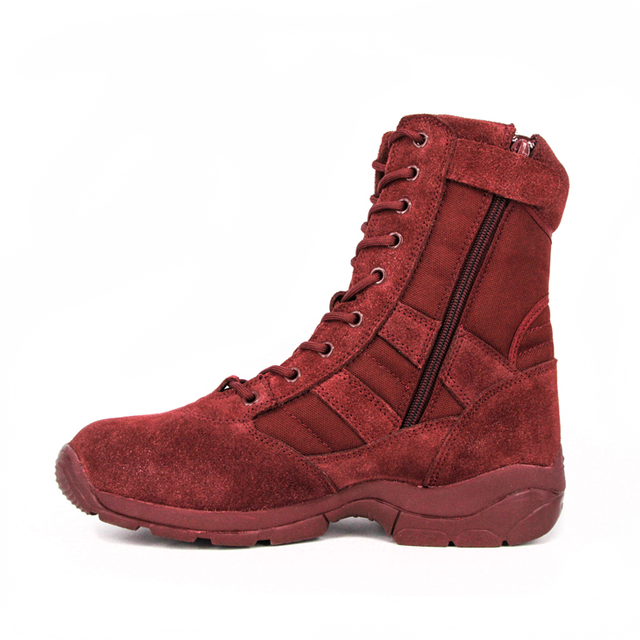
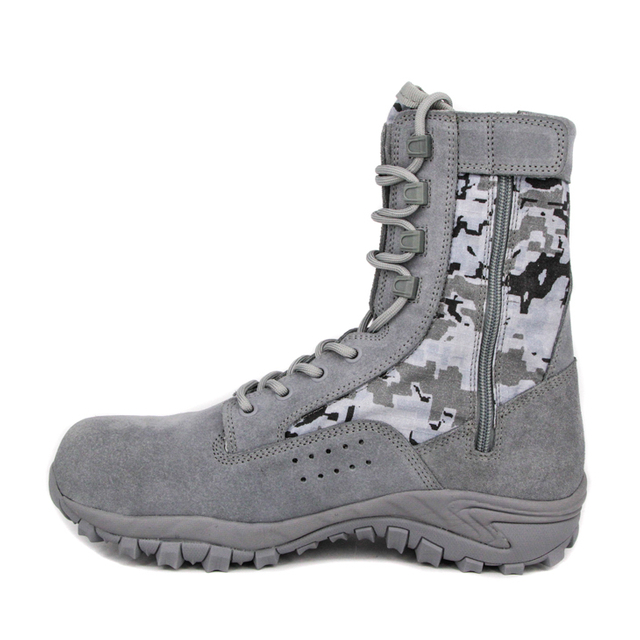
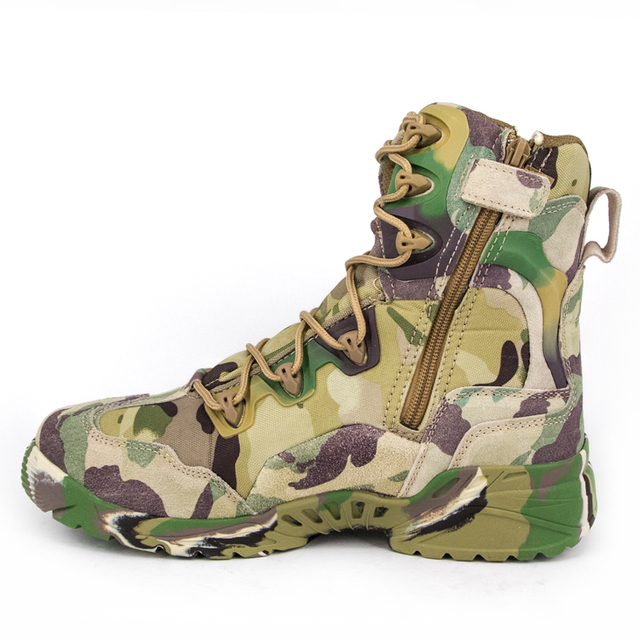
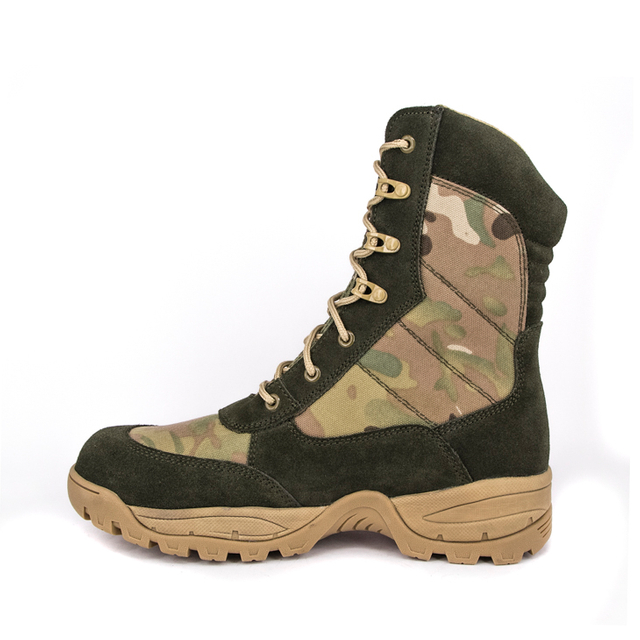
As we all know, the most common colors of military boots are black and sand. Black tactical boots and sand-colored anti-cassette desert boots are the two most basic military boots, and milforce has many other special color matching military boots in addition to these two military boots. Today, it is introduced in many military boots. The "shiny" military boots that were seen at a glance.
The 7239 full camouflage military boots are one of our star products. In fact, camouflage military boots are very common, but the special feature of the milforce 7239 is that his entire boots are green camouflage, including the leather and rubber soles of the upper. It has a green camouflage pattern. Sandy nylon laces and nylon zips work well with the overall camouflage tones.
In contrast to the 7239, the 4232 police boots are also a green camouflage color military boots, but only the nylon cloth is camouflage, the leather part of the shoe body and the upper is black, and the color contrast is obvious. The sole is made of sand-colored MD sole with nylon cloth, and the laces and eyelets are also sand.
Red is a rare color in military color matching, milforce 7264 is a pair of red military boots. This special red military boot is custom made by one of our customers. We made a slight modification with reference to our 4206 and 7206 models. The shoe body is made of red suede leather and nylon cloth. The sole is made of the same red rubber bottom as the 4206. It is non-slip and wear-resistant, and the sole has a self-cleaning function.
The last thing to introduce is our new military boots 5239 ultra-light jungle boots, this military boots also use camouflage color, single-layer camouflage nylon cloth with gray suede leather, lightweight and breathable. The upper side of the sole has two rows of venting holes that allow the foot to dry quickly. The sole is a gray, lightweight rubber sole, and the connection between the leather and the nylon cloth is sewn three times and is very strong.
The above is milforce some special color military boots, many special colors are customized, because we are the development and sales of the collection of boots, we will try our best to meet your needs.
Procuring footwear for government agencies requires balancing strict budgets against the demand for high-performance gear. Institutional buyers and quartermasters navigate a fragmented market filled with complex compliance standards and fluctuating supply chains.
Foot health dictates officer safety, endurance, and focus during grueling 10- to 12-hour shifts. The persistent dilemma involves selecting footwear that blocks external moisture versus footwear that vents internal heat.
Law enforcement and first responder footwear has shifted heavily toward rapid-deployment designs over the last decade. Patrol officers, paramedics, and security personnel increasingly rely on side-zip models to meet demanding shift requirements.
Law enforcement patrol work physically breaks down the human body over time. You spend 12-hour shifts standing on asphalt, running through unpredictable terrain, and carrying 20 to 30 pounds of gear on your duty belt and vest.
Choosing the right military desert boots is essential for users who operate in hot, dry, and challenging environments. Unlike ordinary outdoor footwear, military desert boots need to provide a balance of breathability, durability, traction, protection, and long-term wearing comfort.
Waterproof military desert boots may sound unusual at first. Desert environments are often associated with heat, sand, dust, and dry weather, so many buyers assume that waterproof protection is unnecessary. In reality, military and tactical users may face more complex conditions than pure dry sand.
Military desert boots used in the Middle East and Saudi Arabia need to handle more than high temperatures. These regions can include open desert, rocky ground, fine sand, dry roads, temporary camps, vehicle areas, and occasional wet or muddy surfaces.