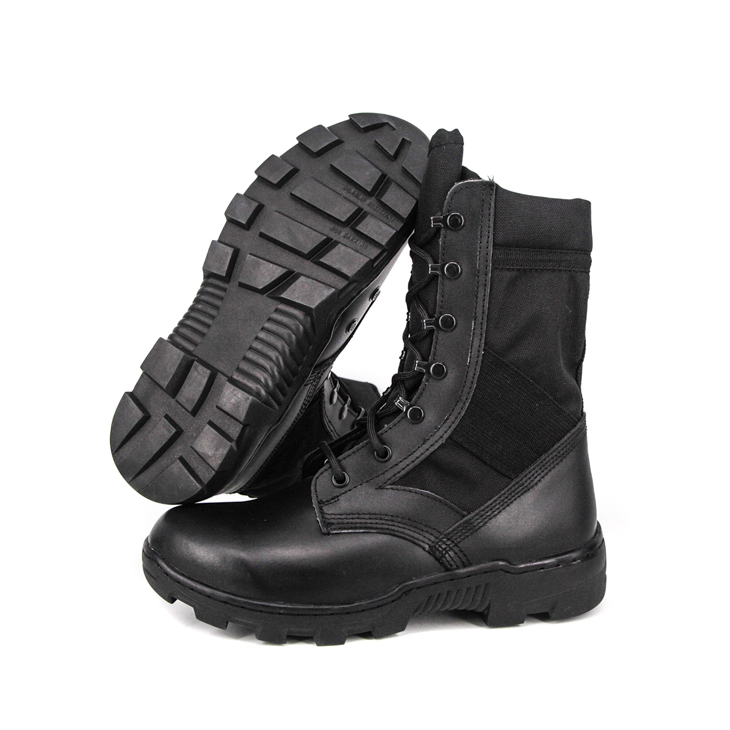
There are many types of military boots, including tactical boots, leather boots, desert boots, etc. Each military shoe has its own unique features, each of which has the best performance in different environments. This article Introduce one kind of boots that are excellent in function and useful —jungle boots.
Designed before World War 2, jungle or hot weather boots were issued to US Military soldiers serving in Panama. These boots have at their core the idea that a waterproof design cannot be achieved in jungle and swamp environments, which means that breathability, the speed of drainage and drying need to be prioritized. The boots have rubber soles, either Vibram or Panama style and, usually, canvas uppers with ventilation holes in the instep which allow for water drainage and good air circulation.
The reasons for going with a jungle boot instead of any other pair of boots are varied. Starting from the soles, jungle boots have specially designed rubber soles with wide grooves, called Panama soles, and these work so as to prevent mud getting stuck on your shoes. If you opt for Vibram soles instead, they will provide a bit more versatility as they can be used on sand, pebbly surfaces, etc. The second most important aspect of jungle boots is the breathability which is provided through the vents and the canvas upper.
Jungle boots have high laces, and you are supposed to tuck your pants in them to keep leeches, ticks, and ants at bay. Some will have leather in the toe and heel for additional protection, while a number of shoes used to have a stainless steel plate inside the sole to protect the wearer from punji stake traps. Because of their design, jungle boots do well in preventing trench foot, blisters and other issues related to spending prolonged periods of time in wet footwear.
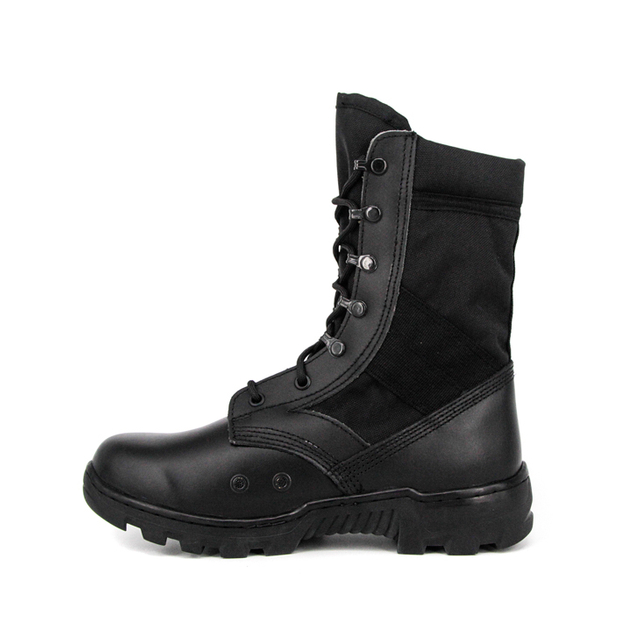
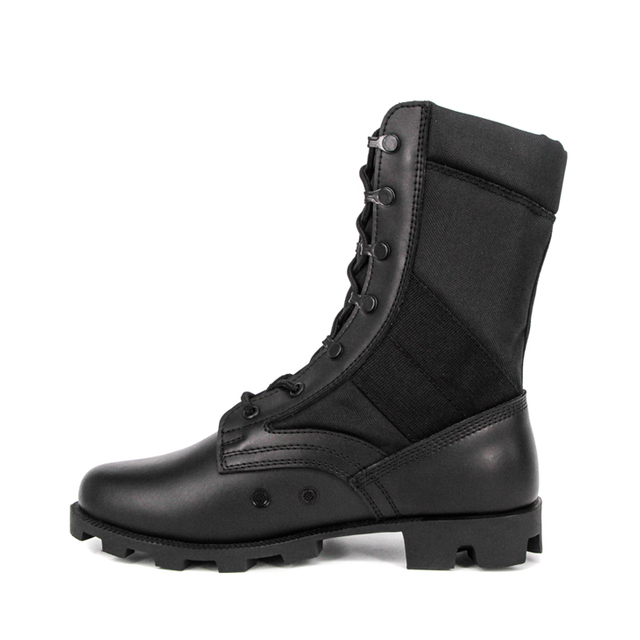
Although it is called "jungle boots", it is suitable for many places. They will also dry more quickly, which is excellent for camping trips where you want to stay as dry as possible after having spent the day walking through puddles and creeks. This black jungle boot is a great choice; this boot is perfect for hot environments. The full-grain leather and nylon construction of the boot makes it very tough but it's also breathable for cool, dry, comfortable feet. If that weren’t enough, it features a moisture wicking lining and anti-bacterial treatment to keep moisture away and to keep your boots smelly like boots rather than stale, sweaty feet. In comparison to any other pair of jungle boots, these shoes come cheap, while still providing good quality and comfort. Still, they are made in China, so their durability may be slightly less than what you would expect if you paid three times the price. Their life can be prolonged through correct care and cleaning.
Can jungle boots be worn only in the jungle? The answer is no.
Today, jungle boots are used equally by military personnel as well as enthusiasts who wear them to camping or trekking trips in hot and humid environments. Although they are not in wide distribution, they still provide a much-needed upgrade from regular leather or rubber jungle boots.
Foot health dictates officer safety, endurance, and focus during grueling 10- to 12-hour shifts. The persistent dilemma involves selecting footwear that blocks external moisture versus footwear that vents internal heat.
Law enforcement and first responder footwear has shifted heavily toward rapid-deployment designs over the last decade. Patrol officers, paramedics, and security personnel increasingly rely on side-zip models to meet demanding shift requirements.
Law enforcement patrol work physically breaks down the human body over time. You spend 12-hour shifts standing on asphalt, running through unpredictable terrain, and carrying 20 to 30 pounds of gear on your duty belt and vest.
Choosing the right military desert boots is essential for users who operate in hot, dry, and challenging environments. Unlike ordinary outdoor footwear, military desert boots need to provide a balance of breathability, durability, traction, protection, and long-term wearing comfort.
Waterproof military desert boots may sound unusual at first. Desert environments are often associated with heat, sand, dust, and dry weather, so many buyers assume that waterproof protection is unnecessary. In reality, military and tactical users may face more complex conditions than pure dry sand.
Military desert boots used in the Middle East and Saudi Arabia need to handle more than high temperatures. These regions can include open desert, rocky ground, fine sand, dry roads, temporary camps, vehicle areas, and occasional wet or muddy surfaces.
Sand color military boots are widely used in desert, dry, and hot-weather environments. Compared with black or dark brown combat boots, light-colored desert footwear is better suited for sandy terrain, high temperatures, dusty ground, and military-style uniforms used in arid regions.