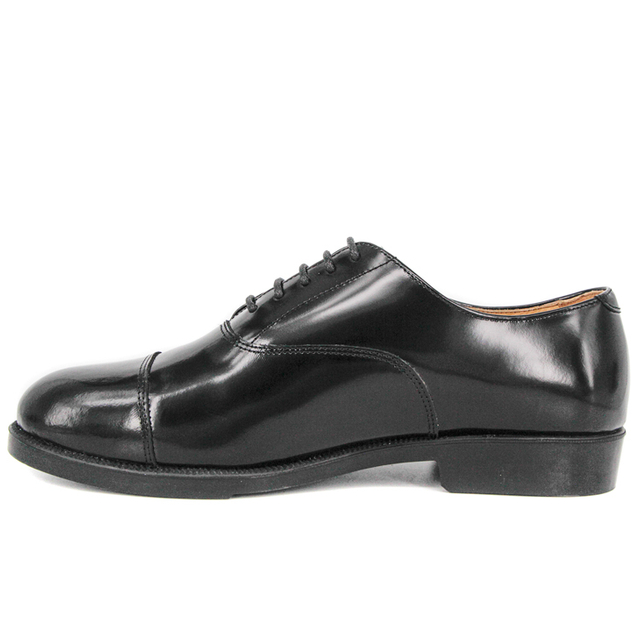
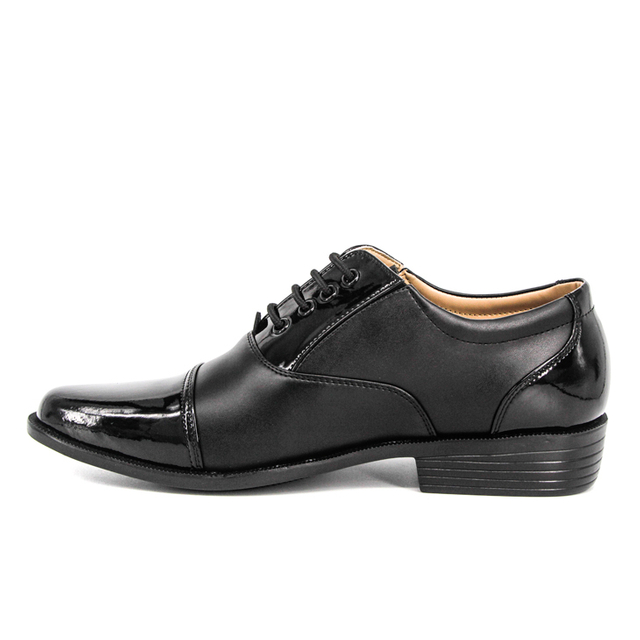
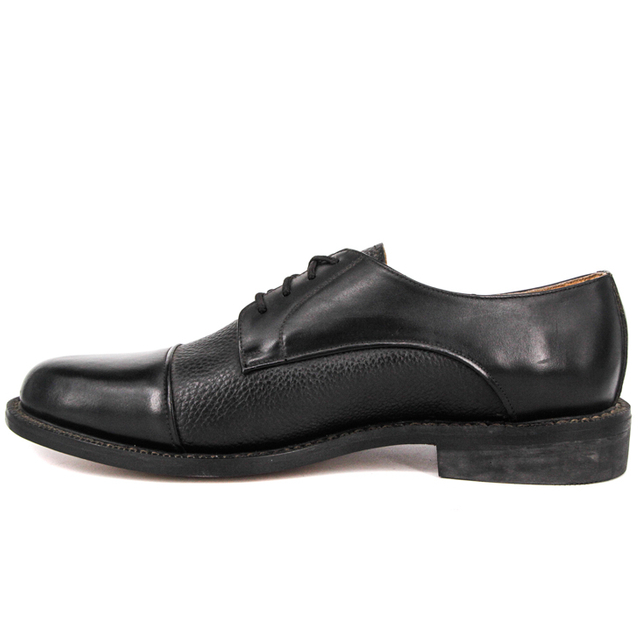
Dress shoes can be divided into Oxford shoes (Oxford) and Derby shoes (Derbies), which are generally made using Goodyear. The difference is that the part of the Derby stud with the eyelet is open and the oxford shoe is pressed under the vamp. Traditionally, this close laceing of oxford shoes seems to be more rigorous.
Generally speaking, there are two kinds of oxford office shoes, one is flat-headed oxford shoes and the other is three-joint style oxford shoes.
Flat-headed oxford shoes have no leather on the toe and no carved decorations. It is the most elegant style of oxford shoes. Black flat-headed oxford is the standard dress shoes. Three-joint toe cap oxford shoes are flatter oxford shoes. There is a piece of leather on the toes (sometimes there are also heels), which is the most widely worn.
In the era of traditional gentlemen, the most traditional dress shoe is a three-joint style. For example, wearing a morning dress must be equipped with a three-joint, while an evening dress with a cabaret, a small dress with a patent leather two-joint oxford. Nowadays, the etiquette habits are gradually loose. In general business occasions, regardless of day and night, the three-connector models can be said to be daily essential commuter shoes for business people.
The Cap Toe style has a horizontal trim on the toe and a horizontal stitch on the toe. The standard leather shoes worn in military uniforms are all three joints. The square-headed three-joint style that is too sharp and sculptural is too big for most people to look a bit weird. A slightly rounder style is more in line with the public's aesthetic, such as the following Cheap wholesale black fashion style office shoes 1265.
The toe line is round and elegant, and it is neither dull nor avant-garde. The back of the foot is higher, the foot is more close to the foot, and the toe forms a three-dimensional, smooth arc, elegant and beautiful.
The leather shoes process has two major distinctions: cement and goodyear. Why is the goodyear technique superior?
First of all, goodyear shoes are a continuation of classics and tastes. In the old days, there was no glue, and there was no way to make shoes. The gentlemen and nobles wore hand-stitched leather shoes. This tradition continues to this day. Up to now, the elite class still loves to wear hand-stitched shoes, which is the persistence of traditional menswear culture and a symbol of taste.
Secondly, suture shoes have a long life and can avoid low embarrassing conditions. Depending on the level of the process, when the adhesive is worn for a long time or the environment is bad, the process characteristics of the adhesive will gradually become invalid, and the occurrence of cracking and falling off may not be ruled out. The upper and the sole have a suture connection, which largely avoids the embarrassing state, so it is especially suitable for high-end people. Traditional suture craft leather shoes are customary. However, the skin is not wear-resistant, and it is slightly reluctant for white-collar workers who need to wear it as a daily commuter shoes and take it by subway and street. Since the rubber sole is more practical, why can't the goodyear process be combined with the rubber sole?
The 1285 is made with Goodyear and a rubber sole with a non-slip pattern on the heel. Waterproof, non-slip and abrasion resistant are better than the leather bottom.
Black dress shoes fromMilforceare undoubtedly the color that business men should have. It is formal and good. Dark blue, gray, navy, stripes, black leather shoes can be worn in any dark color. After having a pair of black leather shoes, many people will consider brown in the second pair. Men who wear formal dresses who like to have a sense of fashion, would have liked to wear dark suits with brown shoes. Gray clothing can also be matched with dark brown. The color is lighter or deeper.
Prolonged standing during ceremonies, inspections, and daily administrative duties takes a severe physical toll on the body. Static standing on hard surfaces like concrete parade decks transfers immense pressure through the lower extremities.
Deploying into tropical environments guarantees your feet will get wet. Moisture acts as a constant operational hazard, not an occasional inconvenience. You face a strict footwear dilemma: try to block water from entering, or let it drain out fast.
Aviation environments present unique hazards that standard tactical footwear cannot mitigate, making the selection of specialized footwear a mandatory safety and compliance decision.
Procuring footwear for government agencies requires balancing strict budgets against the demand for high-performance gear. Institutional buyers and quartermasters navigate a fragmented market filled with complex compliance standards and fluctuating supply chains.
Foot health dictates officer safety, endurance, and focus during grueling 10- to 12-hour shifts. The persistent dilemma involves selecting footwear that blocks external moisture versus footwear that vents internal heat.
Law enforcement and first responder footwear has shifted heavily toward rapid-deployment designs over the last decade. Patrol officers, paramedics, and security personnel increasingly rely on side-zip models to meet demanding shift requirements.
Law enforcement patrol work physically breaks down the human body over time. You spend 12-hour shifts standing on asphalt, running through unpredictable terrain, and carrying 20 to 30 pounds of gear on your duty belt and vest.