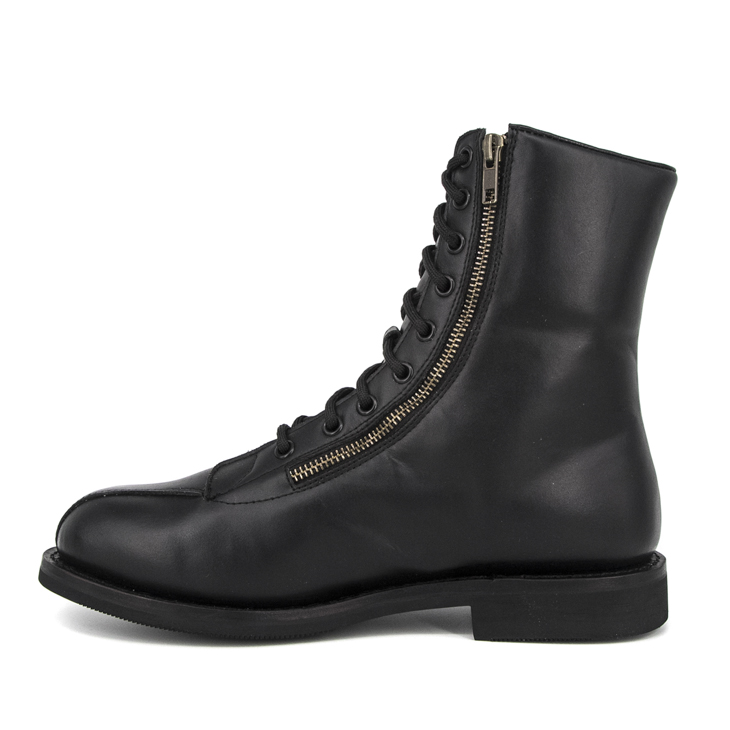
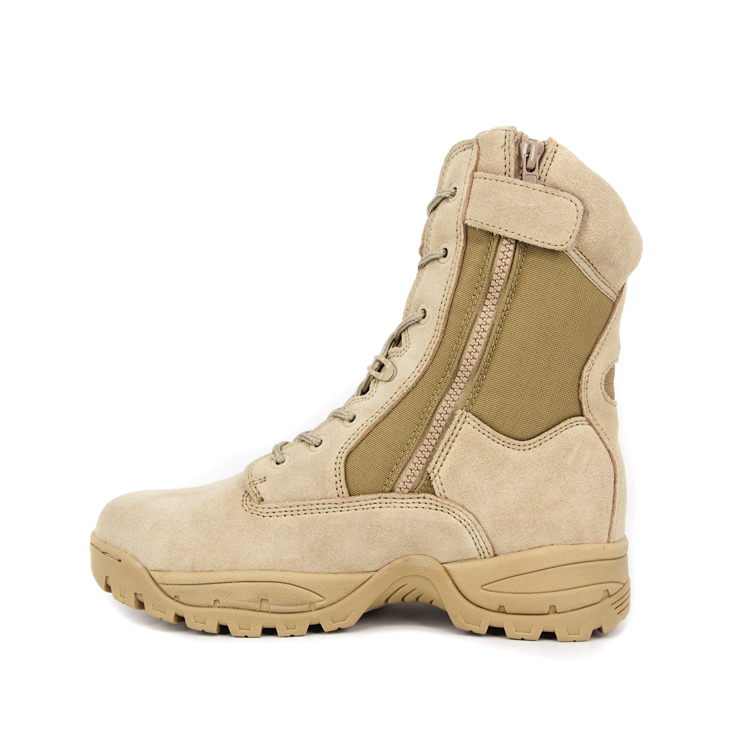
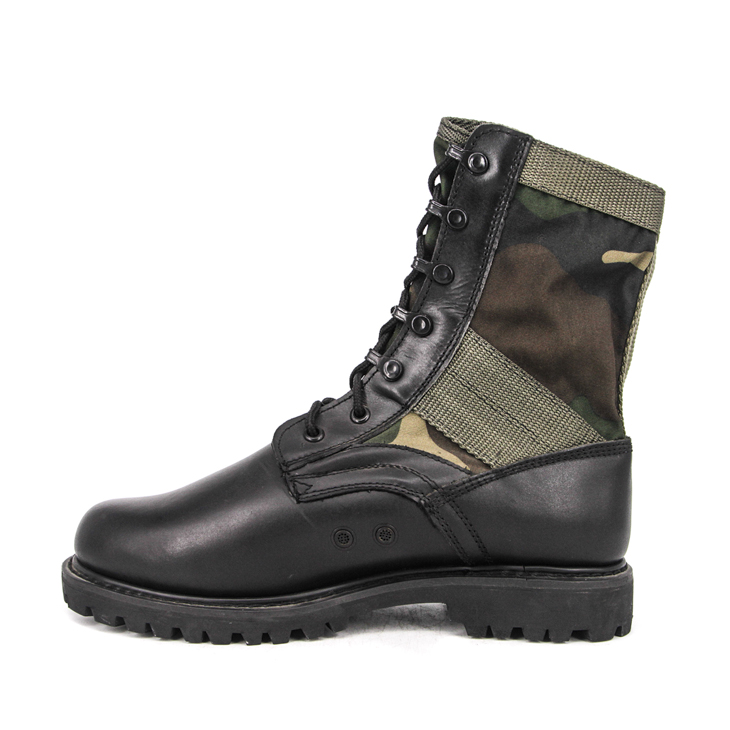
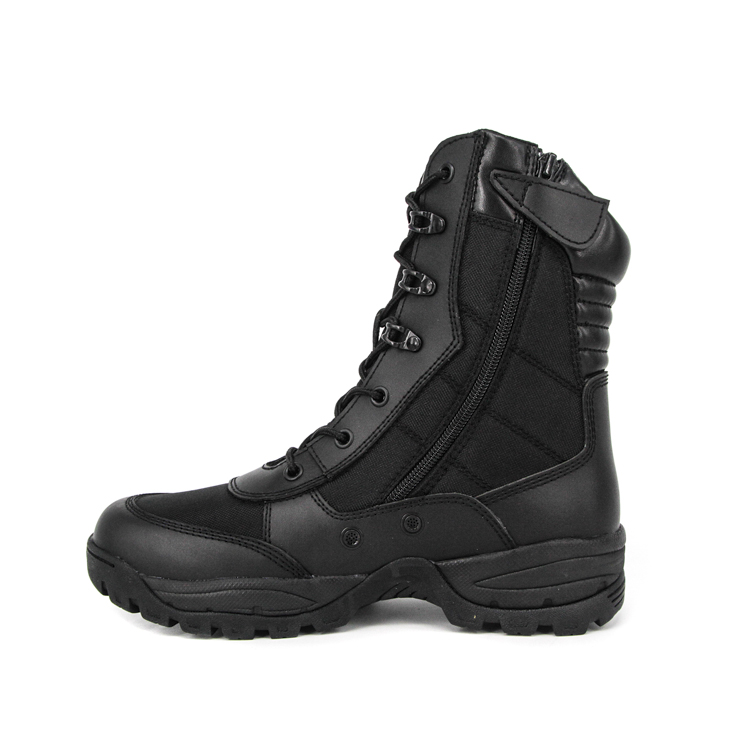
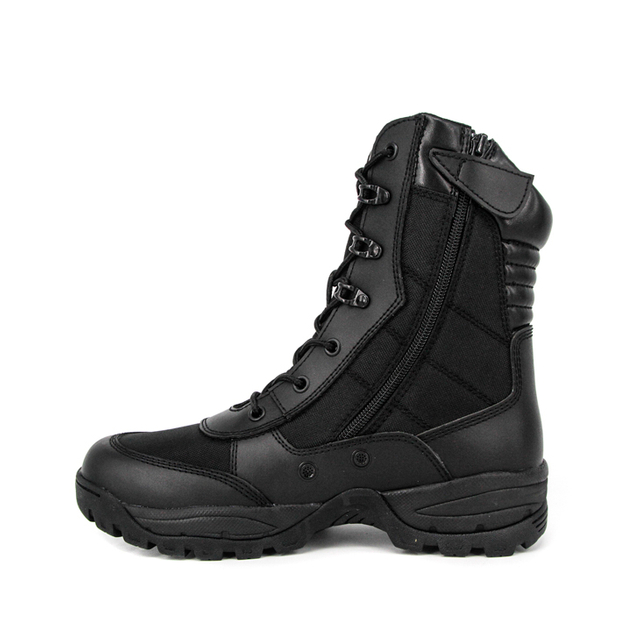
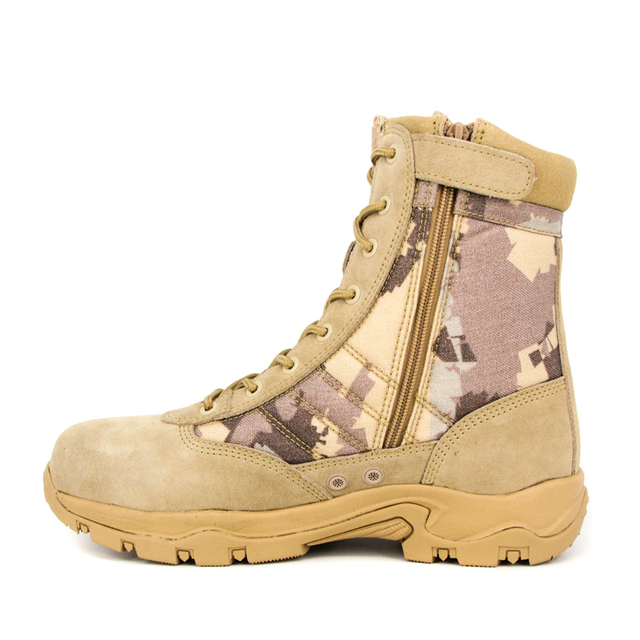
Today,we are talking about two common accessories in military boots, Zippers and Venting holes.
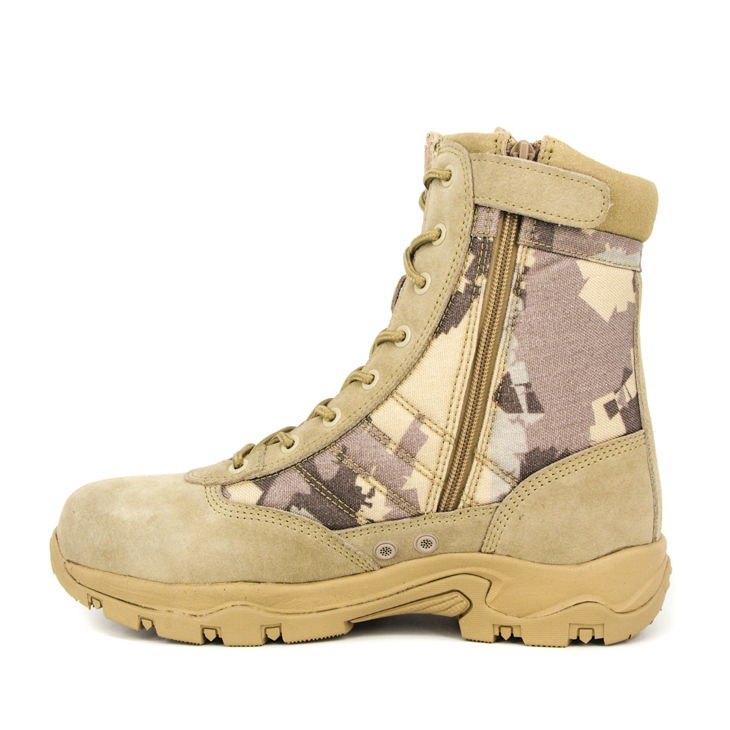
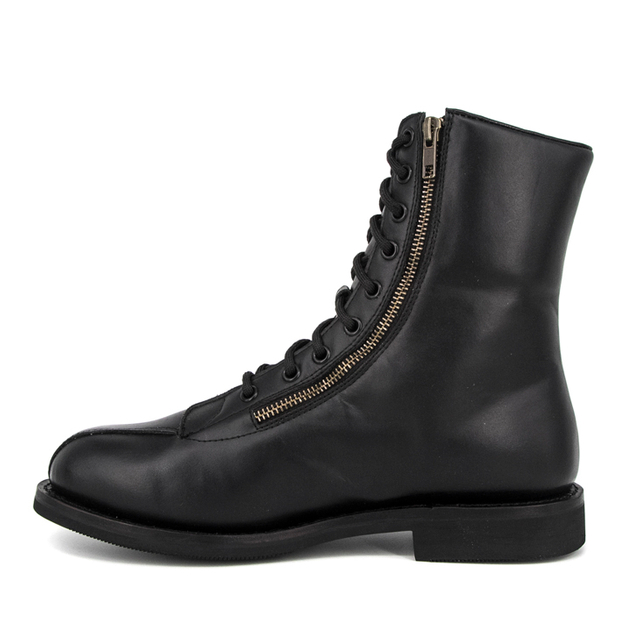
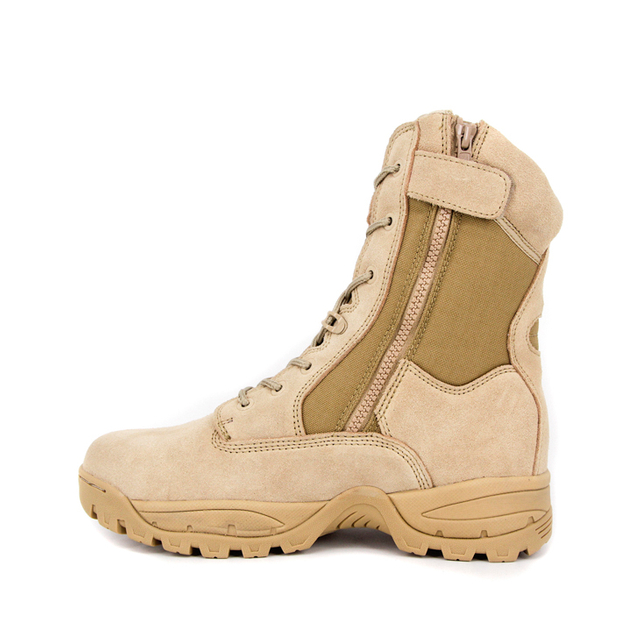
Zippers are very common in the design of military boots. Various types of military boots have zipper styles, such as police boots, tactical boots, which require users to quickly wear off military boots, zipper style is very popular,It can help users save time in wearing and detaching, and the position of the zipper is on the upper side of the shoe.
In general, the material of the zipper is divided into a resin zipper, a nylon zipper and a metal zipper. Resin zipper teeth are made of polyester plastic by dye coloring and discharged through an injection molding machine. Nylon zipper teeth are made of nylon monofilament by heating the die to wrap the center line. Metal zipper teeth are made of copper or aluminum wire. The machine is discharged. The zipper is not expensive to manufacture and can be produced on a large scale. The well-known brand with good quality in the zipper is YKK from Japan. He is the originator of the zipper industry and represents the industry standard. Because of Japan's precise craftsmanship, raw materials and management methods, it has excellent quality, YKK's zipper is generally used in high-end clothing, outdoor products and so on, so high-quality military boots use YKK zipper generally, such military boots will not be easily opened due to zipper strong. However, YKK is expensive; its price is ten times that of other brands. The price of military boots using YKK zippers will be relatively high.
In addition to the convenience, the zippered military desert boots make it more comfortable to wear, and the military boots are more suitable for the foot with adjustable elastic buckles
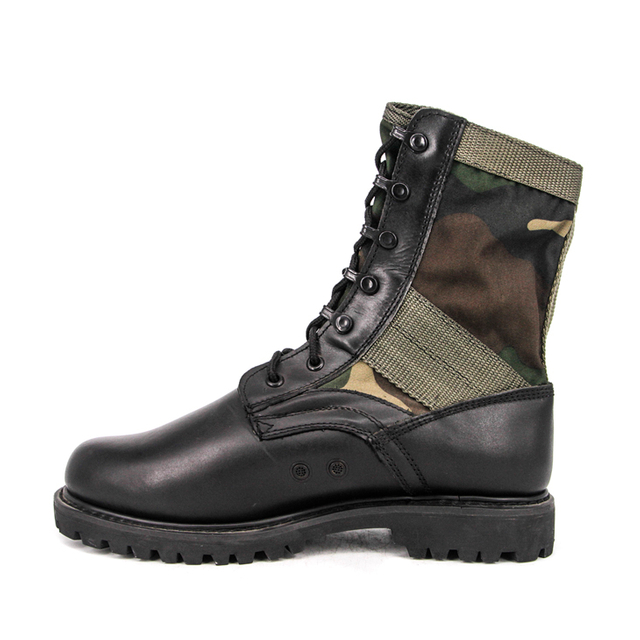
In addition to the zipper, there are two metal holes in the inner lower part of the military boots near the sole. What is his role? The answer is breathable, In fact, the tradition of leaving two venting holes in this part of the shoe begins with canvas basketball shoes, represented by Converse, the hole was not for ventilation or drainage at that time, and It was to let the shoelaces pass through, which can be convenient for adjusting the fit of the shoes and the feet. With the development of the footwear industry, in the field of military boots, the same position of the venting holes is for the purpose of ventilation.
With these two small holes, the airflow inside the boots can circulate, not to suffocate the feet, and keep the feet dry at all times. But because it is close to the sole, boots may not be waterproof. After all, you can't have your cake and eat it too.
Zippers and vents play an important role in the composition of the military boots. Boots have both of them that are especially suitable for use in hot areas, as zippers also increase breathability. These boots tend to be lightweight, resistant to heat and comfortable. It is worth buying.
Prolonged standing during ceremonies, inspections, and daily administrative duties takes a severe physical toll on the body. Static standing on hard surfaces like concrete parade decks transfers immense pressure through the lower extremities.
Deploying into tropical environments guarantees your feet will get wet. Moisture acts as a constant operational hazard, not an occasional inconvenience. You face a strict footwear dilemma: try to block water from entering, or let it drain out fast.
Aviation environments present unique hazards that standard tactical footwear cannot mitigate, making the selection of specialized footwear a mandatory safety and compliance decision.
Procuring footwear for government agencies requires balancing strict budgets against the demand for high-performance gear. Institutional buyers and quartermasters navigate a fragmented market filled with complex compliance standards and fluctuating supply chains.
Foot health dictates officer safety, endurance, and focus during grueling 10- to 12-hour shifts. The persistent dilemma involves selecting footwear that blocks external moisture versus footwear that vents internal heat.
Law enforcement and first responder footwear has shifted heavily toward rapid-deployment designs over the last decade. Patrol officers, paramedics, and security personnel increasingly rely on side-zip models to meet demanding shift requirements.
Law enforcement patrol work physically breaks down the human body over time. You spend 12-hour shifts standing on asphalt, running through unpredictable terrain, and carrying 20 to 30 pounds of gear on your duty belt and vest.