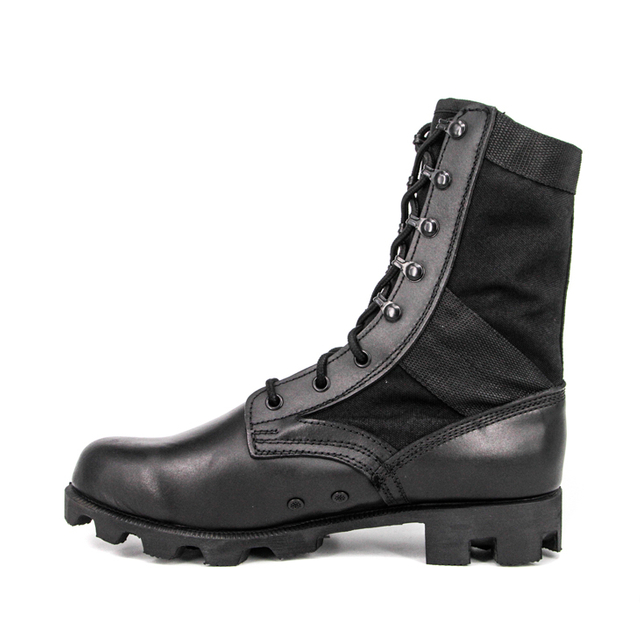
Everyone knows that the soldiers in the army are in high-intensity training every day. Military boots are for soldiers,also it is used during the war.
Military boots are made well and durable,it can completely protect soldiers' feet. It can give people a sense of upright and high-rise, also it looks very powerful.
That's why many people love military boots.
The material of military boots is more conservative. For the soldiers, the military boots not only can be able to wear, but also can be able to protect their feet on the battlefield. According to the use of military boots, it can be divided into jungle boots, desert boots and combat boots. Different military boot have different uses. Although military boots look bulky, they actually provide a good protection for soldiers’ ankles.
Wearing military boots not only can protect their ankles, but they also avoid being bitten by mosquitoes in complex environments. So for military boots, wear ability is the most practical thing. Military boots have the same style every year, so they can be changed only once in a few years.
We want to recommend our 5216 jungle boots. Military boots, have a SGS, ISO and ITS certificated manufacturer since 1984. This jungle boots use highly breathable full-grain cowhide leather and nylon fabric upper for long lasting support. 5216 outdoor work shoes have rubber sole, breathable lining, double and triple stitched seams, bringing you comfort even in warm weather and hot climate of the Middle East. The army boots are not only suitable for combat stealth force defense, but also for work outdoor activities. So the jungle boots footwear is a good choice for both men and women.
Prolonged standing during ceremonies, inspections, and daily administrative duties takes a severe physical toll on the body. Static standing on hard surfaces like concrete parade decks transfers immense pressure through the lower extremities.
Deploying into tropical environments guarantees your feet will get wet. Moisture acts as a constant operational hazard, not an occasional inconvenience. You face a strict footwear dilemma: try to block water from entering, or let it drain out fast.
Aviation environments present unique hazards that standard tactical footwear cannot mitigate, making the selection of specialized footwear a mandatory safety and compliance decision.
Procuring footwear for government agencies requires balancing strict budgets against the demand for high-performance gear. Institutional buyers and quartermasters navigate a fragmented market filled with complex compliance standards and fluctuating supply chains.
Foot health dictates officer safety, endurance, and focus during grueling 10- to 12-hour shifts. The persistent dilemma involves selecting footwear that blocks external moisture versus footwear that vents internal heat.
Law enforcement and first responder footwear has shifted heavily toward rapid-deployment designs over the last decade. Patrol officers, paramedics, and security personnel increasingly rely on side-zip models to meet demanding shift requirements.
Law enforcement patrol work physically breaks down the human body over time. You spend 12-hour shifts standing on asphalt, running through unpredictable terrain, and carrying 20 to 30 pounds of gear on your duty belt and vest.