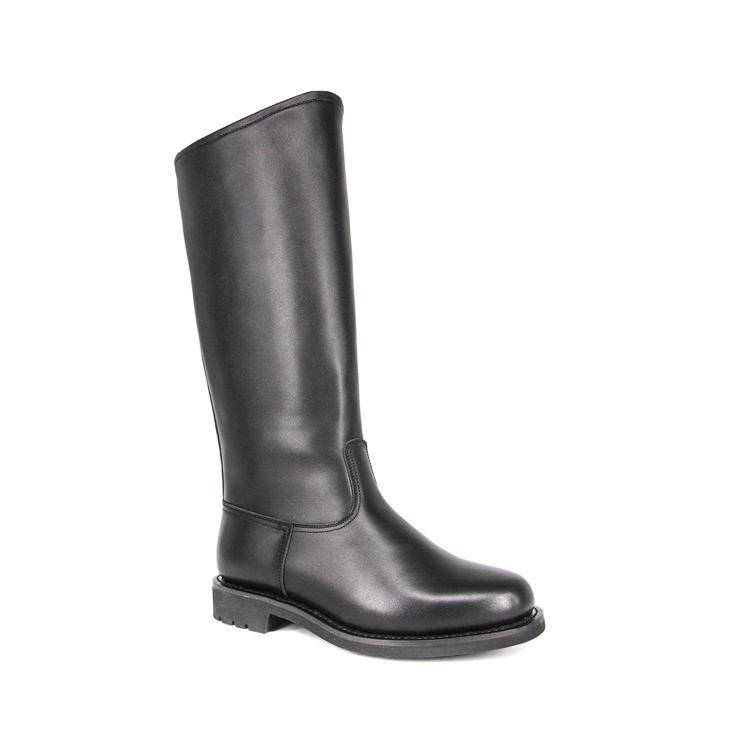
The concierge boots are a special type of boots in military boots. Only the guards of honor guards and welcoming soldiers will wear them, because it is not as easy to use as general military boots, long vamps and tied ties or buckles to wrap soldiers’ calf, looks solemn and serious when paired with a uniform for the concierge.
Most of the exquisite concierge boots are made of soft leather with a length to the knees; an upper is made of hard grained leather, and a zipper on the back and sides for easy access. Zippers are the weakest, most vulnerable part of the boot and should be cared for carefully. Most important consideration for zipper health is to be sure nothing gets stuck in it -- particularly socks. My preference is to employ 2 simple tools: a brass zip-it (like a stud chain with a hook) and your own index finger. Put your finger between the back of the zipper and your leg and use your outside hand to pull the zip-it.
The long shoe of the concierge boots is also one of the areas that need to be carefully maintained. It uses a large area of leather. The soft leather is prone to wrinkles and slips easily. The buckle and nylon straps prevent the tube from shrinking. Will tighten the upper part of the boot, but be careful not to be too tight, it will make your legs uncomfortable. Some concierge boots are wrapped in a piece of leather to cover the calf for easy wearing and tearing. The edge of the leather is fixed with Velcro. This style is comfortable and convenient, which is a very good choice.A black military tactical concierge boots from Milforce military boots manufacturer is like this, you can choose it.
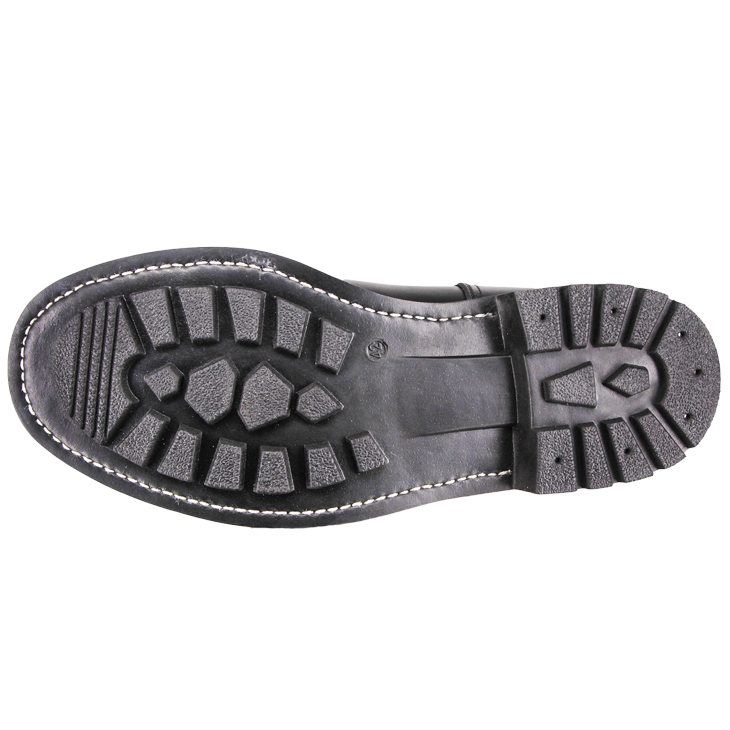
The excellent sole of the concierge boots is made of Goodyear stitching. The sole and the upper are firmly joined. The rubber sole will undergo thermal expansion and contraction when it encounters high temperature or low temperature. The seaming process can prevent the sole Separated from the upper surface.
We produce the highest quality concierge boots to meet all your requirements, welcome to know!
Procuring footwear for government agencies requires balancing strict budgets against the demand for high-performance gear. Institutional buyers and quartermasters navigate a fragmented market filled with complex compliance standards and fluctuating supply chains.
Foot health dictates officer safety, endurance, and focus during grueling 10- to 12-hour shifts. The persistent dilemma involves selecting footwear that blocks external moisture versus footwear that vents internal heat.
Law enforcement and first responder footwear has shifted heavily toward rapid-deployment designs over the last decade. Patrol officers, paramedics, and security personnel increasingly rely on side-zip models to meet demanding shift requirements.
Law enforcement patrol work physically breaks down the human body over time. You spend 12-hour shifts standing on asphalt, running through unpredictable terrain, and carrying 20 to 30 pounds of gear on your duty belt and vest.
Choosing the right military desert boots is essential for users who operate in hot, dry, and challenging environments. Unlike ordinary outdoor footwear, military desert boots need to provide a balance of breathability, durability, traction, protection, and long-term wearing comfort.
Waterproof military desert boots may sound unusual at first. Desert environments are often associated with heat, sand, dust, and dry weather, so many buyers assume that waterproof protection is unnecessary. In reality, military and tactical users may face more complex conditions than pure dry sand.
Military desert boots used in the Middle East and Saudi Arabia need to handle more than high temperatures. These regions can include open desert, rocky ground, fine sand, dry roads, temporary camps, vehicle areas, and occasional wet or muddy surfaces.