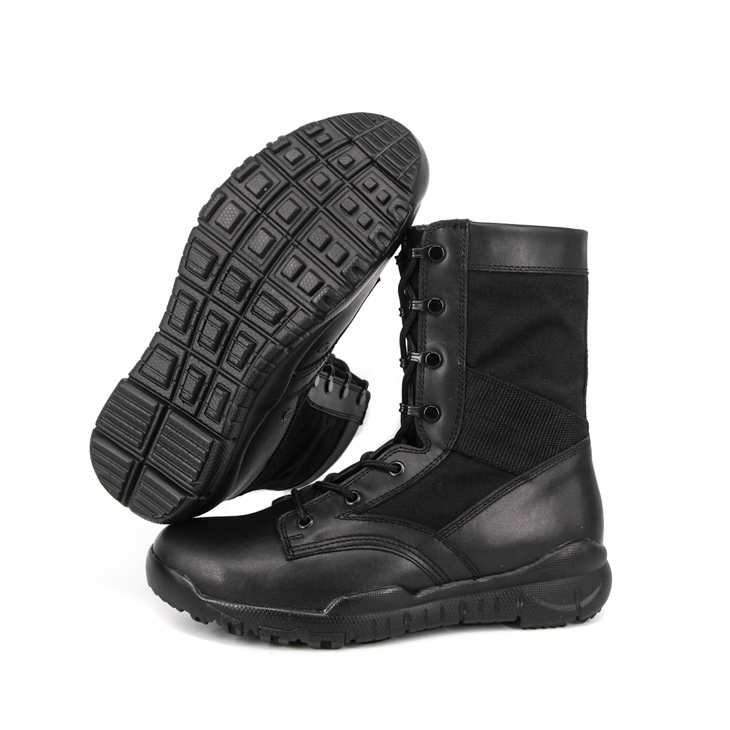
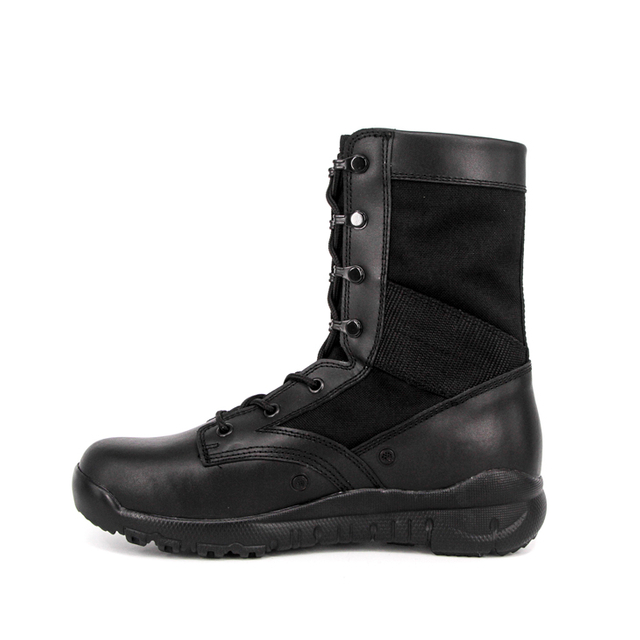
As we all know, the soldiers in the army will undergo intensive training every day. And they all wear military boots, but compared to comfortably, sneakers are more comfortable, but why do soldiers have to wear military boots, not sports shoes? Military boots look very heavy, but they actually play a good protective effect on the soldiers' ankles. Soldiers may try all kinds of difficult movements when they are trained, and they are not easy to twist their ankle and avoid being bitten by mosquitoes in a complex environment. In addition, the boot barrel is high, when soldiers are trained in water, shoes are not easy to enter water, and clothes which are wet are very easy to dry. And once the shoes go into the water, to wear comfort can be difficult. Therefore, in this case, the military boots will eventually be identified as military equipment, however, although many benefits, but according to memories of some veterans, military boots are very difficult to wear. For this improvement, MILFORCE will provide you with lightweight military boots.
Military boots have been widely equipped in military and police forces and become the basic configuration of combat personnel. Generally, military boots are set according to different operational environment needs. Our finished products which are lightweight look cool and have streamline design. Under this beautiful appearance, the light military boots do fairly well in consideration of comfort. You have a false sense of breathing on the feet when wearing; basically there is no uncomfortable feeling. Lightweight boots enable soldiers to feel like that they walk in the mountain road as easily as on smooth ground. In the face of all kinds of battlefield environments, they spend a lot of time in hard activities replace of caring boots.
We strongly recommend a jungle boot 5221 for you. This pair of military boots weighs only 650 grams. PU is lighter and more flexible than traditional rubber sole. PU can provide light and soft shock absorption for people. PU sole have some characteristics of corrosion resistance and being against acidity and alkali. The upper is made of top grain cow leather and fabric. The weight of cow leather and fabric is lighter and more breathable than that of full grain cow leather. In order to increase breathability, 5221 jungle boots has air hole. Air hole increase internal air circulation and keep foot dry always. Fashionable design is thought by heart by the R & D department. If you think there is room for change, we will produce light jungle boots for you according to your requirements.
In addition, for the complex battlefield environment facing the infantry, the air vent of 5221 boots can not only allow the boots to be drained after the water is flooded, but also block the wind and sand attacks.
The lightweight military jungle boots are playing a super protective role. Of course, the lightweight boots do not only protect the feet from injury while walking. Because of the scientific nature of its own design, it can provide a full range of care for the feet. For example, the design of the foot arch can ensure that the foot pressure can be greatly reduced during the long march. In order to ensure the demand of combating, military boots from MILFORCE also have a humanized design which is very convenient to wear and take off. No matter what your idea is, we will try our best to achieve it.
Prolonged standing during ceremonies, inspections, and daily administrative duties takes a severe physical toll on the body. Static standing on hard surfaces like concrete parade decks transfers immense pressure through the lower extremities.
Deploying into tropical environments guarantees your feet will get wet. Moisture acts as a constant operational hazard, not an occasional inconvenience. You face a strict footwear dilemma: try to block water from entering, or let it drain out fast.
Aviation environments present unique hazards that standard tactical footwear cannot mitigate, making the selection of specialized footwear a mandatory safety and compliance decision.
Procuring footwear for government agencies requires balancing strict budgets against the demand for high-performance gear. Institutional buyers and quartermasters navigate a fragmented market filled with complex compliance standards and fluctuating supply chains.
Foot health dictates officer safety, endurance, and focus during grueling 10- to 12-hour shifts. The persistent dilemma involves selecting footwear that blocks external moisture versus footwear that vents internal heat.
Law enforcement and first responder footwear has shifted heavily toward rapid-deployment designs over the last decade. Patrol officers, paramedics, and security personnel increasingly rely on side-zip models to meet demanding shift requirements.
Law enforcement patrol work physically breaks down the human body over time. You spend 12-hour shifts standing on asphalt, running through unpredictable terrain, and carrying 20 to 30 pounds of gear on your duty belt and vest.