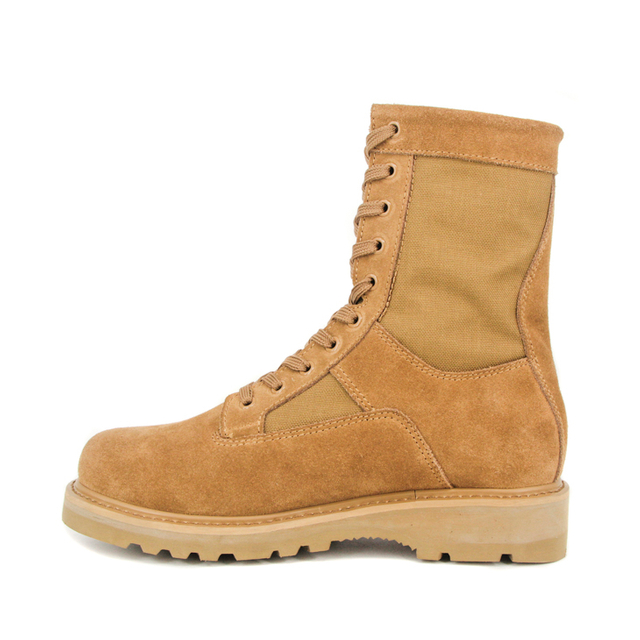
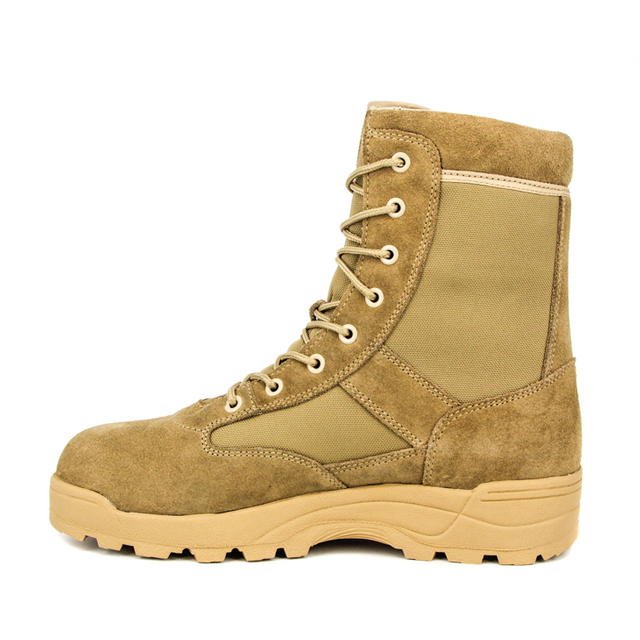
In short, rough leather is full grain leather. It has rough outside and soft inside.
Full grain leather is the top skin just below the animal hair.
Top skin is full grain leather. Full grain leather is the highest quality leather.
Full grain leather comes from the outer/top layer of the fur and is the toughest and most durable part of the leather. The farther from the surface of the skin, the softer the leather will be.
That's why the most durable brands of military tactical boots and clothing are made of full grain leather.
It is not only the most expensive, but also the most durable type of leather.
Stepping on the rugged terrain, soldiers must know the importance of boot durability.
Tough boots can provide better foot and ankle protection.
Here we will recommend our 7270 and 7275 boot to you.

7270 Function:
Coyote color body, seam craft sole, shoes overall breathable, comfortable.

7275 function:
desert boots offer an athletic look combined with a comfortable, light weight performance design.
As shown in the figure below, sometimes the color and texture of the material is different.
![]()
Suede and rough leather often confuse each other.
Because they look very similar. Also leather surfaces look rough.
Suede and rough leather look similar, but are made of completely different leather.
I will compare their differences and hope you don't confuse the two types of leather.
Suede is different from rough leather. It is made from the lower part of the leather, not the full grain leather near the top of the skin.
There is a big difference between the two because the lower part of the leather is cheaper and less durable.
On the other hand, suede leather is softer and smoother than rough full grain leather.
Rough leather looks more rough and less delicate.
Suede leather is sometimes called "split leather" because it is made from the lower part of the leather and separates from the top.
Suede desert boots are not as long as full-grain boots because they hide mainly the soft parts.
Advantages of Rough Leather:
One of the simplest advantages of rough boots is that the rough side of leather has an aesthetic appearance.
In addition, there are very practical benefits about the area of style preference.
Here are some practical points:
Rough leather boots are very durable.
The rough surface of leather is more resistant to scratch and scratch.
Even if boots are indeed scratched or scratched, these defects are better concealed on the rough surface of the leather than on suede leather.
Not all boots need polishing.
When you know that you have a long way to go, you will use swapping rough leather for suede on rugged terrain for maximum topographic resistance.
Protection.
Suture can sink deeper into leather, providing you with more ankle protection.
Many wearers of leather boots only like rough boots, because the rough side of the leather is on the outside, while the smoother side is on the inside and their feet feel more comfortable.
Nursing care of rough leather boots:
Even though your boots are more durable and flexible, it need some care. If rough boots get dirty, you can use a suede brush to clean up the dirt.
Important tips:
Rough leather materials are not water-friendly. You should avoid hair conditioner, wax or oil touching rough leather surfaces. Because they can destroy the leather material on boots.