![]()
The duty belt is an important tool for carrying personal police equipment.
The police equipment includes handcuffs, pistols and rifles, pepper spray and so on.
The concept of modern policing begins in the UK, but the British police usually do not carry guns.
Therefore, only the British SWAT team will carry guns while on duty or performing special tasks.
In contrast, since the establishment of the police force, pistols have been an integral part of US police equipment. In the United States, almost every policeman carries at least one gun.
Although some American policemen still carry revolvers, most American policemen carry semi-automatic pistols.
Pepper spray actually comes in many forms and varieties.
Some sprays have the ingredients of tear gas, while others have only high concentrations of capsaicin.
Most US police forces have strict regulations on the use of pepper spray.
Officials usually need to be exposed to the spray to experience the effect.
Pepper spray is completely harmless except for a small group of people who may be allergic.
If only capsaicin is used, the substance is completely natural and will not cause damage.
![]()
![]()
The style of American police uniforms is determined by their legal effects in each state.
A set of police uniforms includes police caps, police uniforms, police trousers, and police boots.
In the early days, the use of dark blue police uniforms by the police was purely due to the surplus of the Army Blue uniforms in the civil war.
The hat is mainly in the form of a chimney cap (a scalded woolen long hat), or an English-style hard round police cap.
By the beginning of the 20th century, the style and form of American police uniforms critically determined the style of modern American police uniforms: buttoned shirts, ties, loose-fitting breeches with military-style trousers and pointed hats.
Despite the variety and style of police uniforms in the United States, they use the metal badge worn on the left chest as an identification feature.
Unlike the British police who come in and out to show their police cards, the metal badge has become a passport for the police.
The US police's badge is worn on the left chest. When wearing plain clothes, a badge with a badge is attached to the belt.
Most police departments provide police officers with two uniforms: combat uniforms (also known as B suits) and formal uniforms (also called A suits).
The design and style of combat uniforms or training uniforms are similar to those of the US Army's official training uniforms, usually patrolling or performing intense physical exercises.
The more important part of combat uniforms is the police boots.
Generally, the height of the boots is generally around 17 inches.
The size of the shoe size can be judged according to the size of the shoe.
The boot is made of leather and the interior is made of breathable material to keep the feet dry and comfortable.
The design of combat boots focuses on functionality, such as: quick wear and tear, waterproof, anti-mite and so on.
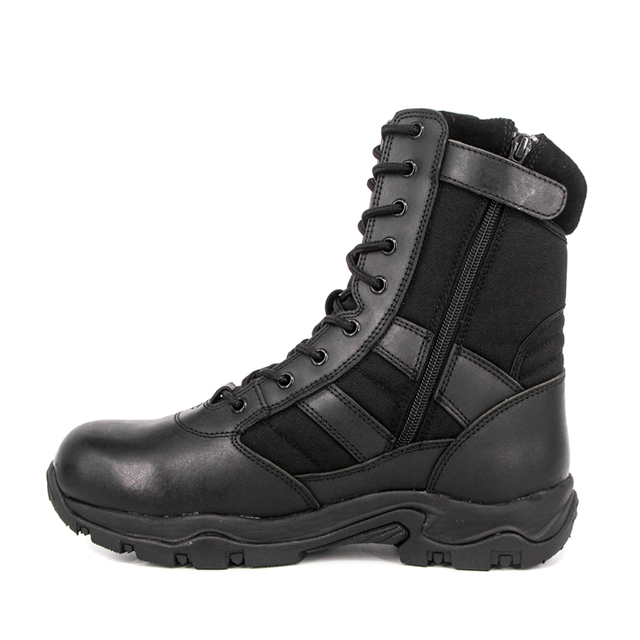
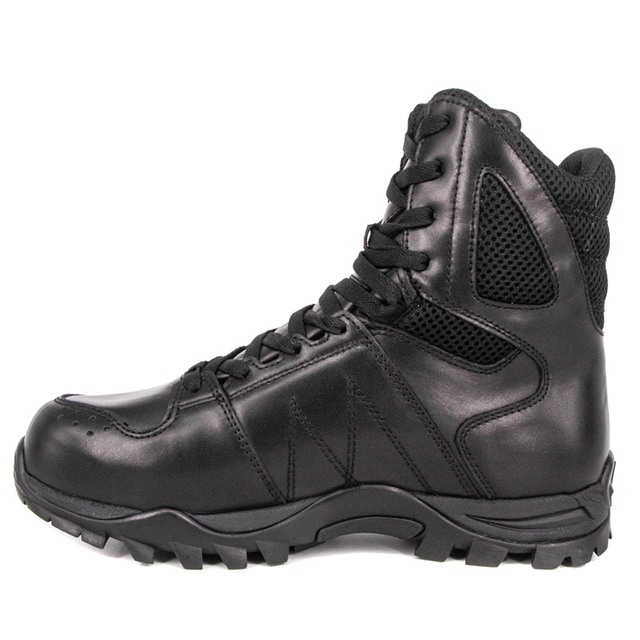
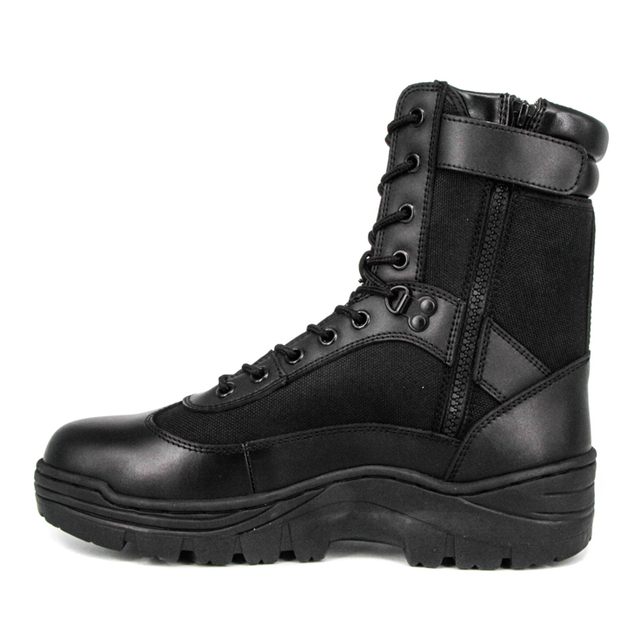
Milforce's sport tactical boots 4298 is a highly functional combat boots for the United States.
It has a highly breathable body and a non-slip MD sole.
Similar soldier tactical boots have 4299, some adjustments in the details, with side zips, faster wear and tear. The 4208 men's tactical shoes use a traditional rubber outsole.
The shoe is a hard canvas and leather that maintains the shape of the boot.
It can display a beautiful streamlined calf muscle, which is very powerful and majestic.


Formal uniforms dressed in duty, high-profile events and celebrations.
Sometimes, due to the need, some special police uniforms are worn, usually called C suits, such as the plateau suit.
Some police departments prohibit elite forces from wearing so-called training uniforms.
they have their own uniforms and prevent them from being too militarized in the public image.
Municipal police are represented by blue and black, while state police uniforms are usually brown and khaki.
Do you knoe US law enforcement agencies do not often have white uniforms (such as shirts)?
Because the strong contrast between white shirts and black police uniforms.
They make the US police a target for dangerous criminals in architectural searches.