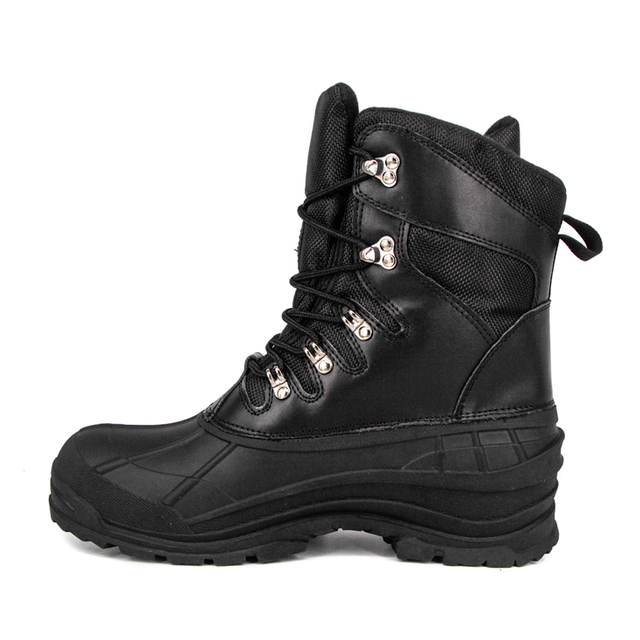
It can be seen directly from the appearance that these boots inherit the excellent soles of the 4244 military boots and add a circle of anti-collision rings. From here, it can be seen that the positioning of these boots is heavy outdoor high-top boots.
Next, we analyze the various designs of 4291 custom military tactical boots one by one. Start with the sole. This outdoor design has a certain anti-oil and anti-slip performance. It adopts special non-slip rubber material, which can adapt to most cities and outdoor terrain, and has good grip. In addition, the sole of this custom tactical boots is adopted. Milforce's protective sole technology protects the footsteps and reduces the risk of being pierced by sharp objects.
The inner insole uses EVA+TPU material, which has good absorption energy and rebound support. The insole is based on ergonomic principles. It is asymmetrical and can stabilize the heel to prevent sprains.
The fabric is made of waterproof leather and waterproof nylon fabric. The custom nylon fabric is waterproof and has good air permeability. The waterproof property increases the chemical protection function. The breathability maintains the comfort. The non-woven insole with internal sweat absorption and moisture absorption. At the same time, it has comfort and functionality.
In terms of details, the milforce 4291 military tactical boots are equally good. The shoelace retaining ring is made of reflective stainless steel and has a smooth coating on the surface to prevent breakage. The top two pairs of buttonholes use hooks that help the soldier quickly entangle the laces. The handle ring behind the upper is very large, so it is easy to put on and off, and you can reach it with thick gloves in winter. There is also a special place for this military boot. The place where the sole is connected is made of nylon instead of traditional leather, which is very helpful for improving the flexibility of the shoe. Two stitches are sewn at the joint for reinforcement, improving the quality of outdoor use.
Overall, the main design of these boots is biased towards outdoor sports. The protective performance is very good, it will not cripple in outdoor activities, thanks to the very good support of the sole, these boots are suitable for outdoor long-distance trekking or standing for a long time without feeling tired.
Prolonged standing during ceremonies, inspections, and daily administrative duties takes a severe physical toll on the body. Static standing on hard surfaces like concrete parade decks transfers immense pressure through the lower extremities.
Deploying into tropical environments guarantees your feet will get wet. Moisture acts as a constant operational hazard, not an occasional inconvenience. You face a strict footwear dilemma: try to block water from entering, or let it drain out fast.
Aviation environments present unique hazards that standard tactical footwear cannot mitigate, making the selection of specialized footwear a mandatory safety and compliance decision.
Procuring footwear for government agencies requires balancing strict budgets against the demand for high-performance gear. Institutional buyers and quartermasters navigate a fragmented market filled with complex compliance standards and fluctuating supply chains.
Foot health dictates officer safety, endurance, and focus during grueling 10- to 12-hour shifts. The persistent dilemma involves selecting footwear that blocks external moisture versus footwear that vents internal heat.
Law enforcement and first responder footwear has shifted heavily toward rapid-deployment designs over the last decade. Patrol officers, paramedics, and security personnel increasingly rely on side-zip models to meet demanding shift requirements.
Law enforcement patrol work physically breaks down the human body over time. You spend 12-hour shifts standing on asphalt, running through unpredictable terrain, and carrying 20 to 30 pounds of gear on your duty belt and vest.




 The fabric is made of waterproof leather and waterproof nylon fabric. The custom nylon fabric is waterproof and has good air permeability. The waterproof property increases the chemical protection function. The breathability maintains the comfort. The non-woven insole with internal sweat absorption and moisture absorption. At the same time, it has comfort and functionality.