Views: 123 Author: Site Editor Publish Time: 2018-08-22 Origin: Site
The leather sole shoes are made of natural leather as the sole material; they have the characteristics of breathable perspiration, so it is not easy to produce beriberi. However, Due to the need to use high-quality natural leather in large quantities, the cost is high. Today, leather sole shoes are only for formal occasions.
We all know that our sweat is basically from the soles of the feet. Therefore, this part of the water vapor from the body will be in contact with socks and soles of the shoes at the first time. Many people often recommend wearing cotton socks, because cotton socks have better sweat absorption and will make the feet feel more comfortable. After the cotton socks absorb the moisture, on the one hand, a part of the moisture will be transmitted to the shoes, and a part of the moisture will stay on the cotton socks.
At this time, if you wear rubber sole shoes, due to the dense structure of the rubber material, most of the moisture will be blocked inside the sole. Moisture can only be dissipated through the upper. And if the shoes you wear are patent leather, there is absolutely no way to get rid of the moisture.
However, if you are wearing leather sole shoes, the situation can be greatly improved. Let’s first take a look at the classification of the leather sole, the sole can be divided into ordinary skin, shot out of the skin, matte skin. The production process of shooting the skin bottom is more complicated. The production process of shooting the skin bottom is more complicated. It is not necessary to stick the rubber sheet before wearing, so the price is more expensive than the whole skin bottom. The advantage is that it is wear-resistant and non-slip; and the matte leather bottom are thicker than the ordinary skin bottom, so the price is slightly expensive. And it looks more graded.


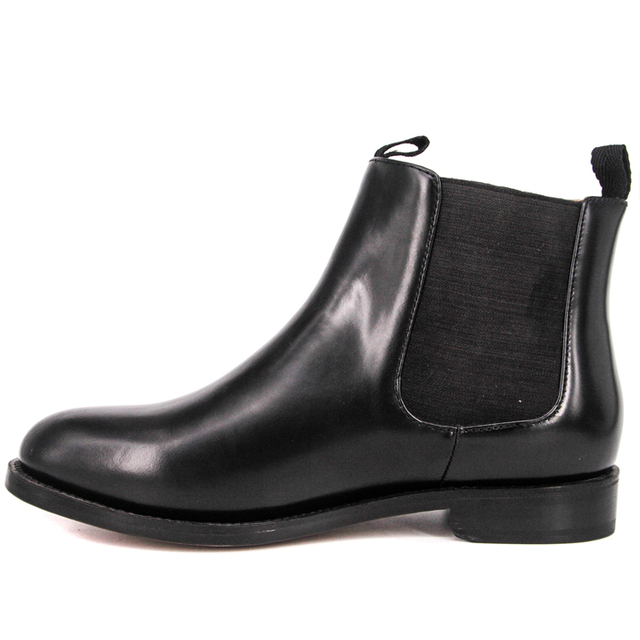
1225 black office boots is an authentic Goodyear craftsmanship office shoe. We see several layers on the sole. Each layer is made of leather and has a cork layer in the middle. When our sweat is absorbed by the cotton socks, the next step is passed to the sole. The leather absorbs moisture better than rubber. And from the inner sole to the outer sole, the moisture can be transported slowly and layer by layer. Only this process is slow and weak.
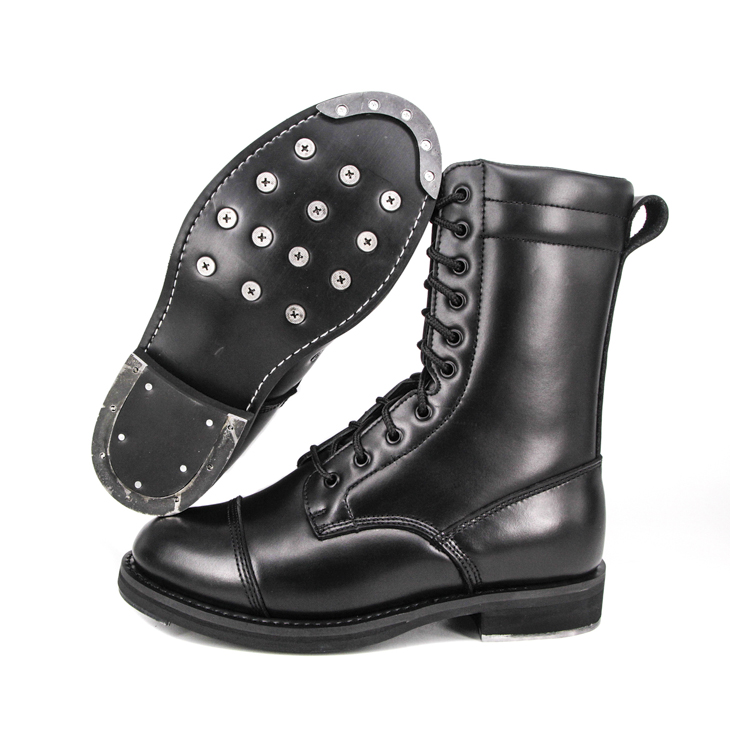
6267 full leather boots is also a pair of leather sole boots. Leather sole has characteristics of fine texture, smooth, good breathability, good elasticity and curvature. When you put it on, your feet will feel comfortable when you touch the ground. And the leather shoes can best reflects the high-end and taste of the shoes.
We know that leather sole shoes have better breathability.
After that, what we need to do is three points. Firstly, after taking off your shoes every day, you can use wooden stretcher to support them, so that the moisture inside the shoes will naturally dry up. Secondly, each maintenance, you can first wipe the inside of the shoe with alcohol. Thirdly, new leather sole shoes, you can you can use wooden stretcher to support them to keep the shoe type. Because of the properties of the skin material itself, it is not resistant to flooding and non-wearing. Therefore, it is not suitable to wear in wetlands.